Wage Subsidies and Global Temperatures Are On The Rise!

Monday morning news…

  • Federal wage subsidies ended up costing taxpayers $188,000 a year for every job saved — maybe we should try a different approach Canadians are increasingly feeling frustrated by the number of profitable businesses that are receiving the Canada Emergency Wage Subsidy (CEWS). Linamar recently became the newest corporate villain after announcing a doubling of dividends while receiving more than $108 million in government handouts. They are far from alone. (Toronto Star)

  • Welcome to the Roaring ’20s, but Maybe Not for Stocks When the world finally bids good riddance to Covid-19, courtesy of a bevy of novel vaccines, expect Americans to emerge from their lairs with a joie de vivre not seen since the 1920s. That’s marvelous news for the economy, which could use some cheer after a punishing year, and for the many companies that will help keep the good times rolling. Just don’t expect the party on Main Street to spread to Wall Street, which had a rollicking celebration of its own this past year. (Barron’s)

  • The Rich Are Minting Money in the Pandemic Like Never Before Americans have become, by some measures, richer during the pandemic than ever before. It’s a difficult thing to fathom, what with the economic collapse and the surge in the ranks of the jobless, the homeless and the hungry. But the top 20% or so of earners have had to worry little about such matters. (Bloomberg)

  • How to Hold Social Media Accountable for Undermining Democracy While the blame for President Trump’s incitement to insurrection lies squarely with him, the biggest social media companies — most prominently my former employer, Facebook — are absolutely complicit. They have not only allowed Trump to lie and sow division for years, their business models have exploited our biases and weaknesses and abetted the growth of conspiracy-touting hate groups and outrage machines. (Harvard Business Review)

WMO consolidates 5 different datasets. All concur that we just had warmest decade and warmest 6 years on record.

ErtVj5cXcAIQS19.jpg

Workin’ On a Weekend Like Usual

The weekend reads

  • Why So Many Pop Stars Are Trying to Be Working-Class Heroes Now Artists including Justin Bieber, Drake, and Travis Scott are making clumsy plays at humble relatability during an era of deepening economic inequality. (Pitchfork)

  • A Glass or Two of Red Helps Square the Numbers Deloitte's informal dealings with a fallen U.K. tech darling exemplify how auditors and clients can get too close. (Blomberg)

  • Our souls are dead’: how I survived a Chinese ‘re-education’ camp for Uighur’s After 10 years living in France, I returned to China to sign some papers and I was locked up. For the next two years, I was systematically dehumanized, humiliated and brainwashed (The Guardian)

  • Inside Twitter’s Decision to Cut Off Trump Jack Dorsey, the chief executive, had reservations about locking the president’s account. But the calls for violence that his tweets provoked were too overwhelming. (New York Times)

  • Among the Insurrectionists The Capitol was breached by Trump supporters who had been declaring, at rally after rally, that they would go to violent lengths to keep the President in power. A chronicle of an attack foretold.(New Yorker)

  • State Capitols Brace for Right-Wing Violence The FBI warns that pro-Trump protests are planned at U.S. statehouses before the presidential inauguration. Long targets of far-right militias, capitol buildings now face new security fears. (Bloomberg)

John Florence’s Last Sessions of 2020 on the Seven Mile Miracle

The Pacific’s been churning recently. Despite La Niña, everywhere from Vancouver Island to Hawaii has seen an astounding six-week run of swell. Perhaps one of the best surf season in ages.

Quantitative Easing in Canada, Bitcoin and the Future of Urban Cities

  • 9 Trends That Will Shape Work in 2021 and Beyond While 2020 was the most volatile year in modern history, it would be a mistake to think that we’re in for smoother sailing this year. In fact, as we move into 2021 and beyond, the rate of disruption will potentially accelerate as the implications from 2020 play out across the next several years. Here are nine predictions from the chief of research for Gartner’s HR practice. (Harvard Business Review)

  • Bitcoin: Magic Internet Money Crypto violates core rules of investing: Always know what you are investing in; Not a capital asset or store of value; nearly certainly a bubble and likely manipulated. (Research Affiliates)

  • Yes, the Pandemic Is Ruining Your Body Quarantine is turning you into a stiff, hunched-over, itchy, sore, headachy husk. (The Atlantic)

  • Jack Ma was China’s most vocal billionaire. Then he vanished The richest person in China was about to orchestrate the world’s biggest IPO. His retreat from public life raises a number of questions (Wired)

  • The future of cities: The end of the rat race will reshape Canada's urban centres The global pandemic changed everything in 2020. Now it is going to change everything forever. (Bloomberg)

  • Self-pardon? It might not go how Trump thinks. The president’s cherished Supreme Court majority has disappointed him before — and it might again. (Politico)

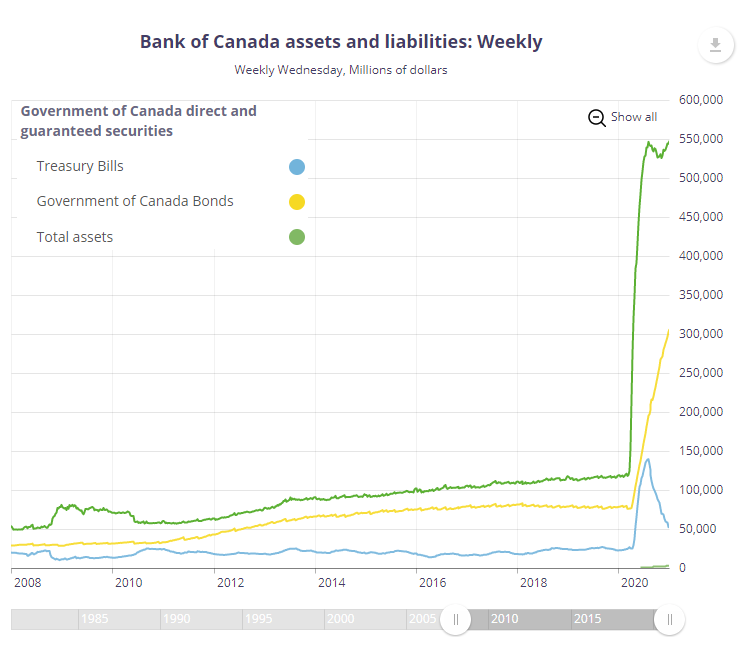
Quantitative Easing in Canada - The Bank of Canada is Buying a Few Assets

quant.PNG

Hockey is Back! Are the Nets Stacked?

The Thursday morning news feed.

  • The NHL’s New Canada-Only Division Gives a Crumbling Empire a Leg Up After a pandemic-related reshuffling, Canadian hockey clubs now have a greater opportunity to end their collective 27-year Stanley Cup drought (The Ringer)

  • 4 Lessons Tony Hawk Taught Me About Success The most famous skateboarder of all time and the man behind the $1.4 billion Activision video game series talks about what it takes to stay at the top of your game while living a meaningful life. (Entrepreneur)

  • Is Tesla a car company, or a casino? In 2020, Tesla delivered fewer than 500,000 cars, but it added almost $750bn to its market value. General Motors sold 2.5 million vehicles in 2020 and has more than $200bn in assets, but its market capitalisation is a small fraction of Tesla’s, at $62bn. At its current price-to-earnings ratio it would take Tesla 1,600 years to make as much money as the stock market has invested in it. (New Statesman)

  • After Deadly Capitol Riot, Fox News Stays Silent On Stars’ Incendiary Rhetoric Fox News, the network that has helped shape conservative politics in the U.S. for more than two decades has yet to acknowledge how the heated rhetoric radiating from its shows and stars may have helped inspire the pro-Trump rampage. Comments from prominent Fox News hosts and guests had helped stoke the MAGA mob’s fury for the two months following the November elections. (NPR)

  • A Black officer faced down a mostly White mob at the Capitol. Meet Eugene Goodman. For 85 tense seconds, Goodman tries to hold back dozens of rioters, twice retreating up a flight of stairs. Police experts say he wasn’t fleeing, but luring the mob away from the Senate chambers, where lawmakers were sheltering and armed officers — including one with a semiautomatic weapon — were securing the doors.(Washington Post)

  • Nets have their big three, now they need to fit together Having a Big Three is great. That is, if those players want it to be great. And that’s the challenge in Brooklyn now, after agreeing to the trade that landed three-time reigning scoring champion James Harden from Houston: Getting Harden, Kevin Durant and Kyrie Irving, all individually great, to want to be great together. (TSN)

Construction Housing Starts Are Down and Yurts Are Up

  • Money markets are betting Bank of Canada might make 'micro rate cut' next week Just the fact that it was mentioned earlier means policy makers are thinking about it. Money markets see an increased chance of the Bank of Canada cutting interest rates closer to zero, as tightening economic restrictions to contain a second wave of COVID-19 cases offset optimism that activity will rebound later this year. (Financial Post)

  • Tear Down Residential Schools, or Keep Them as Memorials? Communities Should Decide Such decisions reveal the complexities of healing and memory. Let’s support choice. (Tyee)

  • Are yurts the next big thing in portable housing? As people look for opportunities to isolate and create more space, Canadian yurt manufacturers are busier than ever during the pandemic (CPA Canada)

  • Behind the rise in fungi fashion lies a psychedelic revolution Gucci, Fiorucci, Stüssy and Marc Jacobs’ Heaven all helped dub 2020 the year of the mushroom. But here’s why the roots of mycelium mania run a little deeper, well into the new year and, no doubt, the rest of the decade. (The Face)

  • Vancouver Gave Homeless People $5,800. It Changed Their Lives. A single infusion of cash helped recipients pay their rent, get to work — and put their lives back on track. (Reasons to Be Cheerful)

  • The Conservative Cult of Victim-hood Trump was a perpetrator who thought himself a victim, and American society has indulged that same illusion among Trump supporters. (Atlantic)

  • Construction is faltering when we need it most in Victoria At only 877 active residential listings on the market, December not only represented the lowest December on record for inventory, but the lowest month in the 24 years of data we have. (Househunt Victoria)

starts_relative.jpg

Value Investing in 2020, Bitcoin and Surfing Maverick’s

Tuesday morning articles to read

  • What’s Behind Value Investing’s Long Losing Streak? The strategy has suffered a devastating drought for more than a decade, sending investors scrambling for answers. (Bloomberg)

  • Howard Marks: Something of Value The dichotomy of “value” and “growth” investing has become a sharp stylistic divide. But is it helpful? Howard Marks writes in his latest memo how he views the art and science of value investing, especially in the increasingly efficient and complex world we face today. (Oaktree Capital)

  • The Hot Alternative Investments to Watch in 2021 Whisky, music and the great outdoors are just some of the other ways to put your money to work. (Bloomberg)

  • What will commercial real estate look like in 2021? When Naz Ali was sitting at home in March, under lockdown along with the rest of Vancouver, she had the idea of using her specialized skills to track data on people’s movements owing to the COVID-19 pandemic. (Globe and Mail)

  • An Epiphany Moment’ for Corporate Political Donors May Have Arrived As companies put their donations to candidates on hold, they should reassess political giving entirely, making the halt permanent. (New York Times)

  • Lost Passwords Lock Millionaires Out of Their Bitcoin Fortunes Bitcoin owners are getting rich because the cryptocurrency has soared. But what happens when you can’t access that wealth because you forgot the password to your digital wallet? (New York Times)

  • Yes, It Was a Coup. Here’s Why. What Trump tried is called a “self-coup,” and he did it in slow motion and in plain sight. (Politico)

  • Trump’s Brand Loses Its Luster in the Backlash Companies and institutions are shunning President Trump and many associates. His business, built on luxury hospitality, is contemplating a reinvention. (New York Times)

  • The Last Handoff It was a fraught, utterly uncharted presidential transition — four years ago, from Obama to Trump. It was a prelude for so much that followed. (New York Times)

  • Massive Mavrick’s Some of the best and scariest moments from one of the biggest and scariest Maverick's days in years (Surfline) and Peter Mel’s massive tube ride (Youtube)

LA Lakers, Diversification, Donations and Fox News

Monday morning reads

  • Lady of the Lakers Jeanie Buss inherited a team, and a legacy, from her father. What will her imprint be? (New York Times)

  • Good Leadership Is About Asking Good Questions Especially when they find themselves in the midst of crisis and uncertainty, leaders should ask powerful and inspiring questions. Asking questions well can put you on the path to solving intractable problems and will also help you connect with others and, counterintuitively, to earn their trust. Those questions should be big in scope: What new opportunities have emerged that we don’t want to miss? How might we use new technologies to change our business model? And you should involve others in answering those questions —employees, stakeholders, and even customers. Doing so can not only help you generate better answers, it can also help you to change your organization’s culture. (Harvard Business Review)

  • Diversification Matters—but It’s Getting Harder to Find The broad indexes, so often touted as diversified, really aren’t—not anymore. That’s because the market itself isn’t truly diversified. That sets investors up with a conundrum: What does it mean to own a diversified portfolio if the S&P 500 itself is at its most concentrated in decades? And the bigger question: Is diversification still important? (Barron’s)

  • Requiem for the Super Commuter: The pandemic-driven rise of remote work in 2020 emptied commuter trains in major cities and all but killed off the long-haul trip to the office. Is that a good thing? (Bloomberg)

  • Fox News wants its viewers angry enough to watch but not angry enough to riot Guess what happens when you tell people, over and over, that they’re being robbed? They may believe you.(Vox)

  • Corporate America is rethinking its political donations Big businesses often donate to both political parties and say that their support is tied to narrow issues of specific interest to their industries. That became increasingly fraught last week, after a pro-Trump mob stormed the Capitol and some Republican lawmakers tried to overturn Joe Biden’s win in the presidential election. (New York Times)

What about Breakfast at Tiffany's?

Sunday funday morning breakfast news articles to read.

  • LVMH completes the acquisition of Tiffany & Co. LVMH Moët Hennessy Louis Vuitton SE, the world’s leading luxury products group, announced today that it has completed the acquisition of Tiffany & Co. (NYSE: TIF), the global luxury jeweler. As it closed its $15.8 billion acquisition, Tiffany will be dropped from the S&P 500 Index now that the deal has been approved. (Globenewswire)

  • The dark money that built Victoria's Craigdarroch Castle The Dunsmuir fortune was built on deadly mine conditions, strike-breaking, racist fear mongering, and stolen land (Capital Daily)

  • These Are the Rioters Who Stormed the Nation’s Capitol The mob that rampaged the halls of Congress included infamous white supremacists and conspiracy theorists. (New York Times)

  • Nobody Lived a Fuller Baseball Life than Tommy Lasorda The Dodgers' Hall of Fame manager spent seven decades associated with the club. He died on Thursday at age 93 (Sports Illustrated).

  • Hand in Glove - The false promise of plastics The first one I saw was on the path outside my house: a single white plastic glove, the fingers curled inward like a sleeping animal. This was in the early days of lock-down, when the world seemed to have shifted in ways for which we weren’t yet able to account. In the weeks that followed, as governments struggled to provide enough personal protective equipment (PPE) and hospital staff improvised with skiing goggles and masks made from sanitary towels, more white or blue gloves began to appear on nearby streets and footpaths. (Orion)

  • The Market Value of My Father When the novelist Joshua Ferris’s family blew up, his mother revealed a truth: his father was worthless, a con man. A bad investment in their lives. But years later, a mysterious book about Wall Street showed up—a gift from his father—that began to change the story. (Wealthsimple)

  • Scotiabank project follows money trails to detect signs of child sexual exploitation A joint project led by the Bank of Nova Scotia and backed by Canada’s financial intelligence agency has created a new model to detect warning signs of child sexual exploitation by following trails of money. (Globe and Mail)

  • Grizzlies at the Table When the wild salmon runs around Wuikinuxv, BC, were depleted, the local grizzly bears grew hungry — and dangerous. Now, as the salmon are returning, the community is asking a challenging new question: can we include the bears in the management of the fishery? (Beside)

  • A Nation’s Economy Divided: Breadlines vs. Bread Makers An economy is its people. Alongside the 19 million infected and more than 330,000 killed in the coronavirus pandemic in the U.S., there are millions more whose lives have been upended by the economic collapse that has come with it.(Businessweek)

Are Sneakers a Good Investment or Just for Fun?

Sneakers are for wearing and cars are for driving. Here are a few morning articles.

  • The Unbeatable Ed Hyman For four decades Ed Hyman has been unrivaled among Wall Street economists. It is a truth universally acknowledged that Edward S. Hyman Jr. is Wall Street’s greatest living economist. And a nice guy too. The former has been documented every October since 1976 in Institutional Investor. The latter, most recently by everyone interviewed for this article. Is his reign nearing its end? (Institutional Investor)

  • Make Way for the ‘One-Minute City’ While the “15-minute city” model promotes neighborhood-level urban planning, Sweden is pursuing a hyper-local twist: a scheme to redesign every street in the nation. (Citylab)

  • Can Donald Trump Survive Without Twitter? On Friday, Twitter permanently suspended Donald Trump’s account. According to the company, one of the tweets that sealed the deal was “President Trump’s statement that he will not be attending the inauguration” and its implication that the results of the 2020 election were not legitimate. (New York Times)

  • Facebook Is a Doomsday Machine The architecture of the modern web poses grave threats to humanity. It’s not too late to save ourselves. (Atlantic)

  • Nike is killing dunk hype and that’s ok Life is one big cycle filled with smaller cycles. People grow old, seasons change — and the same principle applies to the sneaker industry. Specific models or styles enjoy a certain level of hype, which eventually peaks before the sneaker fades back into obscurity. If you’ve been around long enough, you’ll have seen this unwritten rule in effect many times, indiscriminate of the brand, model, or style of the sneaker. It just happens. A lot of that is tied to changing consumer trends, though brands also play a large part in the life cycle of a shoe. (Highsnobiety)

The S&P 500 is up 54% from the pandemic lows of March 2020

s&p500-march2020.png

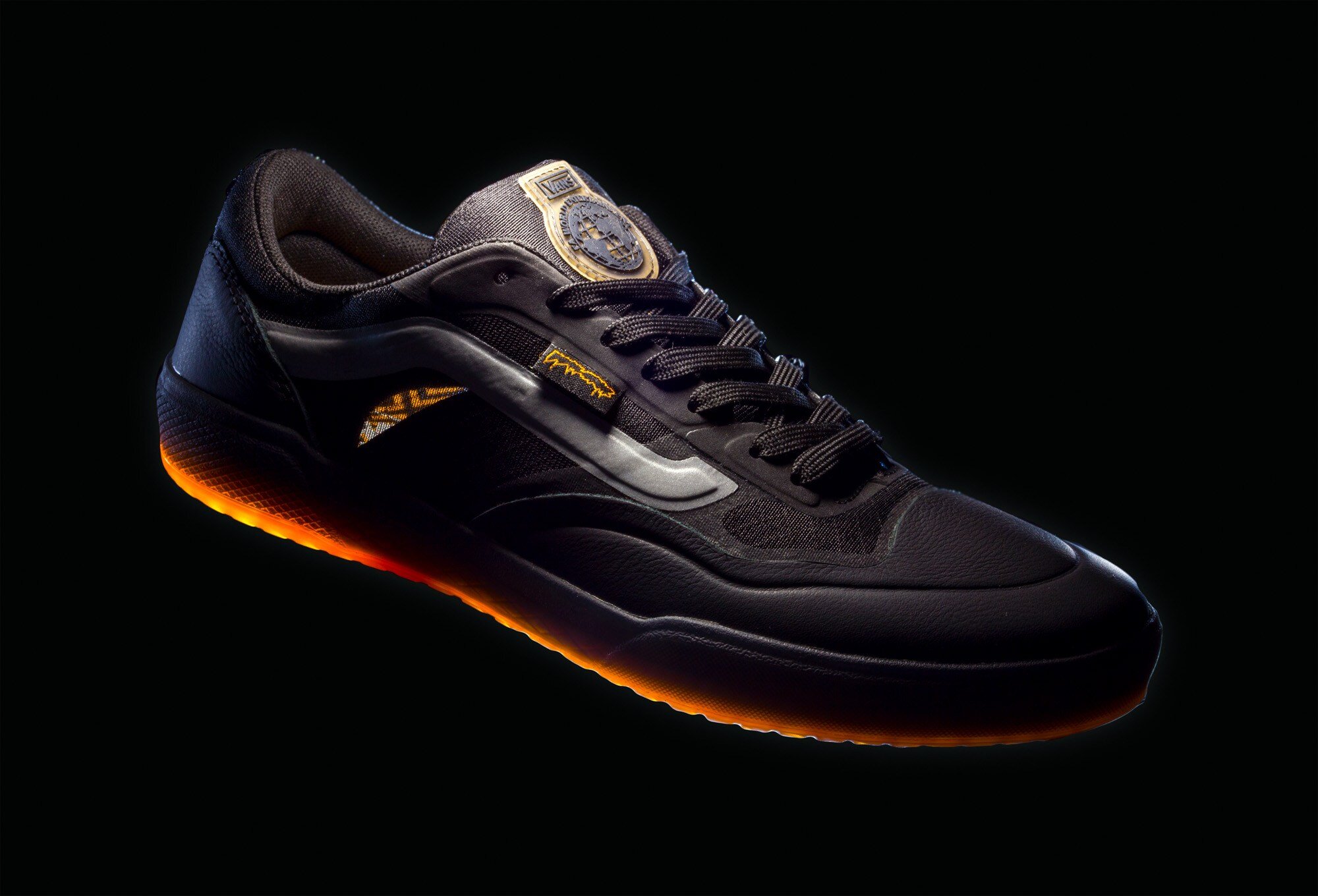
Vans A.V.E. x FA Collaboration

Vans and FA have partnered to introduce an exclusive new take on the AVE Pro, with elevated details that speak to a shared vision of uncompromising standards. (Goodnews)

vans-fucking-awesome.jpeg

Union LA x Air Jordan IV Collaboration

The Jordan 4 is one of the most iconic sneakers of all time and Union LA x Air Jordan collab dropped an epic colorway exclusively for the North American audience. (Union Jordan LA)

Union-Air-Jordan-4-Off-Noir-DC9533-001-6.jpg

Custom Indexing, Construction, COVID, and Stormtroopers

Friday morning news articles.

  • Stakeholders ruminate on COVID’s future impact on Canada’s construction sector The coronavirus pandemic dramatically transformed the Canadian construction landscape in 2020 with more disruption clearly to come in the new year. The Daily Commercial News and Journal of Commerce invited stakeholders to assess COVID’s continuing impacts for 2021 through the lenses of leadership, health and safety, the economy and projects, and innovation. (Journal of Commerce)

  • CO2 can help the construction industry emit less CO2 At more than $11 trillion per year, spending related to construction is responsible for about 13% of global GDP – but in comparison to other industries, productivity and growth are lagging behind. At the same time, the impact on the environment can be illustrated, for example, by noting that the production of cement alone accounts for 8% of global CO2 emissions. The sector's productivity and CO2 footprint are key problems that need to be addressed quickly to meet the increasing demand for construction while reducing the damage to the environment. (World Economic Forum)

  • Investing in Purpose-Built Real Estate Canada’s housing and affordability crisis is one of the most critical challenges facing our communities today. (The Walrus)

  • The Future of Offices When Workers Have a Choice Some work spaces in central employment districts may become housing, and some housing in residential areas may become work spaces. (New York Times)

  • Has the Pandemic Made Online Dating Better? “It's hard to meet people these days" has never been truer. But COVID-19 might be making courtship more considerate. (The Walrus)

  • Why can’t the stormtroopers in Star Wars shoot straight? Everyone knows the Galactic Empire’s plastic-looking soldiers can’t aim for toffee. But there’s a perfectly good explanation… (The Guardian)

  • Custom Indexing: The Next Evolution of Index Investing By 2025, most financial advisors will use web-based software to create and manage Custom Indexes for their clients. Standard indexes have a single methodology; one rule-set dictating what they own and how they re-balance. Standard indexes are “one size fits all.” Like standard indexes, Custom Indexes also invest and re-balance according to a defined methodology. But with Custom Indexes, the methodology is personalized based on an investor’s circumstances and preferences and can be easily adjusted as an investor’s circumstances change. (Canvas)

Can this go on forever? Tesla and Bitcoin - Price % Change

tesla-bitcoin-bubble.png