Barstool, Video Game Consoles, GM & Climate Change

Articles to read for Tuesday

  • Rise of the Barstool Conservatives. Dave Portnoy is one of America’s most visible critics of the lockdown policies instituted by virtually every state governor, it became clear that more so than anyone else, he embodied the world view of millions of Americans, who share his disdain for the language of liberal improvement, the hectoring, schoolmarmish attitude of Democratic politicians and their allies in the media, and, above all, the elevation of risk-aversion to the level of a first-order principle by our professional classes (The Week)

  • G.M.’s Bold Move on the Climate The end of the gasoline-powered car will transform the economy. (New York Times)

  • Still Looking for a New Gaming Console? Here’s Why A month after the holiday season, gamers are still contending with scalpers, bots and immense demand as they hunt for elusive devices. (New York Times)

  • The Silicon Valley Start-Up That Caused Wall Street Chaos Robinhood pitched itself to investors as the antithesis of Wall Street. It didn’t say that it also entirely relies on Wall Street. This past week, the two realities collided. (New York Times)

  • What do short-sellers really do? Without short-sellers, it’s theoretically very hard to push stock prices down past a certain point. Many economic theorists have argued that this tends to lead to persistent overvaluation in the market. Without shorts, they predict, prices will be higher than fundamentals. (Noahpinion)

  • Who Owns Stocks? Explaining the Rise in Inequality During the Pandemic Bad economies usually hurt both workers and investors. Only the first part has been true this time. (Upshot)

  • The Cost of Doing Business on Vancouver Island The obstacles to doing business on Vancouver Island include higher taxes and insurance rates, rising food and housing costs, shipping times and frequent ferry crossings. For loyal Island business owners, the benefits outweigh the challenges. (Douglas)

  • Logging change: old-growth harvesting has deep roots on Vancouver Island, but how long can it last? Logging-dependent communities are facing an existential threat from what conservationists and First Nations say is an overdue change to forestry practices. (Capital)

  • The Remote-Work Revolution Will Be Bigger Than We Think The past year has offered a glimpse of the nowhere-everywhere future of work, and it isn’t optimistic for big cities. (The Atlantic)

Data Privacy, Trump, Gamestop and Connor McDavid

The Monday morning articles

  • The GameStop Reckoning Was a Long Time Coming: Depending on whom you ask, the GameStop saga is either a cautionary story about a bunch of reckless nerds destabilizing the stock market for laughs in a way that is likely to backfire on them spectacularly, or a David-and-Goliath morality tale about a fearless band of retail investors cleverly putting one over on corrupt financial elites. (New York Times)

  • ‘Trillion Dollar’ Mt. Gox Demise as Told by a Bitcoin Insider Many of the Bitcoin lost or stolen from Mt. Gox have since been found, and the Japanese bankruptcy trustee Nobuaki Kobayashi is working to reimburse creditors. (Bloomberg)

  • How to Manage Your Investments Late in a Cycle Nobody knows for sure whether equities will keep rising or for how long, but knowing a little market history can help ease the anxiety.  (Bloomberg) and (Fidelity)

  • Tim Cook on Why It’s Time to Fight the “Data-Industrial Complex” “They’re manipulating people’s behavior,” the Apple CEO tells GQ in a frank conversation about his hope that Apple’s new privacy initiatives will help solve some of the internet’s scariest problems. (GQ)

  • The push to control Americans' health care U.S. officials say the Chinese government is trying to collect Americans' DNA, and they believe a recent offer from a Chinese company for assistance in COVID-19 testing was suspicious. Companies and foreign countries are also vying for your DNA In the world of biotech, data is the new oil. That means the DNA you provide for a genealogy test could be shared in a market worth trillions. Jon Wertheim reports. (Part 1 - 60 Minutes) and (Part 2 - 60 Minutes)

  • Trump’s useful thugs: how the Republican party offered a home to the Proud Boys Early in Trump’s presidency, emboldened neo-Nazi and fascist groups came out into the open but were met with widespread revulsion. So the tactics of the far right changed, becoming more insidious – and much more successful. (The Guardian)

  • Something went terribly wrong with Trump’s defense A week before his second impeachment trial started, former President Trump’s entire legal team has walked away. Trump insistence on defending himself by repeating the same dangerous lie that sparked the Capitol riot — that the election was stolen from him — led to his 5 attorneys quitting. Unlike his election legal counsel — now being sued by Dominion Voting Systems for slander — these attorneys refused to cross that ethical line (CNN)

cant-lsoe.jpg

Connor McDavid is the greatest of this generation How McDavid's victims on Leafs feel being on wrong end of highlight goal (Sportsnet)

Trump, Corona Virus and More Gamestop

Weekend articles to read.

  • The 1920s Roared After a Pandemic, and the 2020s Will Try The modern economy sprang to life in the Jazz Age, but today’s secular stagnation will be tough to overcome. (Businessweek)

  • Fauci on What Working for the Admin in 2020 Was Really Like From denialism to death threats, Dr. Anthony Fauci describes a fraught year as an adviser to President Donald J. Trump on the Covid-19 pandemic. (Science Times)

  • ex-KGB Spy: Russia Cultivated Trump as Asset for 40 years, ‘The Perfect Target’ Donald Trump was cultivated as a Russian asset over 40 years and proved so willing to parrot anti-western propaganda that there were celebrations in Moscow, according to a former KGB spy. Yuri Shvets, posted to Washington by the Soviet Union in the 1980s, is a key source for American Kompromat: How the KGB Cultivated Donald Trump, a new book comparing the former US president to “the Cambridge five”, the British spy ring that passed secrets to Moscow during the early cold war. (The Guardian)

  • Worrisome New Coronavirus Strains Are Emerging. Why Now? Across the globe, SARS-CoV-2 is evolving ways to evade the immune system and become more infectious. Blown pandemic response plans are to blame. (Wired)

  • Three Weeks Inside a Pro-Trump QAnon Chat Room For the past three weeks, a group of Trump supporters and QAnon believers met online, swapped theories and eagerly awaited the conspiracy’s violent climax. I was listening in. This is what they sounded like. (New York Times)

  • A Ticket to Build: permits rebound after suffering from lockdown backlogs The construction sector has weathered the pandemic storm with a strong rise in activity. The third quarter of 2020 saw the total value of building permits issued on Vancouver Island rebound to $681.6 million, or 40 per cent above the second quarter of 2020. (Douglas)

  • Inside the Reddit army that’s crushing Wall Street This past week has been a banner one for Reddit’s island of misfit investors, as WallStreetBets exploded into the mainstream, moving from the front page of Reddit to the front page of the New York Times and nearly every other major news site. Describing itself as if “4chan found a Bloomberg terminal,” the forum’s giddy nihilism, inscrutable language and memes fueled a war on a perceived corrupted mainstream. (CNN)

  • What to Know About Music’s Copyright Gold Rush Neil Young, Lindsey Buckingham, Shakira, and others recently sold their song catalogs to the flashy music publishing upstart Hipgnosis, in deals that have implications for the future of the recording industry (Pitchfork

Tourism in Victoria, BC in 1936

GameStop - 'Cause You Can't, You Won't, and You Don't Stop

I've got the brand new doo-doo, guaranteed like yoo-hoo

  • The ‘Roaring Kitty’ Rally: How a Reddit User and His Friends Roiled the Markets A Massachusetts man who goes by “Roaring Kitty” on social media helped fuel the frenzy around GameStop. His $53,000 investment in the company briefly reached $48 million in value (New York Times)

  • Robinhood, in Need of Cash, Raises $1 Billion From Its Investors The no-fee trading app, which is popular with young investors, has been strained by the high volume of trading this week in stocks such as GameStop. (DealBook)

  • Short Sellers Crushed Like Never Before as Retail Army Charges Short traders in the American stock market are taking a historic pounding as the retail crowd charges into the most-hated names on Wall Street. The 50 most-shorted companies on the Russell 3000 Index have now surged 33% so far this year, with the Goldman Sachs Group Inc. basket set for its best month since at least 2008. (Bloomberg)

  • Reddit’s r/WallstreetBets breaks all-time traffic record as hedge fund bleeds Driving the surge is an unlikely face-off between David-like retail investors vs. a hedge-fund Goliath — and David is very much winning. It can often be hard to decipher what is real and what is a joke on the board, making the whole subreddit an entertaining mess. (Mashable)

  • America’s Next Great Economic Experiment: What if We Run It Hot? Supporters of aggressive stimulus see an opportunity to finally correct the mistakes of the last recession and achieve boom times quickly. (Upshot)

  • The SP 500 index out-performed hedge funds over the last 10 years. And it wasn’t even close In 2007, Warren Buffett entered into a famous bet that an unmanaged, low-cost S&P 500 stock index fund would out-perform an actively-managed group of high-cost hedge funds over the ten-year period from 2008 to 2017, when performance was measured net of fees, costs, and expenses. (AEI)

  • Why you should care about data privacy even if you have “nothing to hide” Yes, your data is used to sell you shoes. But it also may be used to sell you an ideology. (Recode)

  • Your Next Car Will Probably Be an Electric Pickup Truck With their mass appeal, automakers say selling battery-powered models should be a breeze. If they ever get made. (Bloomberg)

Great song and some excellent slab riding by trials rider Danny MacAskill

Construction Trends, Technology, and GameStop

When Wall Street traders take advantage of the system, it’s called capitalism, but when outsiders do it, it’s called manipulation. Strange times…

Thursday news reads

  • If Canada can survive four years of Trump, it can navigate the new Buy American Joe Biden’s White House has more in common with Canadians than Trump ever did, but a new “Made in America” buy American plan puts our mutual economic recovery at risk. (On Site)

  • No going back: The abrupt turn to technology on construction job sites looks unstoppable The global pandemic, which accelerated the construction industry’s drive to adopt technology throughout 2020, may have been an aberration, but the widespread embrace of new tech tools on job sites is here to stay. It has also been a long time coming. Much of the industry has been integrating an increasing level of technology for the past decade. (On Site)

  • Top 10 Canadian construction trends to watch in 2021 After a turbulent 2020, which forced the industry to adapt on the fly to a series of new on-site safety protocols and an abruptly altered building market, contractors are facing volatility in the year ahead, with growth predicted in some segments of the market and decline in others. (On Site)

  • How can we stop the bleeding of youth fleeing a wounded Calgary? The flight of young talent is bad enough. The suggestion that there are few opportunities beyond traditional industries is even worse (Calgary Herald)

  • Causes for cautious optimism Uncertainty abounds, but 2021 promises opportunities in equities markets (Investment Executive)

  • This Is The Power Gap he first equal pay legislation in Canada passed in 1951, making it illegal to pay men and women in the same job different salaries. Women overtook men among university graduates three decades ago. Today, women represent just under half of the workforce. And yet, men still dramatically outnumber, outrank and outearn women. (Globe and Mail)

  • Investing in a Bubble: Spotting Bubbles is Easier than Investing through Them The S&P 500 index soared 38% in 1995. This sharp increase, following four years of steady gains, made some of the smartest investors on Wall Street begin to grow wary of a bubble in the making. We found that the investors we studied almost all perceived the market to be in a bubble, but almost all of them were too early in making the call. It’s easier to predict what will happen, it turns out, than when it will happen. (Verdad)

  • The Triumph of Dumb Money: It may be a “digital boiler room,” but Robinhood mostly won 2020. Does a reckoning await? (Institutional Investor)

  • History Has a Warning for GameStop Traders The SEC can take steps right now to curb the day-trading frenzy and help safeguard the investing public. (Bloomberg)

  • How Does This End? Let’s have an honest conversation about GameStop. (DealBook)

GameStop Corp Percent of Shares Outstanding Short % Change

gmeshort.png

Essential Workers, GME GameStop, and Gender Equity

Midweek news

  • The Emotional Tax of Essential Work Customer experience is routinely privileged over employee well-being. As COVID-19 case numbers surge, we’re seeing the consequences (Walrus)

  • The Gender Equity Marathon As we mark the fiftieth anniversary of the report by the Royal Commission on the Status of Women in Canada, SARAH BOESVELD reflects on its significance and notes that, when it comes to gender equity, the struggle continues (Walrus)

  • The GameStop Game Never Stops How GME exploded: Some people think GameStop is primed for a turnaround. One of those people is Ryan Cohen, the former chief executive officer of Chewy Inc., the online pet-food retailer. If you can sell pet food online, you can sell video games online. (Bloomberg)

  • The Gamma Algo is Different The curation algorithms of TikTok, Reddit, Robinhood, Amazon & Netflix are designed not to do anything good for you the consumer but to keep you engaged on the platform you happened to launch from your phone. Once your TikTok feed is full of stock tips, you’re going to get the most sensational, clickbait posts bubbled to the top of your window. (ETF Trends)

  • Who Owns Stocks? Explaining the Rise in Inequality During the Pandemic Bad economies usually hurt both workers and investors. Only the first part has been true this time. (Upshot)

  • It Seems Money Does Buy Happiness After All A study refutes the theory that above a certain income level dollars don’t help your sense of well-being. (Businessweek)

  • After Climate-Protection Drift And Despair, A Blueprint For Success Emerges In Cascadia Washington state’s redoubled climate goals and fresh action plan revive hope to cut emissions. But ongoing fossil fuel development in BC could undercut Cascadia’s progress. (Investigate West)

EsqxNwIXMAUtYEw.jpeg
carboncuts.jpg

LeBron and Brady, Climate Goals and Carbon Emissions

Tuesday morning news

  • Tom Brady Has Added to a Legacy That Had No Room to Top We thought Brady had already done everything a quarterback could do. More than everything. His 2020 has somehow only added to the story. (Sports Illustrated)

  • LeBron James Just Might Play Forever Like Tom Brady, the Lakers star is redefining the aging curve. And after turning his biggest weakness into a strength this season, he may have extended his career even further. (Ringer)

  • BlackRock Chief Pushes a Big New Climate Goal for the Corporate World Larry Fink is using his firm’s huge influence to pressure companies to eliminate greenhouse gas emissions by 2050 using the weight of his firm’s $9 trillion in assets. (Dealbook)

  • You've heard of net zero? These oil companies say they've reached 'net-negative' carbon emissions CO2 is stored using carbon capture technology, which also helps produce more oil (CBC)

  • Has the Pandemic Transformed the Office Forever? Companies are figuring out how to balance what appears to be a lasting shift toward remote work with the value of the physical workplace. What’s an office for? The COVID-19 pandemic has presented companies with an unprecedented opportunity to rethink the fundamentals of the physical workplace (New Yorker)

  • With Democrats in Control, Investors Are High on Cannabis Weed businesses are counting on the political shift to help them win access to financial markets and perhaps even national legalization of pot. (Businessweek)

  • Hempton: Where we are: Many quality growth stocks are now very expensive, often requiring a decade of uninterrupted growth to “earn their way” into the current valuation. And garbage stocks and new issues are at levels that even a few years ago we would have considered vanishingly unlikely. On the plus side we look at shorting opportunities now and see a “target rich environment.” Alas, recent experience tells us that the targets can shoot back. (Bronte Capital)

Investing Bubbles in 2021

Monday morning news

  • Waiting for the Last Dance - The Hazards of Asset Allocation in a Late-stage Major Bubble The long, long bull market since 2009 has finally matured into a fully-fledged epic bubble. Featuring extreme overvaluation, explosive price increases, frenzied issuance, and hysterically speculative investor behavior, I believe this event will be recorded as one of the great bubbles of financial history, right along with the South Sea bubble, 1929, and 2000. (GMO)

  • 9 Uncomfortable Facts About the U.S. Stock Market Things feel pretty comfortable in the stock market right now. Pretty much anything you put your money into has worked spectacularly well since stocks bottomed this past March. The crash last year shows how risky investing in stocks can be but it was over in the blink of an eye. There have been plenty of other instances where investors in U.S. stocks have been much more uncomfortable for longer periods of time. (Wealth of Common Sense)

  • Babine Lake Mines Leaking Dangerous Contaminants into Salmon Habitat Advocates want greater oversight as a mapping project identifies more than 170 mines putting waterways at risk. (Tyee)

  • A Fight Over GameStop’s Soaring Stock Turns Ugly The denizens of the WallStreetBets subreddit helped push the flailing stock to dizzying heights—while a short seller alleged an accompanying harassment campaign. (Wired)

  • How WallStreetBets Pushed GameStop Shares to the Moon Short sellers have been called a lot of things. Bloodsuckers. Parasites. Other words not fit to print. Now in the vortex engulfing GameStop Corp., they have a new name: the establishment. (Bloomberg)

  • Investor exuberance pushes BlackBerry shares up 40% to highest level since 2011 Move driven by investor enthusiasm, not necessarily fundamental change to business, experts say (CBC)

  • More Vaccinations, More Stimulus, More Sanity: A Guide to 2021 The economic outlook is starting to brighten, but the world still needs a shot in the arm. (Businessweek)

  • What Biden’s EV push could mean for jobs: The U.S. lags far behind the rest of the world in electric vehicle adoption. Catching up will require big investments in EV production — including battery cell manufacturing and mining of raw materials — to avoid dependence on imports and foreign supply chains. (Axios)

Jeremy Grantham, co-founder and chief investment strategist of Boston’s GMO, believes U.S. stocks have become an epic bubble and will burst in a collapse rivaling the crashes of 1929 and 2000. In this interview, he explains why, discusses the futility of Federal Reserve policy, criticizes the state of American capitalism, and shares his thoughts on gold, Bitcoin, emerging markets and climate change.

Hank Aaron, Diversity, Tesla/Volkswagen, Crypto and The Pandemic

Some long form journalism for your weekend reading.

  • Hank Aaron's lasting impact is measured in more than home runs Henry Aaron, who rose up from the depths of Southern poverty to become one of the towering figures in baseball history as well as a bittersweet symbol of both American racial intolerance and triumph, has died. He was 86. (ESPN)

  • The Business Case for Boardroom Diversity When big banks see a benefit in helping companies recruit more diverse directors, it’s a sign that there are not just morals at play — there is money at stake, too. (New York Times)

  • The Worst President in History Three particular failures secure Trump’s status as the worst chief executive ever to hold the office. 1) He failed to put the national-security interests of the US ahead of his own political needs. 2) In the face of a devastating pandemic, he was grossly derelict, unable or unwilling to marshal the requisite resources to save lives while actively encouraging public behavior that spread the disease. 3) Held to account by voters for his failures, he refused to concede defeat and instead instigated an insurrection, stirring a mob that stormed the Capitol. (The Atlantic)

  • America Abandoned Its Economic Prophet. The World Embraced Him. The pandemic has put Galbraith’s global legacy into stark relief. One can now map out the rise and decline of nations simply by distinguishing between those that have continued along the lines that once defined U.S. economic success as Galbraith saw it and those that fell under the spell of illusions about free, competitive, and self-regulating markets and under the dominating power of finance, hanging on to a self-image that no longer corresponds to reality. (Foreign Policy)

  • The Bit Short: Inside Crypto’s Doomsday Machine This is the story of a Bitcoin trade — the most financially impactful trade I’ve ever made in my life. It’s also the story of the deep-yet-frantic investigation of the crypto ecosystem that led me to make that trade. And it’s the story of what’s really going on in crypto — and what we should do about it. (Crypto Anonymous)

  • Tesla/Volkswagen How Volkswagen’s $50 Billion Plan to Beat Tesla Short-Circuited – Faulty software set back a bid by the world’s largest car maker for electric-vehicle dominance (Lefsetz)

  • Total eclipse How falling costs will secure solar’s dominance in power Renewables are the proven zero-carbon technology where much of the capital funding the energy transition will be invested. Over the next 20 years, we expect more than 4 terawatts (TW) of wind and solar power to come on stream globally, taking renewables’ share of the world’s power capacity to 30% from 10% today. Of this new capacity, some 2.6 TW will be solar. (Wood Mackenzie)

  • A Year Later, the First Post-Pandemic City A year ago when Wuhan shut down, it offered the world a forewarning about the dangers of the virus. Now, it heralds a post-pandemic world where the relief at unmasked faces, joyous get-togethers and daily commutes conceals the emotional aftershocks. That was unthinkable last year, and remains unthinkable for much of the world still in the grips of the pandemic. (New York Times)

  • The Post-Pandemic Office Isn’t A Place Where are tech companies going to go once the pandemic subsides as vaccines reach more and more Americans? (Initialized)

Asset Bubbles, and Is Fixed Income Still a Thing?

Friday morning news reads

  • What Low-Paying Fixed Income Still Gives Us: Ballast Despite small interest payments and not much price appreciation potential, many investors say it does deliver in this one area. (CIO)

  • Their noses paid the bills. Then Covid took their sense of smell As many as half of Covid-19 sufferers lose their sense or smell or taste. For master sommeliers and professional bakers, it could spell the end of their careers (Wired)

  • Why the U.S. isn't in desperate need of the Keystone XL pipeline U.S. President Joe Biden fulfilled a campaign promise by scuttling the 1,897-kilometre pipeline (CBC)

  • CFO Roundtable 5 lessons from the Pandemic that will shape Ontario’s economy In late July 2020, Carol Wilding, CEO of CPA Ontario gathered some of the province’s most senior business leaders from a cross section of industries for a virtual roundtable discussion. She asked them to share their experiences off the record, but with the intention that their strategic insights about how to survive and thrive throughout the pandemic would be distilled and shared with CPA Ontario members. (CPA Ontario)

  • Progress on anti-money laundering efforts, but no additional RCMP resources: B.C. attorney-general More than 20 months after the federal government promised to provide additional police resources to help investigate money laundering in the province, it has not done so, according to B.C. Attorney-General David Eby. (Vancouver Sun)

  • Unbreakable Canadian Housing? The past year has displayed in glorious detail just how hard it is to keep the Canadian housing market down—even a global pandemic couldn’t knock it off its perch. While much of the rest of the economy struggled with the deepest downturn of the post-war era, Canadian home sales and prices hit record highs, while starts churned out shockingly solid gains. Suffice it to say that this was diametrically opposed to what the conventional wisdom expected for the housing market during the depths of the spring lockdown, including an official call for a double-digit price decline. Instead, residential investment—which includes new building, renovation activity, and sales costs—was a rare source of growth. And it looks set to remain robust in 2021. (BMO)

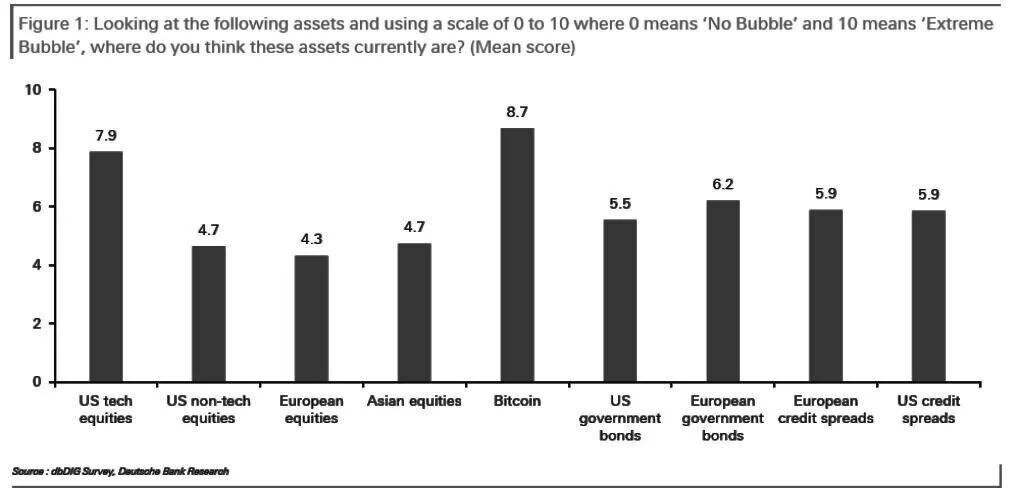
Asset Bubbles…

fig1-1.jpg
north-american-home-prices-divide.jpg