Golf, TikTok, Mining, Investing and Electric Cars

Wednesday news drop

  • It’s time for two sets of golf rules When was the last time you played golf with a pal who hit the ball so absurdly far that he or she brought the golf course you were tackling to its knees? Simultaneously, consider this: How often does that happen on the PGA Tour? (Toronto Star)

  • Everybody Hates Millennials: Gen Z and the TikTok Generation Wars The video-based platform may not have created generational animosity, but it’s happy to fan the flames (Walrus)

  • What If We Never Reach Herd Immunity? Hitting the threshold might actually be impossible. But vaccines can still help end the pandemic. (Atlantic)

  • Critics Skeptical as Alberta Reverses Course on Open-pit Coal Mines Five days after Kenney defended the province’s mining push, the government says it was all a big mistake. (Tyee)

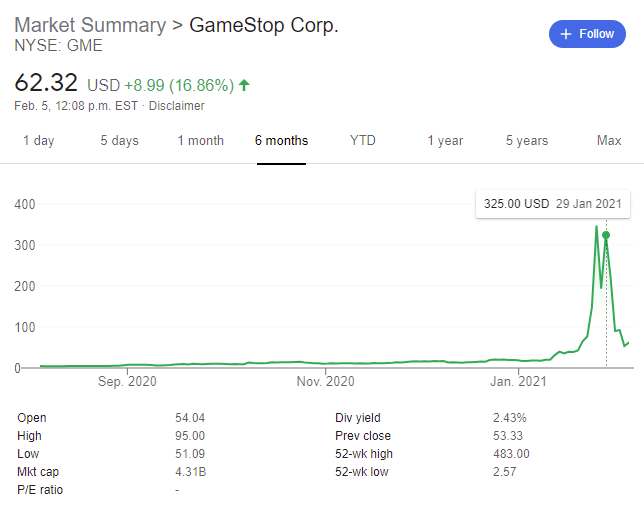
  • Wall Street’s Most Reviled Investors Worry About Their Fate Short sellers — self-described financial detectives who make money when companies fail — were already worried about their success and safety. Then GameStop happened. (New York Times)

  • GM's electric vehicle plan could shake up the energy sector — but how soon? 'The future of transportation, starting now, is electric,' says environmentalist working with automaker (CBC)

  • Norway’s Electric Car Triumph Started With an ’80s Pop Star How a rule-breaking joyride by an MTV icon helped make Norway the world’s EV capital. (Reasons To Be Cheerful)

  • Is the Bank of Canada’s new boss living up to his climate change credentials? When Tiff Macklem took over as Bank of Canada governor in June he brought the requisite credentials in government and academia, including a past stint as deputy governor of the central bank. But more important to some are his ‘green’ credentials, particularly his chairing of the federal Expert Panel on Sustainable Finance, which in 2019 recommended Canadian financial institutions revamp their business practices to address the challenges of climate change. (Globe and Mail)

  • Americans take to ‘buy now, pay later’ shopping during pandemic, but can they afford it? It is unclear how buy now, pay later fits into U.S. regulations – the companies that offer these services do not have bank charters, some do not charge interest and laws vary by state. Some experts expect the sector to come under more scrutiny during the new administration. (Reuters)

Marvel Universe, Retail Investing and Investment Apps

Tuesday news drop

  • Who Really Created the Marvel Universe? Stan Lee presided over a world of superheroes, but his collaborators and readers sustained his vision—and his characters outlasted it. (New Yorker)

  • A Record Number of New Retail Investors Signed Up in 2020 They’re younger, more diverse, and they go to their friends and family for investment advice, a new report confirms. (CIO)

  • Some Friendly Reminders About Day Trading There will always be winners and losers in the stock market, even for those who aren’t day-trading. This is simply the zero-sum nature of transacting in a market like this. For every buyer, there has to be a seller and vice versa. But day-traders face a much higher hurdle rate than long-term investors for a couple of reasons: (A Wealth of Common Sense)

  • Family of novice investor who killed himself sue Robinhood Robinhood has drawn criticism in its drive to bring more regular people into investing (Investment Executive)

  • Why people love to hate Robinhood Robinhood is loved not only by the trading newbies who are downloading the app at a record pace, but also by Wall Street investors who have recently sunk $3.4 billion into the company. The online brokerage has also been relentlessly attacked, however, by everybody from Alexandria Ocasio-Cortez to Ted Cruz and Mark Cuban. (Axios)

  • How to Win at the Stock Market by Being Lazy The drama of GameStop is misleading; the surer path to wealth is extremely boring (New York Times)

  • More Than Two Dozen Funds Returned More Than 100% Last Year. Here’s Why That’s Not Good News. The top performers of 2020 are mostly concentrated growth funds from a handful of firms. While doubling your money is a win for current investors, these outsize gains pose problems for potential investors trying to evaluate these funds. (Barron’s)

  • Silicon Valley Won’t Last Forever, and Texas Knows It The birthplace of Dell and TI has been quietly building its tech industry since the 1930s. Now it has the chance to move into the spotlight. (Bloomberg)

  • Riding out the pandemic on Lake Ontario Surfers brave frigid waters to wash COVID stress away (CBC)

robinhood.png

Super Bowl, Investing, GameStop, Jeff Bezos and Unemployment

Monday morning articles to read

  • The Winners and Losers of Super Bowl LV Tom Brady keeps winning just to prove he can, and though Patrick Mahomes lost, he made highlight-worthy throws to the very end. Plus: taunting, a failed big-man reception, and more. (The Ringer)

  • The Weeknd’s Super Bowl 2021 Halftime Show Broke Longstanding Traditions Despite speculation that he might be joined by other artists, the spotlight was focused firmly on the 30-year-old chart-topper and an array of backup dancers and singers (Vanity Fair)

  • They Stormed the Capitol. Their Apps Tracked Them. Times Opinion was able to identify individuals from a trove of leaked smartphone location data. (New York Times)

  • Wealthsimple’s membership has exploded in recent days — and its founder is alarmed Michael Katchen has one word to describe his approach to personal investing: “boring.” That’s why the CEO of Wealthsimple, the Toronto-based financial management system for young people new to investing, watched the recent trading frenzy in the stock market with some alarm. This approach, buying and selling shares of somewhat random stocks in the hopes it might sink a few hedge funds, was anything but boring. (Toronto Star)

  • The GameStop Phenomenon Is Hardly New. Here’s How a Similar Squeeze Played Out in 1923. Long before GameStop, there was Piggly Wiggly.In 1923, the supermarket company—which still does business in the South and Midwest—was at the center of a short squeeze/market morality play that echoes the recent frenzy around GameStop. (Barron’s)

  • J.P. Morgan Won Active Management in 2020. Here’s How They Did It. “We took the playbook out and we executed against it,” Gatch, who took over as CEO in August 2019, told Institutional Investor during a Zoom call from his New York apartment. “We had no idea it was going to be a pandemic, but we knew that a crisis was coming,” he said, in his first media interview about about its performance last year. (Institutional Investor)

  • Jeff Bezos Doesn’t Have Time to Be CEO of Amazon “I’ll do hobbies. I’ll see movies. I’m talking about work. I’m not going to work on something that I don’t think is improving civilization. I think The Washington Post does that, I think Amazon does that, and I think Blue Origin does that. And I’m not going to put productive energy into anything that doesn’t improve civilization. Why would I? What would I be trying to do?” The shelf life of a tech executive, innovation in the Covid era. (Wired)

  • America’s deeply unequal economic recovery, explained in 7 charts The pandemic has made employment disparities in America more evident than ever (Vox)

indeed-job-listings-change.PNG
unemployment-rates-us-by-income-dec-2020.PNG

NBA All-Star Game, Covid, and AirBnB in Victoria

  • Did the NBA All-Star Game Just Get Blocked by James? It’s one thing when fans voice concern about staging All-Star Weekend amid a pandemic, it’s another when those doubts are coming from the face of the league (Ringer)

  • The Egghead Gap: Science and technology support innovation, economic growth, and military might, making them central pillars of geopolitical competition. For the last three decades, the United States has been mostly unchallenged in its role as the world’s leader in scientific and technological research. But in recent years the country has come to face an explicit challenger in China. As the United States seeks to shore up weaknesses and ensure leadership for this century, we must recognize the key role that global talent plays in driving progress on the frontier, our country’s long history of recruiting this talent, and how to fully leverage this advantage with a more proactive approach. (New Atlantis)

  • Cabin pressure: the turbulent history of flight attendants Flight attendants are the face of the airline — and now, they’re pleading with passengers to wear masks. The airline industry has always had its ups and downs, from recessions to gas prices to coronavirus. But when things get unstable, flight attendants are the first to feel the pain. (The Verge)

  • How Europe fell behind on vaccines The EU secured some of the lowest prices in the world. At what cost? (Politico)

  • The Coming Alzheimer’s Crisis—and What to Do About It The hours to come would pit the insurgent conspiracists against a handful of White House lawyers and advisers determined to keep the president from giving in to temptation to invoke emergency national security powers, seize voting machines and disable the primary levers of American democracy. (Barron’s)

  • After Record Turnout, Republicans Are Trying to Make It Harder to Vote The presidential election results are settled. But the battle over new voting rules, especially for mail-in ballots, has just begun (New York Times)

  • Off the rails: Inside the craziest meeting of the Trump presidency White House staff had spent weeks poring over the evidence underlying hundreds of affidavits and other claims of fraud promoted by Trump allies like Powell. The team had done the due diligence and knew the specific details of what was being alleged better than anybody. Time and time again, they found, Powell’s allegations fell apart under basic scrutiny. (Axios)

  • Spurred By The Capitol Riot, Thousands Of Republicans Drop Out Of GOP The number of people changing parties spiked immediately after the Capitol breach. The same phenomenon is playing out nationwide. News outlets documented about 6,000 defections from the party in North Carolina, 10,000 in Pennsylvania and 5,000 in Arizona. (NPR)

  • Victoria Airbnbs are disappearing through the pandemic, returning rentals to the market How the pandemic did what regulators couldn’t, and how that’s played out in the rental market (Capital)

airbnb-greater-victoria-bc-housing.png
vacancy-rate-victoria-bc-2021.png

Frontline - China’s COVID Secrets

Superbowl, Tax Cuts, Investing and Gamestop

Friday news drop

  • Super Bowl LV Prediction: Why the Chiefs Will Beat the Buccaneers No one has won more Super Bowls than Tom Brady, but in a high-scoring game, Patrick Mahomes has a slight advantage. (New York Times)

  • Why the Tampa Bay Buccaneers will win Super Bowl LV Ahead of Super Bowl LV between the Kansas City Chiefs and Tampa Bay Buccaneers, Sportsnet writers will break down why each team can win the Lombardi Trophy on Sunday. (Sportsnet)

  • The Terrifying Warning Lurking in the Earth’s Ancient Rock Record Our climate models could be missing something big. (Atlantic)

  • A call to arms Inside Canada’s impossibly high-stakes rush to lock down tens of millions of doses of the most sought-after product on Earth (Mclean’s)

  • Study: 50 years of tax cuts for the rich failed to trickle down London School of Economics and King’s College study examined 18 developed countries over a 50-year period from 1965 to 2015. The study compared countries that passed tax cuts in a specific year, such as the U.S. in 1982 when President Ronald Reagan slashed taxes on the wealthy, with those that didn’t. The economic outcomes including per capita gross domestic product and unemployment rates were nearly identical after five years in countries that slashed taxes on the rich and in those that didn’t. (CBS News)

  • The Best Way to Manage Sequence of Return Risk For retirees, it’s important to remember it’s not the overall returns that matters as it is the order in which you receive those returns. The problem facing investors is no one knows in advance whether they’ll have good luck or bad luck on the timing of their retirement. A bear market at the outset could severely dampen your ability to spend while a bull market could actually improve your standing. (A Wealth of Common Sense)

  • Stonks Are Bonkers, and Other Lessons From the Reddit Rebellion A tendies-fueled fever upended finance, albeit briefly, and left normies hugging index funds. The serious money is still going long. (Businessweek)

  • Who’s Winning the GameStop Game? Hedge funds, Roaring Kitty, a price update and Robinhood skill (Bloomberg)

Capture.PNG

Fred VanVleet, Hedge Funds, and Supertowers

Thursday articles to read

  • No One Dared to Dream This Big for Fred VanVleet The Raptors’ star—yes, star—point guard achieved new heights yet again Tuesday, scoring a career-high 54 points and adding yet another hard-to-believe chapter to a storybook career (Ringer)

  • How David Beats Goliath in Real Life The hedge fund industry manages $3 trillion. Private equity and real estate and venture money is even bigger than that. Funds are backed by banks and brokerages which are backed by the Federal Reserve. Get a grip on reality. This complex doesn’t lose an arms race. The money is infinite. You can’t squeeze it. It will crush you. The louder and more bellicose you are on the internet, the tighter it will squeeze back, until your head has literally popped off. On Wall Street, David doesn’t beat Goliath – especially in a battle of brute force and liquidity. (Reformed Broker)

  • The Downside to Life in a Supertall Tower: Leaks, Creaks, Breaks 432 Park, one of the wealthiest addresses in the world, faces some significant design problems, and other luxury high-rises may share its fate. (New York Times)

  • Millennials Are Changing the Luxury Real Estate Market Tech-savvy and environmentally conscious, millennials’ preferences are poised to dramatically reshape the high-end housing market. (Bloomberg)

  • The Chrome Update Is Bad for Advertisers but Good for Google Google Chrome is ditching third-party cookies for good. It may rewrite the rules of online advertising and make it far harder to track the web activity of billions of people. But what seems like a big win for privacy may only serve to tighten Google’s grip on the advertising industry and web as a whole. For most people, the change will be invisible but, behind the scenes, Google is planning to put Chrome in control of some of the advertising process. To do this it plans to use browser-based machine learning to log your browsing history and lump people into groups alongside others with similar interests. (Wired)

  • San Francisco Giants outfielder Drew Robinson’s remarkable second act He sat on his living room couch, poured himself a whiskey. He was alone, alone until the end. At about 8 p.m., in one uninterrupted motion, he leaned to the side, reached out to the coffee table, lifted the gun, pressed it against his right temple and pulled the trigger. That was supposed to be the end of Drew Robinson’s story. Over the next 20 hours, he would come to realize it was the beginning of another. (ESPN)

Deathwish Uncrossed Full Length Skateboard Video Deathwish destabilizes any sense of sanity with hellacious hill bombs, kinked rail madness and moves so buck they defy definition. The bar has been raised.

The Big Short, Markets, Robinhood, Victoria Housing

Wednesday morning articles to read

  • The Big Short War Hedge-fund titan Bill Ackman has vowed to bring down Herbalife, the 33-year-old nutritional-supplement company, which he views as a pyramid scheme. With his massive shorting of Herbalife stock, the price plummeted, prompting two fellow billionaires—Ackman’s former friend Dan Loeb and activist investor Carl Icahn—to take the opposing bet on Herbalife. As the public brawl rivets Wall Street, William D. Cohan learns why, this time, it’s personal. (Vanity Fair)

  • When the Electric Car Is King, Less Energy Is More Here’s a surprise: Electrifying U.S. vehicles wipes out the equivalent of our entire current power demand. (Bloomberg)

  • Robinhood’s C.E.O. Is in the Hot Seat Vlad Tenev has incited the fury of the trading app’s fans amid a stock market frenzy. His lack of preparedness on nuts-and-bolts issues was part of a pattern, former employees and analysts said. (New York Times)

  • Howard Marks: «The Biggest Risk Is Rising Interest Rates» Howard Marks, co-chairman of Oaktree Capital, explains why he thinks high valuations in financial markets should be a reason for concern. The legendary investor argues for a prudent approach and says where he spots opportunities in today’s challenging environment. (The Market)

  • Markets Have ALWAYS Been Rigged, Broken & Manipulated When were the markets ever not somehow broken, rigged, manipulated or untethered from fundamentals? When was the glorious period where markets were completely free and devoid of intervention from the forces of either governments, central banks or investors who overstepped the bounds of fair play? (A Wealth of Common Sense)

  • Rise and fall of the house of Bitcoin A Buenos Aires hacker haven produced some of Argentina’s most valuable crypto companies. Then it suddenly disappeared.(Rest of World)

  • The Victoria Real Estate Market starts off with a roar in 2021 January is usually a very quiet month in Victoria real estate. This year started out completely differently. Early listings came back about on pace with last year, but as soon as they hit the market buyers sprang into action and sales roared back as well. The final tally for the month at 646 sales is 57% higher than last January, and second only to January 1990 when we had 686 sales.. (House Hunt Victoria)

sales_31-1612130476.5656.png
sa_moi3.png

Barstool, Video Game Consoles, GM & Climate Change

Articles to read for Tuesday

  • Rise of the Barstool Conservatives. Dave Portnoy is one of America’s most visible critics of the lockdown policies instituted by virtually every state governor, it became clear that more so than anyone else, he embodied the world view of millions of Americans, who share his disdain for the language of liberal improvement, the hectoring, schoolmarmish attitude of Democratic politicians and their allies in the media, and, above all, the elevation of risk-aversion to the level of a first-order principle by our professional classes (The Week)

  • G.M.’s Bold Move on the Climate The end of the gasoline-powered car will transform the economy. (New York Times)

  • Still Looking for a New Gaming Console? Here’s Why A month after the holiday season, gamers are still contending with scalpers, bots and immense demand as they hunt for elusive devices. (New York Times)

  • The Silicon Valley Start-Up That Caused Wall Street Chaos Robinhood pitched itself to investors as the antithesis of Wall Street. It didn’t say that it also entirely relies on Wall Street. This past week, the two realities collided. (New York Times)

  • What do short-sellers really do? Without short-sellers, it’s theoretically very hard to push stock prices down past a certain point. Many economic theorists have argued that this tends to lead to persistent overvaluation in the market. Without shorts, they predict, prices will be higher than fundamentals. (Noahpinion)

  • Who Owns Stocks? Explaining the Rise in Inequality During the Pandemic Bad economies usually hurt both workers and investors. Only the first part has been true this time. (Upshot)

  • The Cost of Doing Business on Vancouver Island The obstacles to doing business on Vancouver Island include higher taxes and insurance rates, rising food and housing costs, shipping times and frequent ferry crossings. For loyal Island business owners, the benefits outweigh the challenges. (Douglas)

  • Logging change: old-growth harvesting has deep roots on Vancouver Island, but how long can it last? Logging-dependent communities are facing an existential threat from what conservationists and First Nations say is an overdue change to forestry practices. (Capital)

  • The Remote-Work Revolution Will Be Bigger Than We Think The past year has offered a glimpse of the nowhere-everywhere future of work, and it isn’t optimistic for big cities. (The Atlantic)

Data Privacy, Trump, Gamestop and Connor McDavid

The Monday morning articles

  • The GameStop Reckoning Was a Long Time Coming: Depending on whom you ask, the GameStop saga is either a cautionary story about a bunch of reckless nerds destabilizing the stock market for laughs in a way that is likely to backfire on them spectacularly, or a David-and-Goliath morality tale about a fearless band of retail investors cleverly putting one over on corrupt financial elites. (New York Times)

  • ‘Trillion Dollar’ Mt. Gox Demise as Told by a Bitcoin Insider Many of the Bitcoin lost or stolen from Mt. Gox have since been found, and the Japanese bankruptcy trustee Nobuaki Kobayashi is working to reimburse creditors. (Bloomberg)

  • How to Manage Your Investments Late in a Cycle Nobody knows for sure whether equities will keep rising or for how long, but knowing a little market history can help ease the anxiety.  (Bloomberg) and (Fidelity)

  • Tim Cook on Why It’s Time to Fight the “Data-Industrial Complex” “They’re manipulating people’s behavior,” the Apple CEO tells GQ in a frank conversation about his hope that Apple’s new privacy initiatives will help solve some of the internet’s scariest problems. (GQ)

  • The push to control Americans' health care U.S. officials say the Chinese government is trying to collect Americans' DNA, and they believe a recent offer from a Chinese company for assistance in COVID-19 testing was suspicious. Companies and foreign countries are also vying for your DNA In the world of biotech, data is the new oil. That means the DNA you provide for a genealogy test could be shared in a market worth trillions. Jon Wertheim reports. (Part 1 - 60 Minutes) and (Part 2 - 60 Minutes)

  • Trump’s useful thugs: how the Republican party offered a home to the Proud Boys Early in Trump’s presidency, emboldened neo-Nazi and fascist groups came out into the open but were met with widespread revulsion. So the tactics of the far right changed, becoming more insidious – and much more successful. (The Guardian)

  • Something went terribly wrong with Trump’s defense A week before his second impeachment trial started, former President Trump’s entire legal team has walked away. Trump insistence on defending himself by repeating the same dangerous lie that sparked the Capitol riot — that the election was stolen from him — led to his 5 attorneys quitting. Unlike his election legal counsel — now being sued by Dominion Voting Systems for slander — these attorneys refused to cross that ethical line (CNN)

cant-lsoe.jpg

Connor McDavid is the greatest of this generation How McDavid's victims on Leafs feel being on wrong end of highlight goal (Sportsnet)

Trump, Corona Virus and More Gamestop

Weekend articles to read.

  • The 1920s Roared After a Pandemic, and the 2020s Will Try The modern economy sprang to life in the Jazz Age, but today’s secular stagnation will be tough to overcome. (Businessweek)

  • Fauci on What Working for the Admin in 2020 Was Really Like From denialism to death threats, Dr. Anthony Fauci describes a fraught year as an adviser to President Donald J. Trump on the Covid-19 pandemic. (Science Times)

  • ex-KGB Spy: Russia Cultivated Trump as Asset for 40 years, ‘The Perfect Target’ Donald Trump was cultivated as a Russian asset over 40 years and proved so willing to parrot anti-western propaganda that there were celebrations in Moscow, according to a former KGB spy. Yuri Shvets, posted to Washington by the Soviet Union in the 1980s, is a key source for American Kompromat: How the KGB Cultivated Donald Trump, a new book comparing the former US president to “the Cambridge five”, the British spy ring that passed secrets to Moscow during the early cold war. (The Guardian)

  • Worrisome New Coronavirus Strains Are Emerging. Why Now? Across the globe, SARS-CoV-2 is evolving ways to evade the immune system and become more infectious. Blown pandemic response plans are to blame. (Wired)

  • Three Weeks Inside a Pro-Trump QAnon Chat Room For the past three weeks, a group of Trump supporters and QAnon believers met online, swapped theories and eagerly awaited the conspiracy’s violent climax. I was listening in. This is what they sounded like. (New York Times)

  • A Ticket to Build: permits rebound after suffering from lockdown backlogs The construction sector has weathered the pandemic storm with a strong rise in activity. The third quarter of 2020 saw the total value of building permits issued on Vancouver Island rebound to $681.6 million, or 40 per cent above the second quarter of 2020. (Douglas)

  • Inside the Reddit army that’s crushing Wall Street This past week has been a banner one for Reddit’s island of misfit investors, as WallStreetBets exploded into the mainstream, moving from the front page of Reddit to the front page of the New York Times and nearly every other major news site. Describing itself as if “4chan found a Bloomberg terminal,” the forum’s giddy nihilism, inscrutable language and memes fueled a war on a perceived corrupted mainstream. (CNN)

  • What to Know About Music’s Copyright Gold Rush Neil Young, Lindsey Buckingham, Shakira, and others recently sold their song catalogs to the flashy music publishing upstart Hipgnosis, in deals that have implications for the future of the recording industry (Pitchfork

Tourism in Victoria, BC in 1936