BC Housing Policy, Pipeline Cyberattacks, Electric Vehicles, and the Big Melt

Wednesday morning news drop

  • Push-Me-Pull-You: Local and Provincial Tensions in BC Housing Policy Will BC take a cue from US states and act on local zoning reform? (Sightline)

  • U.S. government working to aid top fuel pipeline operator after cyberattack The attack is one of the most disruptive digital ransom schemes reported and has prompted calls from American lawmakers to strengthen protections for critical U.S. energy infrastructure from hacking attacks. (Reuters)

  • The Anti-Asian Hate Crime Capital of North America Is . . . Vancouver? : A surge of attacks in one of Canada’s most multicultural cities during the pandemic is surfacing long-simmering racial tensions. (Businessweek)

  • How The Big Melt Will Change Life for People and Nature As BC’s coastal mountain glaciers recede the effects alter ecosystems. Can human engineering begin to compensate? Second in a series. (Tyee)

  • As his restaurants’ customers return, a Miami chef is missing a critical ingredient: Workers Buoyed by a huge spring break and tourist influx, South Florida restaurants are having a boom, with no hourly workers to service them. (Washington Post)

  • I.P.A. Signing Bonuses and Free Subs: Luring Labor as a Beach Economy Booms Restaurants are cutting lunch hours and gas stations are paying signing bonuses as a beach town’s boom serves as a possible preview to the nation. (New York Times)

  • Musicians Say Streaming Doesn’t Pay. Can the Industry Change? Services like Spotify and Apple Music pulled the business back from the brink. But artists say they can’t make a living. And their complaints are getting louder. (New York Times)

  • Elon Musk, Snoop Dogg and Mark Cuban love Dogecoin. Should you? How to stay safe when investing in cryptocurrency So with all the hype around cryptocurrencies like Dogecoin, bitcoin and ether, should you jump in on the mania, too? It depends on how much you can tolerate extreme volatility in your portfolio.(USA Today)

  • Buying an Electric Vehicle? Here Is Some Advice. Buying an electric car can be exciting and bewildering. Consider what kind of car you want and need and where you will charge. (New York Times)

  • Amazon knew seller data was used to boost company sales Internal report flagged lack of controls over access to seller data. (Politico)

House Hunt Victoria, Melting Glaciers, Hitting Baseballs in the MLB, and Green Space

Tuesday morning news drop

  • The Big Melt This is Klinaklini, the largest glacier in Western North America beyond the Alaskan border. As this giant melts, so go B.C.’s more than 16,000 other mountain glaciers — and the pace is fast accelerating. In mere decades, Klinaklini will be gone. (Tyee)

  • Why stocks soared while America struggled For a year that’s been so bad, it’s hard not to wonder why the stock market has been so good. (Vox)

  • How to Lose Money When the Stock Market is at All-Time Highs Even in a blowout year like 2017, when the Russell 1000 was up almost 22%, nearly one-quarter of all stocks in the index experienced losses. There are no years when the index is up and no stocks are down. That’s how averages work in the stock market. (A Wealth of Common Sense)

  • All the Reasons Why It Has Never Been Harder to Be an MLB Hitter Hitting, which was already notoriously difficult to begin with, is now basically impossible. After more than a month’s worth of games, hitters are tracking toward yet another strikeout record by whiffing in 24.3 percent of their plate appearances. They’re also maintaining a .233 batting average, the lowest mark in the league’s 150-year history. Based on these numbers, there’s never been a worse time to be a hitter in Major League Baseball. (Bleacher Report)

  • Blue Space Is the New Green Space Why being near water can be a boon for our health and wellness (Walrus)

  • What CMHC’s first-time homebuyers’ incentive extension amounts to in Victoria For people trying to get into the runaway housing market? Not much. But for housing prices? Also not much (Capital Daily)

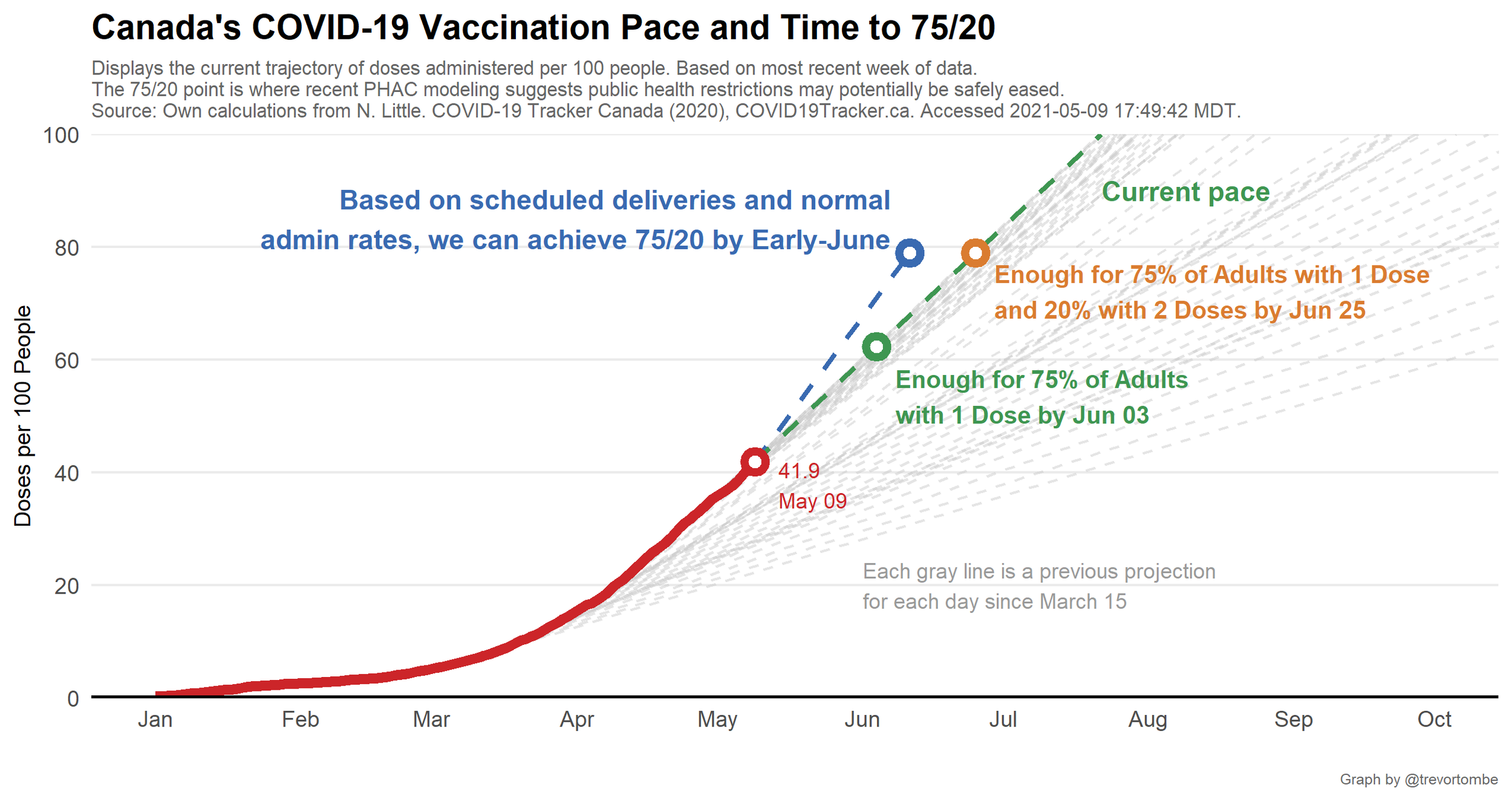
  • Employment and other updates We’re hopefully in the final phase of the deadly part of the pandemic here in Canada, and though COVID will be with us for the long haul, there is increasing optimism that increasing vaccinations will bring us to a pretty broad re-opening soon. Public health modelling suggests that many restrictions can be lifted when 75% have had their first shot and 20% are fully vaccinated, which should happen sometime early to mid June based on the latest data. We have a pretty low rate of vaccine hesitancy here in BC which is good news for the economic re-opening. (House Hunt Victoria)

oot_2021q1-1620237728.0764.png
homes-for-sale-victoria-househunt.png
US-mortgages-by-credit-score.jpeg
Whatever it is, the way you tell your story online can make all the difference.

Cryptocurrency Scrutiny, Vaccine Passports, Trump and Twitter

Monday morning news drop

  • As Scrutiny of Cryptocurrency Grows, the Industry Turns to K Street Companies behind digital currencies are rushing to hire well-connected lobbyists, lawyers and consultants as the battle over how to regulate them intensifies. (New York Times)

  • The economics of movie product placements Today’s films are brimming with products from big-name brands. How exactly do these partnerships work? Each year, hundreds of products — cars, computers, clothing, kitchen appliances, and lawn chairs — grace the silver screen. (The Hustle)

  • 10 Things You Shouldn’t Care About as an Investor It’s never been easier to pay attention to everything that’s going on with the markets, economy, individual companies or your own portfolio. People used to get their paper statements in the mail on a monthly basis to know what was going on with their investments. Now we can watch the changes in market values instantaneously. (A Wealth of Common Sense)

  • The Climate Solution Actually Adding Millions of Tons of CO2 Into the Atmosphere New research shows that California’s climate policy created up to 39 million carbon credits that aren’t achieving real carbon savings. But companies can buy these forest offsets to justify polluting more anyway. (ProPublica)

  • COVID-19: Leaked reports show B.C. health authorities withholding data from the public B.C. doesn’t make anywhere near the same level of detail available to the public as other provinces (Vancouver Sun)

  • Why getting vaccinated for Covid-19 is more popular in the UK than in the US The UK has world-leading vaccine enthusiasm. What can the rest of the world learn? (Vox)

  • Vaccine Passports This is where business and law intersect, and not peacefully. (Lefsetz)

pace_national_projection_7520.png
  • Trump’s Big Lie Devoured the G.O.P. and Now Eyes Our Democracy We are not OK. America’s democracy is still in real danger. In fact, we are closer to a political civil war — more than at any other time in our modern history. Today’s seeming political calm is actually resting on a false bottom that we’re at risk of crashing through at any moment. Because, instead of Trump’s Big Lie fading away, just the opposite is happening — first slowly and now quickly. Under Trump’s command and control from Mar-a-Largo, and with the complicity of most of his party’s leaders, that Big Lie — that the greatest election in our history, when more Republicans and Democrats voted than ever before, in the midst of a pandemic, must have been rigged because Trump lost — has metastasized. It’s being embraced by a solid majority of elected Republicans and ordinary party members — local, state and national. (New York Times)

  • Here’s just how much people have stopped talking about Trump on Facebook and Twitter Trump used to be everywhere on social media. Now he’s nowhere. (Vox)

trump-twitter-mentions.png

Videos of the Week, Coastal Housing Market, Dogecoin, US Economy

Friday morning news drop and videos of the week

  • Tensions mount in Victoria's parks as the end of 24/7 sheltering arrives Temporary shelters are being rejected by some campers despite investments to move everyone indoors (Capital Daily)

  • Is the $1 Trillion Coastal Housing Market a Future Financial Crisis? A decade or two from now — perhaps much sooner — we may be parsing the early signs of the Coastal Housing Crisis, brought on by climate change and its rising seas. If present trends continue, that crisis would also involve soaring home prices and mortgage debt in the most flood-vulnerable zones, and regular, if not catastrophic, flooding that makes once-prized areas undesirable, if not unlivable. (UCLA Anderson Review)

  • Dogecoin Is Surging Again Because Elon Musk Is Going on SNL, and It’s Glorious So here we are. Professional analysts being forced to write things like “Dogecoin is surging because many cryptocurrency traders do not want to miss out on any buzz that stems from Elon Musk’s hosting of Saturday Night Live” because that’s a genuinely important development in the global markets right now. (Slate)

  • The battle for 1042 Cutler Street As landlords and tenants go broke across the U.S., the next crisis point of the pandemic approaches (Washington Post)

  • The Booming U.S. Recovery Is Leaving Some Communities Completely Behind The U.S. economy is on a multi-speed track as minorities in some cities find themselves left behind by the overall boom in hiring, according to a Bloomberg analysis of about a dozen metro areas. (Bloomberg)

  • Bike shops, customers left spinning their wheels as supply dries up In his 30-plus years selling bicycles in Ottawa, Rami Aroosi says he's never seen anything like what's happening this spring. "It's so bad. Normally, I'd probably have close to 1,000 bikes in the shop," said the owner of Foster's Sports Centre on Bank Street. "Now, I don't think I have 20 bikes. And it's not just bikes — we can't get anything that has to do with bicycles." (CBC)

  • The Republican War Against Trans Kids Chase Strangio, who has won a series of landmark court cases in his role as ACLU deputy director for transgender justice, explains why states across the country are suddenly targeting the freedom of trans youth with a wave of new laws. (GQ)

And the Videos of the Week

Danny MacAskill and Kriss Kyle - "This and That" Danny MacAskill and Kriss Kyle - "This and That" - Presented by Endura After a frustrating few months of making and cancelling projects it was amazing to finally get back on the road with my good friend and BMX legend Kriss Kyle. In six days we managed to squeeze in a whole lot of riding on the Mountain Bikes as well as the Trials Bike and BMX and had a lot of fun along the way. A massive thanks to Endura for getting behind this project last minute and allowing us to go out and make this fun film.

ORIGIN ft. Bienvenido Aguado - Utah 

Garibaldi Gold with Matt Bolton Matt Bolton isn't afraid to get his hands dirty while tuning up a trail. As a citizen, rider, and trail builder of Squamish, BC he's also not afraid to send it.

CULTCREW/ COREY WALSH/ 2019 Corey's been shredding all year. most the this video was filmed through out his travels.he sent us the clips and this is what turned up. Not a bad way end the year!

DEMOLITION BMX: Kris Fox - "Mental Exodus" We're proud to present to you, "Mental Exodus". A full length web video part from Kris Fox...

Eithan Osborne and "The Worst Handshape Ever" One of the worst looking surfboards I've ever seen, chunky soft rails, thin and shitty, but Eithan somehow managed to make it look like magic. He also stuck one of the biggest airs on it first session... to be seen in the Snapt 4 movie. Enjoy some surf content

Andy Anderson: a Short Skate Film “Balance - the flow of water, and the consistency of concrete. The ground, and the spaces in between. The simplicity of instability, and the complexities of flat ground. Riding the board, face down, face up, and face out. The purposeful objects of the city, plus the joy of play. The corners, sharp and round. Forwards, backwards, and spinning, all coming together.” - Andy Anderson

Jordan Taylor's "WKND 2021" Part Wall rails, roof rides, film skits and obscure spots, Jordan concocts the quintessential WKND part. Stay tuned past the credits for more fun.

Manny Santiago's "California" Part Manny's mission was to check off NBDs at iconic CA spots—from LA to SF—and he sure as hell came through. This part slays.

REAL Skateboards presents Patrick Praman REAL’s newest am unleashes a barrage of bangers on a host of notorious spots, as his teammates back him up. Congrats, Pat. This is well deserved.

Grosso Forever: Loveletter to Jeff Grosso | SKATE | VANS We all miss Jeff Grosso. It's been a year since Jeff passed so Grosso's long time co-creators, Buddy Nichols and Rick Charnoski of Six Stair Productions, put together this special birthday Loveletters episode to celebrate his life in his own words.

Experience the world's first ski descent of K2 with Andrzej Bargiel

Kevin Backstrom: REAL SNOW 2021 | World of X Games Watch Kevin Backstrom and filmer/editor Markus Wetterberg’s entry into Real Snow 2021, the all-video snowboarding contest brought to you by ESPN's World of X Games.

Federal Debt, Lumber Prices, Chip Shortages, Housing Shortage, and Raising Wages

Thursday morning news drop

  • Annoying Connoisseurs Make Things Better for the Rest of Us You may not like coffee guys but you like the coffee, guys. What happened? Snobs happened. Nerds happened. Connoisseurs happened. For good and for bad. Here are two ways to think about it. (Freddie deBoer)

  • A telecom giant's secret world of low-income housing Eviction warnings, poverty and how wealthy firms quietly control swaths of affordable housing in the Halifax area (CBC)

  • Liberal budget underestimates size of federal deficits, will lead to decades of higher debt: PBO The Liberal government’s 2021 budget underestimates the likely size of federal deficits by about $5.6-billion a year and puts Ottawa on a long-term path of higher debt, says Parliamentary Budget Officer Yves Giroux. (Globe and Mail)

  • Red-hot lumber prices ease pressure on Trudeau to reach softwood deal with U.S. In the two decades until 2020, Canadian forest companies shed capacity and jobs faster than a champion lumberjack could saw through a sturdy Western white pine. Once the country’s dominant resource industry, the forest products sector shrank dramatically as newsprint consumption crumbled and the 2008 U.S. housing crash took a chainsaw to lumber prices. (Globe and Mail)

  • The Chip Shortage Keeps Getting Worse. Why Can’t We Just Make More? Shortages of semiconductors are battering automakers and tech giants, raising alarm bells from Washington to Brussels to Beijing. The crunch has raised a fundamental question for policymakers, customers and investors: Why can’t we just make more chips? There is both a simple answer and a complicated one. The simple version is that making chips is incredibly difficult—and getting tougher. The more complicated answer is that it takes years to build semiconductor fabrication facilities and billions of dollars. (Bloomberg)

  • How Covid Has Reshaped Real Estate From New York to Singapore The retreat from major cities has been the pandemic’s big real-estate story — but that doesn’t mean metropolitan house prices have suddenly got cheap. From New York to London to Sydney, ultra-low interest rates and vast government fiscal support have limited distressed sales. Still, apartment rents have plummeted and suburban bidding wars have erupted as millions of workers have learned they can work from anywhere. (Bloomberg)

  • Everyone wants to buy a home. That means you might end up renting one. Most recently, the pandemic and the premium that it put on private indoor and outdoor space has driven demand and prices. But like many things, this was an existing trend that the pandemic merely accelerated, and it has its roots in a confluence of factors, from an aging millennial population to an influx of private equity. The home sales boom means you might end up renting America’s high home prices could turn us into a nation of renters. (Vox)

  • China Is a Paper Dragon: China’s language and behavior is assertive and provocative, for sure. China’s power is rising, yes. Its behavior at home and abroad is becoming more oppressive and more brutal; that’s also tragically true. But as Americans muster the courage and will to face Chinese realities, that reckoning needs also to appreciate the tremendous capabilities of this country, and the very real limits besetting China: a fast-aging population, massive internal indebtedness, and a regime whose worsening repression suggests its declining popularity. U.S. policy makers should look to the future with a little more confidence and a lot more trust in trade, markets, and the superior potential of a free people. (The Atlantic)

  • 100 Best Sitcoms of All Time From family stories to band-of-misfits hangouts, classic rom-coms to workplace mockumentaries, cringe comedies to antihero showcases, and some shows that defy definition, these are the hundred series that have made us laugh, think, occasionally cry, and laugh all over again. (Rolling Stone)

  • Supportive housing at Mount Edwards has not destroyed its neighbourhood, four years later As plans are implemented across the CRD to house people, can the integration of Mount Edwards be used as a template? (Capital Daily)

  • Finding it Hard to Hire? Try Raising Your Wages Capitalism is an excellent system for creating wealth and getting products and services to where they are most wanted/needed; however, in its unfettered form, it also gave us child labor and slavery. Hence, this is not a market failure, but rather, what we are witnessing is the failure of the political and regulatory systems to create the appropriate minimum wage. Once they do, Capital will become more efficient, Businesses will innovate, automate, and find mays to make higher wages work. So too will Labor adapt — becoming more productive, better educated and more skillful over time. Wages have lagged just about every measure over the past 40 years: CPI Inflation, Health care ands education costs, productivity, corporate profits, C Suite compensation, even the number of billionaires seems to be growing faster than wager. Want to hire qualified candidates who will fill jobs, generate revenue, create profits, and lower your overall cost structure? Perhaps you should consider offering higher starting wages.

hard-to-hire.png

US Recovery Leaving Communities Behind, Chip Shortage, and the Coronavirus

Wednesday morning news drop

  • The Booming U.S. Recovery Is Leaving Some Communities Completely Behind. The U.S. economy is on a multi-speed track as minorities in some cities find themselves left behind by the overall boom in hiring. The recovery is also patchy geographically. The varying speeds matter because the Federal Reserve and the White House vowed to look beyond aggregate figures to more broad-based data before adjusting their monetary and fiscal policies. (Bloomberg)

  • Chip shortage highlights U.S. dependence on fragile supply chain Seventy-five percent of semiconductors, or microchips — the tiny operating brains in just about every modern device — are manufactured in Asia. Lesley Stahl talks with leading-edge chip manufacturers, TSMC and Intel, about the global chip shortage and the future of the industry. (60 Minutes)

  • The Former CEO of Vanguard Has Some Surprising Views on Alternatives Decades after his first book on investing, Jack Brennan has a new update where he discusses everything from endowments to the value of active management. (Institutional Investor)

  • Sorry not sorry This weekend I listened to a lot more Nas and Jay-Z than I did Buffett and Munger. Nas invested in a Coinbase round back in 2013 when the company was raising $25 million at a valuation of $143 million. Coinbase and crypto were far from a sure thing when Nas’s fund bought in. His fund was also early to Lyft, Dropbox and Robinhood, so to dismiss this windfall as a case of getting lucky would be wrong. Warren and Charlie are two idols of mine. I appreciate everything they’ve done and taught to the investor class over decades of success. But they are now 90 and 97 years old respectively and they don’t seem to be curious or interested in the largest trends driving the markets anymore. I don’t think I’ll be any worse off as an investor in the 21st Century, do you? (Reformed Broker)

  • Auto Makers Retreat From 50 Years of ‘Just in Time’ Manufacturing Pressured by pandemic, the hyperefficient supply-chain model pioneered by Toyota is under assault. The hyperefficient auto supply chain symbolized by the words “just in time” is undergoing its biggest transformation in more than half a century, accelerated by the troubles car makers have suffered during the pandemic. After sudden swings in demand, freak weather and a series of accidents, they are reassessing their basic assumption that they could always get the parts they needed when they needed them. (Wall Street Journal)

  • US birth rate falls to lowest point in more than a century The U.S. birth rate fell 4% last year, the largest single-year decrease in nearly 50 years, according to data from the CDC. The rate dropped for moms of every major race and ethnicity, and in nearly age group, falling to the lowest point since federal health officials started tracking it more than a century ago. Births have been declining in younger women for years, as many postponed motherhood and had smaller families. (AP News)

  • How Humanity Gave Itself an Extra Life Between 1920 and 2020, the average human life span doubled. How did we do it? Science mattered — but so did activism. (New York Times)

  • Open Wide and Say “Ahhhh!”: Why Our Dental System Still Bites I was broke, in agony, and out of options. Why more and more people are crowdfunding their dental bills (Walrus)

  • Doctors, scientists who warned officials about oncoming pandemic focus of new Michael Lewis book In his new book, Michael Lewis profiles people who tried to sound the alarm about COVID-19 as officials failed to act. John Dickerson reports. (60 Minutes)

  • The coronavirus vaccine skeptics who changed their minds A growing number of vaccine skeptics have turned vaccinated Americans, a sign of hope amid the slowing pace of vaccinations nationwide. Almost half of all adults have yet to receive a first shot although they are now eligible, and the rolling rate of new shots has dropped to its lowest level since mid-March. “Thinking about herd immunity, thinking about my daughter, thinking about all of that, I just realized — it’s about being a part of something bigger than yourself.” (Washington Post)

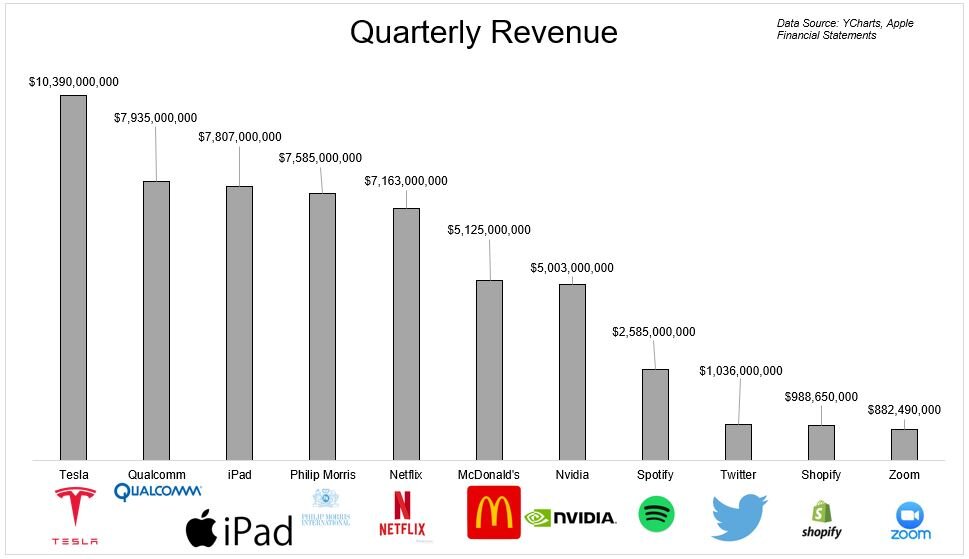
  • The Biggest Threat to Tech The tech giant’s growth continues unabated. The big six now command nearly one-quarter of the entire S&P 500 by market cap. iPad, smallest of Apple’s 5 segments, generated more revenue than Netflix or McDonald’s (Irrelevant Investor)

ipad.jpg
marketcap.jpg

House Hunt Victoria, Vaccines and Coronavirus Variants, and Investing

Tuesday morning news drop

  • Millions Are Saying No to the Vaccines. What Are They Thinking? Feelings about the vaccine are intertwined with feelings about the pandemic: The no-vaxxers I spoke with just don’t care. They’ve traveled, eaten in restaurants, gathered with friends inside, gotten COVID-19 or not gotten COVID-19, survived, and decided it was no big deal. What’s more, they’ve survived while flouting the advice of the CDC, the WHO, Anthony Fauci, Democratic lawmakers, and liberals, whom they don’t trust to give them straight answers on anything virus-related.(The Atlantic)

  • Reaching ‘Herd Immunity’ Is Unlikely in the U.S., Experts Now Believe Widely circulating coronavirus variants and persistent hesitancy about vaccines will keep the goal out of reach. The virus is here to stay, but vaccinating the most vulnerable may be enough to restore normalcy. (New York Times)

  • The U.S. Has the Power to Tamp Down Coronavirus Variants — If We’re Willing to Use It We’re in a race against mutations all around the world. The fastest way to speed vaccination is to let other countries manufacture the vaccines developed by Operation Warp Speed. (Politico)

  • TikTok Is the Place To Go for Financial Advice If You’re a Young Adult TikTok is the place to go for new dances, viral taco recipes—and, now, financial advice. The big benefit of TikTok is that it allows users to dole out and obtain information in short, easily digestible video bites (called TikToks). And that can make unfamiliar, complex topics, such as those related to personal finance and investing, more palatable to a younger audience. But can TikTok users, many of whom are in their teens, 20s or early 30s, trust the financial advice that is increasingly being offered on the social-media platform? (Wall Street Journal)

  • Why the Plan to Raise Taxes for Rich Investors Isn’t Hurting Stocks Investors have largely shrugged off President Biden’s proposal to raise taxes on investment income for wealthy Americans, as the stock market hovers near record highs after news of a strong economic rebound and blockbuster earnings reports. The indifference is well founded, analysts say. Investors care more about economic data and corporate profits than an increase in the capital gains tax. It has usually been this way. (New York Times)

  • Joe Biden is about to test the politics of going big The administration’s theory of policy so far is to go big. The same goes for its politics. Taken together, President Joe Biden’s $2.25 trillion American Jobs Plan and newly introduced $1.8 trillion American Families Plan come out to slightly over $4 trillion in proposed new spending. It’s an enormous investment in American job creation. (Vox)

  • Ten things to know about Canada’s 2021 federal budget On April 21, the Trudeau government tabled the 2021 federal budget. The budget includes additional COVID-related measures,[1] a major childcare initiative, and various forms of support for low-income Canadians (including for housing and homelessness). (Nick Falvo)

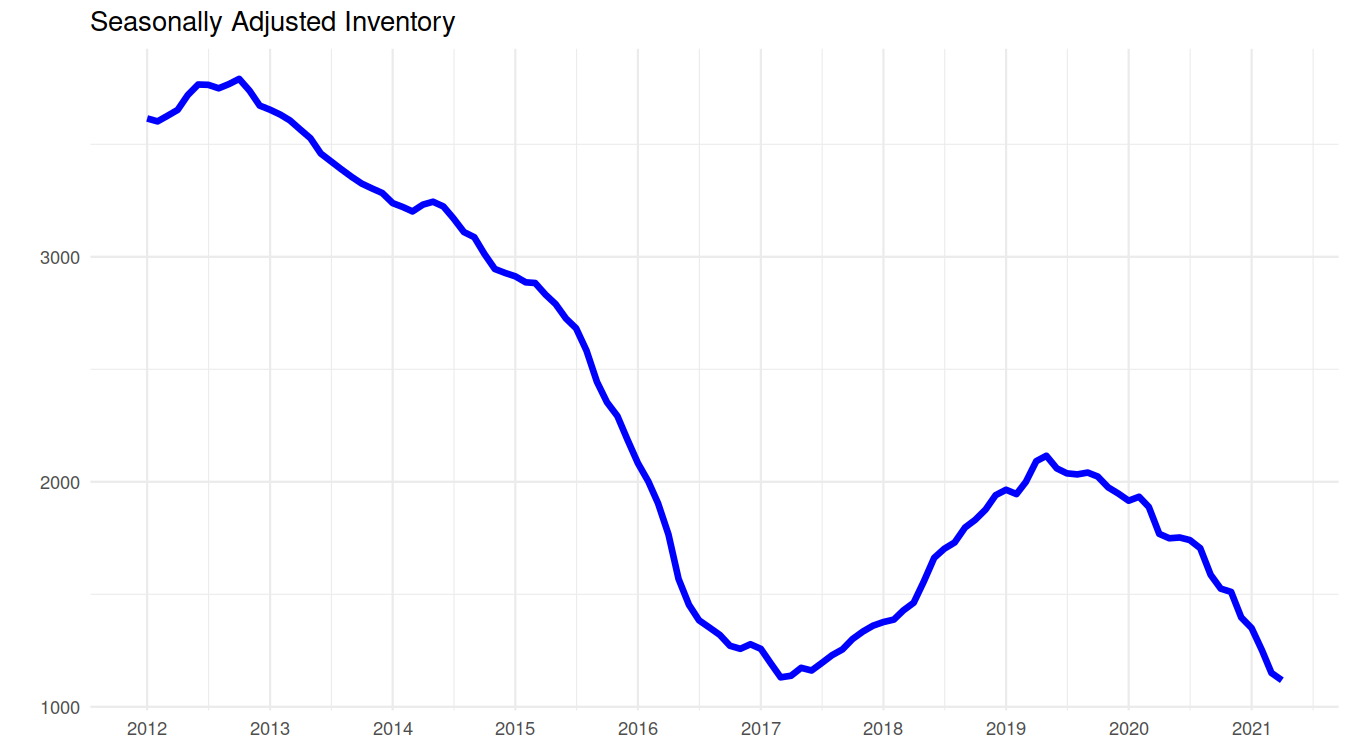
  • House Hunt Victoria April Hot or Top? The 1116 April sales were nearly 4 times last year’s total, and well over half of houses and townhouses went for over their asking price. There was a mere one month of residential inventory, which is a scorching sellers market by any measure. There will be many excited headlines in the news today about real estate. And yet at the same time the small signs that the market has topped out and is starting to slow have also increased. Let’s see what the month looked like in numbers. (House Hunt Victoria)

overask_april-1536x719.jpg
sa_res_inv2.png
sales_may2.jpg

Buffet and Climate Change, US Economy, Vaccine Doubt Is Prolonging the Pandemic

Monday morning news drop

  • In Opposing Climate and Diversity Proposals, Buffett Risks Looking Out of Step Berkshire Hathaway’s shareholders are expected to follow the chairman’s lead and reject demands for more disclosures. (New York Times)

  • How the US won the economic recovery No country handled the economic shock of Covid-19 perfectly. Every country, the US included, made mistakes, sometimes grave mistakes. But a detailed comparison suggests that the US had the strongest economic response to the pandemic, in terms of providing income to its citizens during lockdown and ensuring a strong, rapid recovery as the economy began to reopen. The US will come out of this economically better than any country that was similarly affected by the virus. (Vox)

  • The Price of the Stuff That Makes Everything Is Surging: Global economic rebound is fueling a blistering commodities rally The prices of raw materials used to make almost everything are skyrocketing, and the upward trajectory looks set to continue as the world economy roars back to life. From steel and copper to corn and lumber, commodities started 2021 with a bang, surging to levels not seen for years. The rally threatens to raise the cost of goods from the lunchtime sandwich to gleaming skyscrapers. It’s also lit the fuse on the massive reflation trade that’s gripped markets this year and pushed up inflation expectations. With the U.S. economy pumped up on fiscal stimulus, and Europe’s economy starting to reopen as its vaccination rollout gets into gear, there’s little reason to expect a change in direction. (Bloomberg)

  • State of the Union: Kellyanne Conway and her husband, George, have spent the past several years very publicly divided. Now that America is recovering from Trump, can they? (Vanity Fair)

  • The Slander Industry: To get slander removed, many people hire a “reputation management” company. In my case, it was going to cost roughly $20,000. We soon discovered a secret, hidden behind a smokescreen of fake companies and false identities. The people facilitating slander and the self-proclaimed good guys who help remove it are often one and the same. (New York Times)

  • The Crushing Contradictions of the American University What must one believe in to be willing to borrow tens of thousands of dollars in order to pursue a certification of completion — a B.A.? What would a college have to promise in order to compel someone to do that? What would a bank have to believe to extend this person credit? Or the U.S. government, to guarantee such loans en masse — now roughly $2 trillion? And what would a society have to believe to sustain the system that keeps it all going? Our blind faith in the transformative power of higher ed is slipping. What now? (Chronicle of Higher Education)

  • The Problem With Apple’s Plan to Stop Facebook’s Data Collection “It’s not just giving users the choice,” said Gennie Gebhart, acting activism director of the Electronic Frontier Foundation, the internet-rights advocacy group. “It’s forcing these app developers to ask permission and possibly just stop tracking preemptively so they don’t have this scary permission associated with their app.” There’s a whole industry built around targeting ads using personal data, and if enough people start regularly opting out of tracking, Apple’s new tool could frustrate many of the businesses in this space. (Slate)

  • The U.S. Has the Shots It Needs, But Vaccine Doubt Is Prolonging the Pandemic The bigger problem for everyone, even in a now vaccine-rich country like the U.S., is that there are too many of these fence-sitters to bet on widespread immunity protecting the populace anytime soon. The fewer people who get vaccinated, the longer the pandemic will drag on and the more lives will be lost. America might have the technology and personnel to stamp out the disease, but not necessarily enough trust left in public-health efforts to get it done. (Businessweek)

  • Heartbreaking Photos Show How Dire This Coronavirus Surge In India Is As cases in India surge faster than anywhere in the world, Indians struggle to care for their family members who have COVID and mourn lost loved ones. (Buzzfeed)

Videos of the Week, Women in Construction, Stock Market Returns, and Corporate Tax Loopholes

Friday morning news drop and videos of the week

  • Number of women in construction continues to grow in B.C., survey finds A survey conducted by the BC Construction Association (BCCA) indicates the industry is becoming increasingly diverse, with 10,667 credentialed tradeswomen now working in construction in the province. Women now make up 6.2 per cent of the workforce, a 35 per cent increase over a five-year period. (Journal of Commerce)

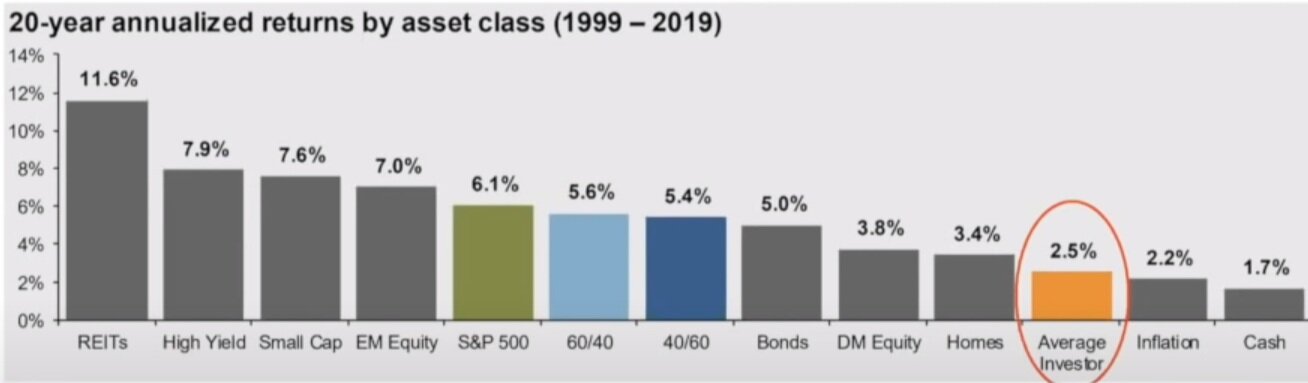
  • Stock Market Returns Are Anything But Average From 1926-2020, average U.S. stock market return was ~10% / year. Investing in the stock market would be way easier if you could simply bank on 10% year in and year out. Unfortunately, it doesn’t work that way. It’s the Catch-22 of investing in risk assets. If you want consistency over the long haul, you have to accept lower returns. And if you want higher returns over the long haul, you have to accept more volatility. (Wealth of Common Sense)

  • Corporate Tax Loopholes Matter More Than a Higher Rate A larger percentage figure just gives companies more room to maneuver to avoid paying what they should. (Bloomberg)

  • Making the Top 1% Its Own Tax Class This administration has decided that the 1% have amassed so much money and power, that they deserve their own (higher) tax bracket. That is the philosophy behind the new cap gains proposal: Treat the top 1% as unique, and tax them accordingly. (TBP)

  • The Economy Is (Almost) Back. It Is Looking Different Than It Used To. The central reality of the economy in 2021 is that it’s profoundly unequal across sectors, unbalanced in ways that have enormous long-term implications for businesses and workers. The economy is recovering rapidly, and is on track to reach the levels of overall G.D.P. that would have been expected before anyone had heard of Covid-19. But that masks some extreme shifts in composition of what the United States is producing. That matters both for the businesses on the losing end of those shifts and for their workers, who may need to find their way into the growing sectors. (New York Times)

  • Bitcoin Doesn’t Fix DeFi, DeFi Fixes Bitcoin “Bitcoin fixes this.” I cringe every time I see this popular meme. I find it worse than nails on a chalkboard. Bitcoin and other cryptocurrency (crypto) supporters seem to wheel this tired trope out for every problem they see, particularly at economic ones. To their credit, they genuinely want to fix the financial system’s problems. I do too! However, crypto’s supporters have their subjects completely reversed. (Integrating Investor)

  • Satellites show world’s glaciers melting faster than ever Glaciers are melting faster, losing 31% more snow and ice per year than they did 15 years earlier, according to three-dimensional satellite measurements of all the world’s mountain glaciers. Scientists, using 20 years of recently declassified satellite data, blame human-caused climate change. (AP)

  • How Much Is the Life of an Essential Worker Worth? The pandemic turned retail and food workers into heroes, but most face risks that they never signed up for (Walrus)

Tomomi Nishikubo

Retired - Calvin Huth

DYLAN STARK REAL HEAT 2021 VIDEO PART

VANS BMX ‘MASH’ - TRANSITION

VANS BMX ‘MASH’ - STREET

Krooked's "Magic Art Supplies" Video Krooked’s young bucks take the reins with Cernicky attacking The City’s walls and hills and McNeely crushing the cuts of VA and LA. Manderson makes another classy addition to the skate canon with his immaculate closing part.

Jake Ilardi's "Coastal Concrete” Part

CE Trucks "Our Turn" Video Deedz, Jacopo, Ronnie, Leo Baker, BA and more fly in formation, covering damn near every corner of the globe before Keegan McCutchen brings it home with his signature grace.

Real Skifi Tenet A paid collaboration with Valio Akatemia. Take off comes before landing. Or does it? What if the outrun is actually the inrun? Real Skifi Tenet

Big 4 Accounting Firms and China, NBA Top Shot, and Lumber Shortages

Thursday morning news drop

  • Big Four auditors squeezed between US and China A fight over access to accounts of Chinese companies spells danger for PwC, Deloitte, EY and KPMG (Financial Times)

  • There Is Growing Segregation In Millennial Wealth Baby boomers and Gen Xers have faced their fair share of calamities — stagflation, the double-dip recession of the 1980s, disco — but millennials have had it really rough. Millennials who got college degrees exited school deep in debt and entered a job market ravaged by the Great Recession. Millennials who didn’t get college degrees found it harder to get a well-paying, blue-collar job, after trade and automation closed avenues that past generations had used to get to the middle class. Child-rearing and first-home-buying years interrupted by a pandemic, all the while slogged through an economy muddied by growing inequality, stagnation and a fading American dream. (NPR)

  • Why Jamie Dimon, Walmart and McDonald’s Want to Hire Ex-Convicts The more than 70 million Americans with criminal records may be a valuable pool of employees as companies juggle labor shortages and jockey for more diverse workforces. (Bloomberg)

  • NBA Top Shot customers can’t get their money out. Experts are confounded NBA Top Shot is the hottest NFT marketplace on the planet. It’s also got a big problem: Customers are complaining about exceptionally long wait times to get paid from sales of digital tokens that can often cost hundreds of thousands of dollars. (CNN)

  • The Psychology of Fighting the Last Crash The future never completely lines up with the past but anyone who has studied market history knows crashes are typically followed by recoveries. That’s just how this works. The problem I witnessed among most endowments and foundations is they couldn’t bring themselves out of the bunker mentality of the crisis. All of the so-called smart money continued to load up on hedge funds, tail-risk strategies and conservative investments following the crash. (A Wealth of Common Sense)

  • The Lumber and Chip Shortages Have the Same Root Cause: Underinvestment Perhaps no manufactured good is less technologically sophisticated than a 2×4, while none is more complex than the latest microprocessors. Yet the U.S. economy is currently suffering from shortages of both lumber and chips—and for similar reasons. In both cases, today’s shortages are the legacy of past busts, which then led to years of underinvestment that has left producers unable to respond to sudden surges in demand. (Barron’s)

2021-lumber-mill-capacity.png
2021-single-family-home-supply.png