Toronto Islands, Value and Growth Investing, Millennial Wealth, and John McAfee

Thursday morning news drop

  • Clash of the Islanders There are 262 homes on the picturesque Toronto Islands, and the battle to get one is epic. Inside the fight over a prime property that’s ripping the tight-knit community in two (Toronto Life)

  • Cancel Amazon Prime The subscription service is Amazon’s greatest—and most terrifying—invention. (Atlantic)

  • Value Investors Don’t Need to Avoid Growth Companies. In Fact, Doing So Can Hurt Returns. Applied Finance argues that despite their prices, growth companies may very well be undervalued in terms of their intrinsic value. (Institutional Investor)

  • World’s Financial Hubs Are Struggling to Return to the Office The journey back to your desk is shaping up to be slow and indirect. Roughly 15 months after locking down to ward off Covid-19, several of the globe’s key financial centers are struggling to get employees back to their offices. Workplace activity in London, New York and San Francisco is still 50% below its normal level, according to mobility data from Google, which tracks the locations of its users. (Bloomberg)

  • Millennials, the Wealthiest Generation? Believe It The world has changed since boomers were young adults, and so has the value of housing, education, and a steady job. (Bloomberg)

  • Texans Are Being Asked to Conserve Power. Are the State’s February Energy Problems Back? On Monday, many Texans began receiving alerts asking them to conserve energy. The request followed significant drops in thermal energy output and a blown transformer at a Texas nuclear plant amid record June demand for power in the state as an early heatwave hits the state. The situation may make you wonder: Is what happened in February happening again, only with extreme temperatures in the reverse direction? (Slate)

  • Alas, John McAfee, We Hardly Knew Ye The erstwhile ‘spokesman for crypto’ has gone to meet his maker. “I regret nothing,” was his final tweet. Here’s an appreciation, sort of. (Decrypt)

Mark Carney, Meme Stonks and Influencers, and Disney Mismanaged Star Wars

Wednesday morning news drop

  • Mark Carney Was the World’s Rock-Star Banker. Now He’s Ready for His Encore Carney led two central banks through two world-shifting crises. Does that make him a political contender? (Walrus)

  • The Fight Over Canada’s Founding Prime Minister Attacks on symbols of nationhood are not merely symbolic actions. They strike at the nationhood the symbol represents. (Atlantic)

  • Influencers Are Luring Investors Flummoxed by Meme Stonks and Options With the rise of free, fast trading from your phone, demand has surged for information about creating wealth, not just managing it. (Bloomberg)

  • How Much Do You Need to Be Financially Independent? When it comes to figuring out how much you will need to be financially independent, we only need to know two things: (1) your annual spending and (2) how many years you need to spend for. Once we know these two things, we can estimate how much you will need to be financially free. (Of Dollars And Data)

  • The SPAC Man Method: Inside the Billionaire Rush for Riches As insiders have raced to push businesses into the public’s hands, they’ve employed a range of maneuvers to boost their fortunes. (Bloomberg Wealth)

  • How Disney Mismanaged the ‘Star Wars’ Universe And how The Mandalorian can restore the true power of George Lucas’s galaxy (The Atlantic)

  • What It’s Really Like to Be a Wall Street Whistleblower SEC’s Office of the Whistleblower has splashed out nearly a billion dollars in its cash-for-tips program. But it’s not for the faint of heart. (Institutional Investor)

Timber! Commodities are down notably from their peaks just a few weeks ago

Change-in-Commodity-prices-2021-.png

Inflation, 5 Day Workweek, Job Market, ESG, and Disc Golf

Tuesday morning news drop

  • As Lumber Prices Fall, the Threat of Inflation Loses Its Bite Costs soared partly because of do-it-yourselfers’ spending stimulus checks, but a month of declines show that consumers aren’t about to. (New York Times)

  • The economy isn’t going back to February 2020. Fundamental shifts have occurred. A new era has arrived of greater worker power, higher housing costs and very different ways of doing business. (Washington Post)

  • Kill the 5-Day Workweek Reducing hours without reducing pay would reignite an essential but long-forgotten moral project: making American life less about work. (The Atlantic)

  • What Quitters Understand About the Job Market More Americans are telling their boss to shove it. Is the workplace undergoing a revolution—or just a post-pandemic spasm? (The Atlantic)

  • ESG Has So Far Been a Rich World Phenomenon. But Emerging Markets Are Catching Up. Investors weigh in on the importance of ESG in these markets and investment opportunities in a post-pandemic world. (Institutional Investor)

  • This one email explains Apple I love this email for a lot of reasons, not the least of which is that you can extrapolate from it the very reasons Apple has remained such a vital force in the industry for the past decade. The gist of it is that SVP of Software Engineering, Bertrand Serlet, sent an email in October of 2007, just three months after the iPhone was launched. (TechCrunch)

  • The Most Important Thing That’s Happened in Our Lifetime? It never made sense to me that Silicon Valley was creating all of these wonderful applications yet so many people in tech still had to work in Silicon Valley. That’s obviously changing now and not just for those in the Bay Area. (A Wealth of Common Sense)

  • How Republicans Became the ‘Barstool’ Party The Barstool-ification of the GOP could reconfigure its cultural politics for a generation. (Politico)

  • The Rise of the $10 Million Disc Golf Celebrity How much can athletes really make in niche sports? A whole lot more than you might think. Disc golfer Paul McBeth set a new standard by signing an eight-figure endorsement contract—and his deal might only be the beginning. (Ringer)

commodities-to-equities-ratio.png

Examining the environmental impact of Bute Inlet landslide British Columbia scientists and a First Nation are examining the environmental impact of a powerful landslide near Bute Inlet, 220 kilometres northwest of Vancouver, which carved a canyon through a creek bed and destroyed trees and fish habitats.

Business Luck, Boats, and Cheap Credit

Monday morning news drop

  • Don’t Underestimate the Power of Luck When It Comes to Success in Business Managers are very prone to both benchmarking and stereotyping. These practices lead them into underestimating the power of luck, so that they often attribute success to capabilities and failure to bad luck in people or organizations they see as having the attributes of greatness, while they discount capabilities and attribute success to luck in people or organizations that do not conform to their ideas of greatness. (HBR)

  • Add Boats to the List of What’s Hard to Find (and More Expensive) Sales and charters of boats of all sizes are up this summer. You can forget about bargaining, brokers say. (New York Times)

  • How bankruptcy lets oil and gas companies evade cleanup rules "It's basically bankruptcy for profit." A battle over who is responsible for cleaning up hundreds of oil and gas rigs in the Gulf of Mexico is quietly playing out in a bankruptcy court in southern Texas. The contestants in this game of fossil fuel infrastructure hot potato: Fieldwood Energy, an offshore drilling company attempting to offload more than $7 billion in environmental cleanup responsibilities. (Grist)

  • How QAnon captured the American church The cult has taken hold among Evangelical Christians (UnHerd)

  • A brief history of credit measures What if we changed the regulations for now to prevent buyers fueled by FOMO from getting drunk on cheap credit? (House Hunt Victoria)

credit_history-1536x690.png

Videos of the Week and Inflation is at 3.6%

Friday morning news drop and videos of the week

  • Canada's inflation rate rises to highest level in a decade, at 3.6% Rate looks especially high because May of 2020 was a low point for the economy, but things are heating up (CBC)

  • Why Executives Need to Take the Leap on ESG and Corporate Purpose In a post-pandemic world, consumers won’t just accept brands at face value. To succeed, companies must demonstrate their commitment to positive ESG practices that support corporate purpose—or risk failing (Walrus)

  • How To Prepare For a Lengthy Bull Market The other side of preparing for bear markets is preparing for a bull market. Yeah, that’s right, I said it. I know valuations are high. I know the U.S. stock market has been positive 11 out of the past 12 years. I know the past 15 months or so have been a crazy orgy of excess and speculation in certain parts of the market. But bull markets can last longer than you think. (A Wealth of Common Sense)

  • How to Have a Roaring 2020s (Without Wild Inflation) The greatest boom in U.S. history is the one we experienced during the mobilization for World War II. In our popular memory, imagery of scarcity and household belt-tightening to help the war effort abounds. But in reality, at an aggregate level, there was no fall in household consumption during the war years. (New York Times)

  • Crypto Die-Hards Built a $90 Billion Wall Street on the Internet Automated protocols running on the internet are paying traders to provide liquidity for unregulated, decentralized markets. (Businessweek)

  • Is there something wrong with the air in South Portland, Maine? Residents have lived near more than 100 massive petroleum storage tanks for decades, never really knowing if they’re breathing in dangerous chemicals. Now they’re fighting to find out. (Boston Globe)

Videos of the Week

10+ Insane Whips In Slo Mo From Crankworx Innsbruck 2021 Crankworx Innsbruck started off with a bang, quite literally, with riders going way past sideways at the official European Whip Off presented by POC. Which one was your favorite?

Insane Kamloops One Shot | Reece Wallace Chromag Family member Reece Wallace rides the Kamloops Bike Ranch closely followed by Calvin Huth's FPV drone in this epic one shot.

CULTCREW/ NORTH EAST/ DEHART, BEGIN, MAGS

OUT THE WINDOW - Gage Sharp

Jamie Foy's "Sunshine State" Dickies Part Foy returns to Florida to unleash a firestorm of NBDs on the thoroughly trafficked region. Might need a few views for this one to soak in.

Sam Atkins "Segway" Part There’s an elegance to Sam’s approach as he strikes Australia’s sets with a timeless arsenal. That closing 360 flip says it all.

Commodities, Meme Stocks, CEO Pay, and Soccer Turf

Thursday morning news drop

  • The Commodities Boom Is Luring Criminals to Make Bigger and Bolder Scores The pandemic, soaring prices, and economic pain have combined to create perfect conditions for thieves and fraudsters. (Businessweek)

  • Meme Stocks Aren’t New, But Their Biggest Fans Are The difference from the Nifty Fifty or dot-com mania is that now anyone with a dollar and a smartphone has the power to move markets. (Bloomberg)

  • GameStop. Dogecoin. Now AMC. Do meme traders need to be protected from themselves? “If you’re trading like it’s a game, you’re probably going to lose.” (Vox)

  • Everyone’s a Rising Star When Debt Is Cheap Rock-bottom financing has led to a wave of credit upgrades, but how will those ratings hold up when borrowing costs increase? (Bloomberg)

  • Bill Ackman Sent a Text to the CEO of Mastercard. What Happened Next Is a Parable for ESG. A yearlong campaign to hold major companies accountable for online sexual abuse met with little success — until a New York Times article got a hedge fund manager involved. (Institutional Investor)

  • Meager Rewards for Workers, Exceptionally Rich Pay for C.E.O.s The gap between workers and C.E.O.s widened during the pandemic as public companies granted top executives some of the richest pay packages ever. (New York Times)

  • Silicon Valley Thought India Was Its Future. Now Everything Has Changed. It once made obvious business sense for Big Tech to focus on India. When digital companies expanded to international audiences throughout the globalizing 2000s, they found a perfect receptor in the Asian subcontinent: an increasingly online, billion-strong, newly capitalist nation ready to welcome foreign business. But this quickly disintegrated, and the bargain tech execs drove in embracing an already-notorious figure like Modi became much harder. (Slate)

  • The Silicon Valley of turf’: how the UK’s pursuit of the perfect pitch changed football They used to look like quagmires, ice rinks or dustbowls, depending on the time of year. But as big money entered football, pristine pitches became crucial to the sport’s image – and groundskeepers became stars (The Guardian)

Bitcoin, Cryptocurrencies, Housing Markets, and California's Drought Disaster

Wednesday morning news drop

  • The Brutal Truth About Bitcoin Despite their high valuations on paper, a collapse of Bitcoin and other cryptocurrencies is unlikely to rattle the financial system. Banks have mostly stayed on the sidelines. As with any speculative bubble, naïve investors who come to the party late are at greatest risk of losses. The government should certainly caution retail investors that, much like in the GameStop saga, they act at their own peril. Securities that enable speculation on Bitcoin prices are already regulated, but there is not much more the government can or ought to do. (New York Times)

  • Fed explores ‘once in a century’ bid to remake the U.S. dollar The rise of private cryptocurrencies motivated the Fed to start considering a digital dollar to be used alongside the traditional paper currency. (Politico)

  • How ‘Chaos’ In the Shipping Industry Is Choking The Economy Economists are concerned that the plumbing provided by these miracle boxes and the vessels that transport them is clogged. It’s making it more difficult for stores to restock their shelves, manufacturers, carmakers and builders to get the parts they need, and farmers to export their products. It’s an important reason, analysts say, that we’re seeing consumer prices surge. (NPR)

  • Wall Street isn’t to blame for the chaotic housing market The boogeyman isn’t who you want it to be. (Vox)

  • Housing Markets Flash 2008 Style Warnings New Zealand, Canada and Sweden rank as the world’s frothiest housing markets, based on key indicators. The U.K. and the U.S. are also near the top of the risk rankings. (Bloomberg)

  • Philosophy’s lack of progress: For centuries, all philosophers seem to have done is question and debate. Why do philosophical problems resist solution? (Aeon)

  • Photos: California’s Growing Drought Disaster After two of the driest years in decades, many of California’s reservoirs are expected to reach record-setting lows this summer, four years after exiting the state’s most recent drought emergency. Lake Oroville, the second-largest reservoir in California, stands at about 37 percent of its capacity. A declared drought emergency for most of the state as farmers are coping with the lack of irrigation water, and fire crews are preparing for a potentially disastrous fire season. (The Atlantic)

House Hunt Victoria, Skilled Trades Certification in B.C, Vaccines and Formal Education

Tuesday morning news drop

  • Mandatory Skills Trades Certification in BC Skilled Trades Certification means uncertified workers in selected trades will need to become certified or register as an apprentice with the Industry Training Authority (ITA) to be legally able to work in that trade. (BC Government)

  • The Amazon That Customers Don’t See Each year, hundreds of thousands of workers churn through a vast mechanism that hires and monitors, disciplines and fires. Amid the pandemic, the already strained system lurched. (New York Times)

  • Alberta's COVID-19 vaccination rates tied to levels of formal education, data shows An analysis of COVID-19 vaccination rates in Alberta suggests one socio-economic factor, in particular, is correlated to vaccine uptake. And it's not income, language or cultural barriers. (CBC)

  • The Most Important Thing to Know About Inflation Right Now For the past two months, the cost of living has been rising quickly. In May, the Consumer Price Index jumped 0.6 percent, faster than economists anticipated. It was the second largest monthly increase in more than a decade, just behind April’s 0.8 percent spike. (Slate)

  • The Green Revolution Is Being Built on a Very Dirty Industry: The battle against climate change is relying on the same polluting building block that drove the second Industrial Revolution a century and a half ago: Steel (Bloomberg)

  • Lithium Gold Rush: Inside the Race to Power Electric Vehicles A race is on to produce lithium in the United States, but competing projects are taking very different approaches to extracting the vital raw material. Some might not be very green. (New York Times)

  • Winners and Losers of the Work-From-Home Revolution High-income workers at highly profitable companies will benefit greatly. Downtown landlords won’t. (The Atlantic)

  • Renting Is Cheaper Than Buying, Almost Everywhere The choice, however, is almost always about money, and in today’s hot seller’s market, a lack of available homes and skyrocketing prices have stymied many aspiring buyers. The flip side has been falling rents, especially in cities, where landlords struggle to fill record numbers of vacant apartments by offering rent cuts and concessions. Although rents show signs of recovering, it’s still a good time to sign a lease. (New York Times)

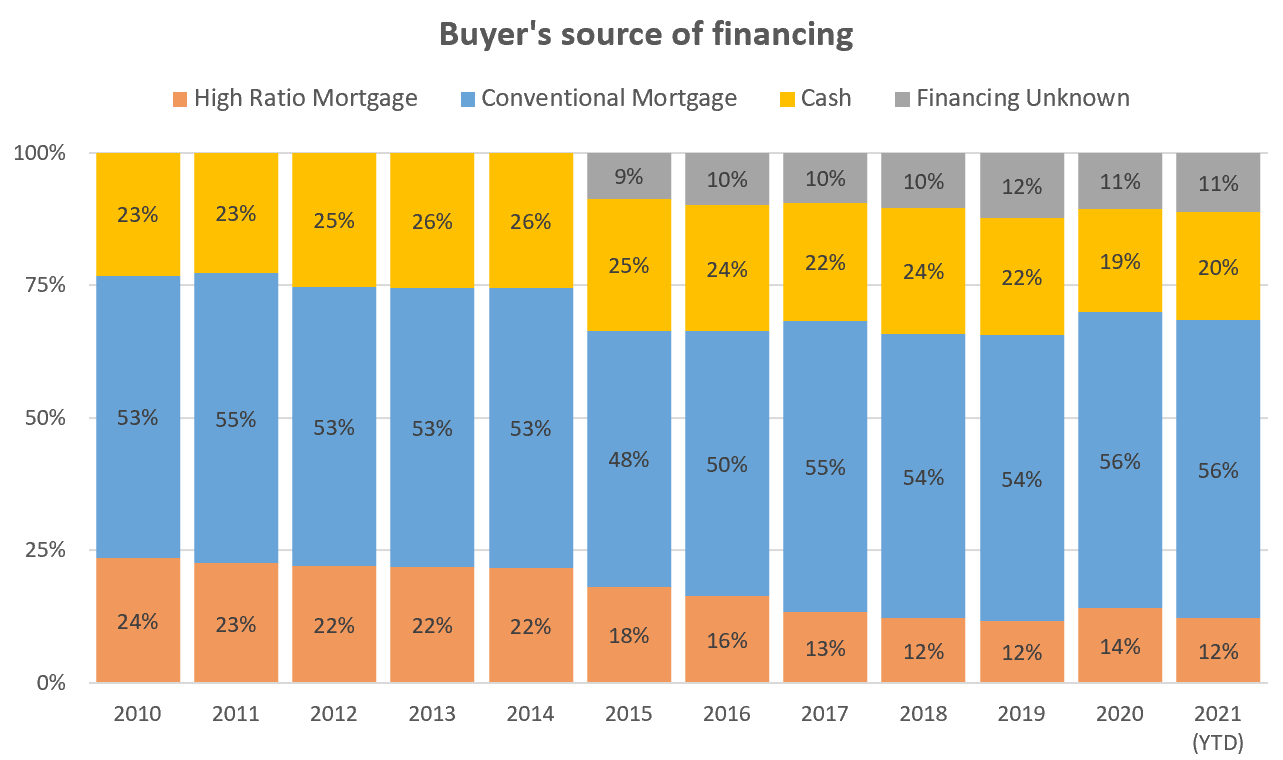
  • Insights from the VREB Buyer Survey Outside of the usual data on prices, sales, and inventory, the VREB also surveys buyers’ agents after each sale to collect some information about the buyer. Outside of a few missed months during the pandemic, we have about 10 years of data from those surveys now available.(House Hunt Victoria)

cmapopchangeageadj.png
house-hunt-victoria-bc-sources-of-financing.png
house-hunt-victoria-over_ask_june14.png

Lumber Prices, Real Estate, Crypto, Vaccination Rates, and the Tax Squeeze

Monday morning news drop

  • Why is lumber so expensive right now? An illustrated explainer of the factors driving up the market. (The Hustle)

  • Yes, Real Estate Prices Are Soaring, and No, It’s Not a Bubble The parallels are hard to ignore: the record prices, the bidding wars, the subdivisions that fill up as soon as they’re built, the resourceful buyer who clinched a deal by dropping off cupcakes that matched the home’s interior paint colors. Today’s real estate market feels a lot like the bubble market circa 2006. There’s one very big difference between then and now, though: Mortgage loans are much harder to get. (Businessweek)

  • There’s a New Vision for Crypto, and It’s Wildly Different From Bitcoin Give Bitcoin some credit: A nearly $1 trillion asset has been memed into existence, despite being backed by nothing. The market is still treating the rest of the crypto space as a monolith. It’s time for that to change. (Bloomberg)

  • There’s A Stark Red-Blue Divide When It Comes To States’ Vaccination Rates “The top 22 states (including D.C.) with the highest adult vaccination rates all went to Joe Biden in the 2020 presidential election … Trump won 17 of the 18 states with the lowest adult vaccination rates.” (NPR)

  • Why I’m Not Worried U.S. Household Debt Is At Record Highs For once it’s not just the top 10% or even the top 1% who are better off. Wealth for the bottom 50% is at an all-time high:; The same is true for the 50th to 90th percentile. (Wealth of Common Sense)

  • World’s Richest Face Tax Squeeze After 40% Run-Up in Fortunes The world’s wealthiest 500 individuals are now worth $8.4 trillion, up more than 40% in the year and a half since the global pandemic began its devastation. Meanwhile, the economy’s biggest winners, the tech corporations that created many of these vast fortunes, pay lower tax rates than grocery clerks, and their mega-wealthy founders can exploit legal loopholes to pass huge windfalls onto heirs largely tax-free. (Bloomberg)

  • King of Cards: As a new generation gets into sports memorabilia, Ken Goldin — market maker, evangelist, therapist — is cashing in on priceless pieces of cardboard. (Businessweek)

Videos of the Week, Interest Rates, Commuting to Work, and Excess Bank Capital

Friday morning news drop and videos of the week

  • Why Interest Rates Have to Stay Low For a Very Long Time Now, you could make the case that higher inflation is a good thing because it actually reduces the debt load in real terms. And if the Fed keeps short-term rates on the floor it’s possible government spending could still be funded with low borrowing costs. But higher inflation and low interest rates can’t coexist forever. Eventually, something has to give. (A Wealth of Common Sense)

  • The Future of Power Is Transcontinental, Submarine Supergrids Coal, gas and even nuclear plants can be built close to the markets they serve, but the utility-scale solar and wind farms essential to meet climate targets often can’t. They need to be put wherever the wind and sun are strongest, which can be hundreds or thousands of miles from urban centers. Long cables can also connect peak afternoon solar power in one time zone to peak evening demand in another, reducing the price volatility caused by mismatches in supply and demand as well as the need for fossil-fueled back up capacity when the sun or wind fade. (Businessweek)

  • The Psychological Benefits of Commuting to Work Here’s the strange part: Many people liberated from the commute have experienced a void they can’t quite name. In it, all theaters of life collapse into one. There are no beginnings or endings. The hero’s journey never happens. The threshold goes uncrossed. And employers—even the ones that have provided the tools for remote work—see cause for alarm. (The Atlantic)

  • Can Removing Highways Fix America’s Cities? Highways radically reshaped cities, destroying dense downtown neighborhoods, dividing many Black communities and increasing car dependence.Now, some cities are looking to take them out. But reconnecting neighborhoods is more complicated than breaking them apart. (New York Times)

  • 'Big dividend increases coming' as Big Six sitting on 'unheard of' levels of excess capital Dividend hikes, share buybacks and acquisitions are primary options of deploying billions in extra cash (Financial Post)

Stefanie-big-bank-war-chest.png

Videos of the week

Dark Hollow | Dion Agius | Full Length Film “Joe G and I have been working on Dark Hollow for the past few years. It’s grown and evolved over time, but it has always taken its core inspiration from my home state of Tasmania. The film is our vision of how the world could be if we looked after it, and features appearances from some of my best friends, including Craig Anderson and Chippa Wilson.” – Dion Agius

Dean Tennant | Welcome to the NOBL Family When NOBL moved to Vancouver Island last year, we knew we had to connect with Dean Tennant. His video edits inspired a whole generation of riders (and still do). To welcome him to the NOBL family, there was no other option but to film him at Mt. Prevost, a place synonymous with his riding and free-racing style. Enjoy 2 minutes of Dean doing what he does best!

WELCOME DYLAN LEWIS ÉCLAT BMX proudly welcomes Dylan Lewis to the family. Dylan's riding needs no introduction, no one blasts a quarter like this guy. We're stoked to welcome Dylan into the fold and have him repping éclat down under.

ROUGH CUT: Louie Lopez' "Seize the Seconds" Part Louie’s Cons part was one of the highlights of 2020. See all the madness that couldn’t fit in the final cut.

Jack O'Grady's "Pass~Port" Part Trick after trick of jaw-dropping mania, Jack attacks Sydney like nobody before. Think that cover was a hoax? See for yourself.