Supertowers, Ransomware, Evergrande, and Minor League Baseball

Wednesday morning news drop

  • The Canadian Construction Association has taken a stance. The Canadian Construction Association recently sent out an email to all its members. In it, CCA Mary Van Buren clarified the association’s stance on vaccinations. (On-Site)

  • Luxury Supertowers Are Going Even Higher (Don’t Mind the Swaying!) Advances in concrete, elevators, and engineering have created a new breed of buildings. (Businessweek)

  • Financing a Net Zero Economy: The Consequences of Physical Climate Risk for Banks This report offers detailed recommendations to guide the banking industry in fully measuring, analyzing, and acting against threats posed by the physical risks of climate change. It sets out a practical roadmap to help banks conduct risk assessments and incorporate climate risks into their day-to-day decision-making. (Ceres)

  • Is Taiwan Next? In Taipei, young people like Nancy Tao Chen Ying watched as the Hong Kong protests were brutally extinguished. Now they wonder what’s in their future. (New York Times)

  • What the Bloody Hell is Happening with Evergrande? Shenzhen-based The Evergrande Group ($EGRNF) is China’s second largest property developer by sales and the 122nd largest developer in the world by revenue according to the 2021 Fortune Global 500 List. (Petition)

  • America Is Being Held for Ransom. It Needs to Fight Back. The digital scourge known as ransomware — in which hackers shut down electronic systems until a ransom is paid — is worse than ever. To combat the ransomware problem, the Biden administration has so far taken a two-prong approach: concerted diplomacy with nations harboring cybercriminals and expanded defensive capabilities at home. (New York Times)

  • Minor Threat MLB puts the farm system out to pasture (Harpers)

Victoria Condo Real Estate, Evergrande, and Facebook's Misinformation

Tuesday morning news drop

  • Why everybody’s hiring but nobody’s getting hired America’s broken hiring system, explained. (Vox)

  • Teetering property developer Evergrande sparks contagion fears for China's economy Company with $300 billion US debt load poised to miss key interest payment (CBC)

  • Why Buying the Dip is a Terrible Investment Strategy Previously I’ve written about why buying the dip can’t beat dollar cost averaging, even if you were God. (Dollars and Data)

  • The Crashes That Nobody’s Talking About The stock market is having a very good year. The S&P 500 printed 53 new all-time highs through the end of August, which is the most to that point in any year ever. Year-to-date, the index is up more than 20%. But as always, you have to look inside the index to understand that not every stock is moving in the same direction. (Irrelevant Investor)

  • This Ain’t It The index has been within 5% of its all-time high for the last 220 days. This streak, which looks like it’s coming to an end, is the 8th longest, going back to 1950. (Irrelevant Investor)

  • Peter Thiel’s Origin Story His ideology dominates Silicon Valley. It began to form when he was an angry young man. (Intelligencer)

  • Troll farms reached 140 million Americans a month on Facebook before 2020 election, internal report shows “This is not normal. This is not healthy.” (MIT Technology Review)

  • The Algorithm Tweaks Won’t Save Us What do you do about Facebook? (Galaxy Brain)

  • Jon Stewart Isn’t Laughing: He understands if you are delighted by his return to TV. But like the subjects he’ll cover on Apple’s ‘The Problem With Jon Stewart,’ his comeback is a little more complicated: “It’s ‘The Daily Show,’ but less entertaining — but also maybe more complete.” (Hollywood Reporter)

  • A lot of salmon died’: Ahousaht Guardians look to watershed restoration amid B.C.’s dangerously dry summer The province’s prolonged drought is exacerbating the damage done to Bedwell River by decades of forestry around Tofino. Now, First Nations and conservation groups are teaming up to protect salmon and bring the watershed back to life (Narwhal)

  • The condo outlook When the pandemic hit, it was clear pretty early that detached house prices would be very resilient to any potential drops. Prices were rising before, and COVID shifted preferences towards more space. The condo market was more uncertain, with sales depressed until last fall and prices unstable. However since last November it was also evident that the condo market was going to see a leg up in prices. Condos have been on a tear since then, jumping about 15% in price. (House Hunt Victoria)

rental_starts-victoria-bc-real-estate.png
victoria-homes-not-owner-occupied-dwellings.png

Scottie Barnes, Wrestling With Fashion, ESG Investing, and Instagram is Toxic for Teens

Monday morning news drop

  • What's Good, Toronto? It feels like we’re about to do something special together - Scottie Barnes. I wanted to say right off the bat, the way this fanbase has already embraced me…. I’m really starting to feel like a Raptor for real. Like I have my own part to play in the next chapter of this story. I don’t feel like I even have the words yet to say how much this all means to me. (The Players Tribune)

  • Long Live the Wrestling Promo Look It's been a long time since pro wrestlers were style icons outside the ring—but that seems to be changing, one plaid scarf at a time. (GQ)

  • Why the Empire State Building, and New York, May Never Be the Same It once symbolized an urban way of working, and the city’s resilience. In the pandemic’s second year, the future of the world’s most famous skyscraper is in doubt. (New York Times)

  • The Trillion-Dollar Fantasy: Linking ESG Investing to Planetary Impact Here’s what’s wrong. Investors are finally taking ESG investment seriously. But as currently practiced, most ESG investing delivers little to no social or environmental impact. (Institutional Investor)

  • The Exponential Age will transform economics forever It’s hard for us to fathom exponential change – but our inability to do so could tear apart businesses, economies and the fabric of society (Wired)

  • Wall Street Influencers Are Making $500,000, Topping Even Bankers Finance firms have long struggled to reach young and new customers — until now. (Bloomberg)

  • Peter Thiel Gamed Silicon Valley, Donald Trump, and Democracy to Make Billions, Tax-Free In an exclusive excerpt from The Contrarian, a new biography, the disruption-preaching power broker is revealed as just another rich guy desperate to keep his fortune from the IRS. (Businessweek)

  • The tangled history of mRNA vaccines In late 1987, Robert Malone performed a landmark experiment. He mixed strands of messenger RNA with droplets of fat, to create a kind of molecular stew. Human cells bathed in this genetic gumbo absorbed the mRNA, and began producing proteins from it. Sinc then, hundreds of scientists had worked on mRNA vaccines for decades before the coronavirus pandemic brought a breakthrough. (Nature)

  • Dinosaur Cowboys Are Hunting for the Next $32 Million T. Rex Fossils have become a hot new asset class. Paleontologists aren’t thrilled, but for Clayton Phipps and his peers, it’s a living. (Businessweek)

  • Why Americans Die So Much U.S. life spans, which have fallen behind those in Europe, are telling us something important about American society (The Atlantic)

  • Facebook Knows Instagram Is Toxic for Teen Girls, Company Documents Show Its own in-depth research shows a significant teen mental-health issue that Facebook plays down in public (WSJ) and (NBC)

  • Social Media Is Attention Alcohol A fun product has the same downsides as booze. Instagram’s own internal research makes the case better than any critic. (The Atlantic)

Videos of the Week, Construction Tradespeople Shortage, and Housing

Friday morning news drop and videos of the week

  • Canada faces skilled labour crunch when 700,000 tradespeople retire this decade, warns RBC Workforce will see a 10,000-worker deficit in 56 nationally recognized so-called Red Seal trades over next five years (RBC)

  • America’s Inflation Story Is Entering a New Phase Idiosyncratic price spikes due to reopening and troubles in the motor vehicle supply chain are fading or reversing. But keep an eye on housing, health care, and restaurants. (The Overshoot)

  • Future Returns: Navigating the Municipal Bond Market The benefits of owning the highest quality of these tax-free securities relative to Treasuries or investment-grade corporate bonds have diminished as the rush to munis has pushed prices higher, and yields lower. But high prices, and low yields, haven’t quashed investor interest in munis. (Penta)

  • Fossil fuel subsidies are one of Canada’s biggest climate conundrums: where do the parties stand? In 2009, when Canada and other G20 nations first pledged to tackle fossil fuel subsidies, a collective promise was made to do away with ‘inefficient’ subsidies. But the term inefficient has never been defined, giving governments and political parties during this election a significant amount of wiggle room (Narwhal)

  • Most fossil-fuel reserves must remain untapped to hit 1.5 °C warming goal Modelling suggests that many planned coal, oil and gas extraction projects will not be viable if the world hopes to achieve climate targets. (Nature)

  • The housing theory of everything Western housing shortages do not just prevent many from ever affording their own home. They also drive inequality, climate change, low productivity growth, obesity, and even falling fertility rates. (Works in Progress)

  • Green Party Housing Platform The Green Party’s pitch about re-focusing CMHC’s core mandate is bold, and their platform focuses a lot on homelessness. However, most of the Green Party’s commitments lack nuance, and many encroach on provincial/territorial jurisdiction. I get the impression party officials have spoken extensively to grassroots activists, and less so to experienced practitioners. (Nick Falvo)

  • It’s getting harder for people to believe that Facebook is a net good for society A new series of reports from the Wall Street Journal, “The Facebook files,” provides damning evidence that Facebook has studied and long known that its products cause measurable, real-world harm — including on teenagers’ mental health — and then stifled that research while denying and downplaying that harm to the public. Perhaps the latest Facebook scandal might stick. (Recode)

  • What’s Behind the Wave of Immersive Van Gogh Exhibits There are nearly 40 Impressionist-ish installations across the U.S., thanks to “Emily in Paris.” Do the exhibitions live up to the hype? (Bloomberg)

  • An interview with Mary-Kate and Ashley Olsen The sisters, who by then needed no introduction as childhood stars turned tween idols, started The Row at just 18 years old. Their backgrounds were unexpected training grounds for a career in fashion. Not that they would ever talk about that time in too much detail. (i-D)

Videos of the Week

John John in Europe -- LE VIEUX MONDE EN ROUGE

If I was goofy -- JJF surfing the other way

Alex Volokhov - Svoboda: Svoboda is a Slavic word tied to an expression of freedom. Mountain bike athlete Alex Volokhov conveys that sense of creativity through his own riding and trail-building, with values further ingrained into him from the considerable time he spent with the late Jordie Lunn. The cumulative months spent completely alone in the pouring rain hauling dirt or digging through difficult roots are completely justified in the pursuit of creation, and giving life to an idea built from the ground up. Director: Liam Mullany.

RESURGENCE | Anthony Messere Building upon a decade of competing at the highest level of freeride and slopestyle competitions around the world, Anthony Messere’s riding career is undergoing a resurgence; still boosting to the moon off a left hip, but to a new level of enjoyment and creativity aboard Polygon Bikes.

GABRIEL CHAVEZ AT DIRT WORLD

Best BMX Riding from the Battle of Hastings2021

FELIX PRANGENBERG // WORLD OF UNCERTAINTY - ÉCLAT BMX

Emerica's "THIS" Video Figgy and Collin go back to back, getting buck on bumps and big sets while Dixon and the team jump in to make it a family affair. Don’t blow it—you gotta see THIS.

Shintaro Hongo "WKND" Part Any wall, anywhere, Shintaro puts four down on every surface in his path, while Nikolai, Tanner and Uncle B pop in to add to the hype.

Homegroan by Nate Galligani From the bricks of EMB to the Oakland Courthouse, The Bay’s hallowed grounds provide the perfect backdrop for Drake Johnson, Jonathan Perez, Nico Hiraga, Tory Hereford and friends to get down.

Benny Milam's Summer Dream | ENCHANTED FOREST At Trollhaugen Resort in Dresser, Wisconsin, snowboarders like Benny Milam have developed an innate ability to sniff out features and lines in unexpected places, and make the most of the little things while dreaming big.

Inflation Hits 4.1% in August, Vaccine Requirements in Construction, and Couchsurfing

Thursday morning news drop

  • Inflation rate spikes to 4.1% in August, highest since 2003 Homeowner replacement cost index rising at fastest pace in more than 30 years (CBC)

  • Canada’s big construction players announce vaccination requirements PCL Construction and EllisDon will soon implement vaccination verification requirement programs. (On-Site)

  • Why the Greens’ Housing Platform Is the Best They’re the only party who, instead of fuelling costs, prioritizes non-market housing. (Tyee)

  • You Can’t Stop Evictions If You Don’t Pay People’s Rent The rollout of emergency rental assistance serves as a reminder that policy design needs to be responsive to the needs of those it is meant to serve—in this case both tenants and landlords (Slate)

  • ‘Just Get Me a Box’: Inside the Brutal Realities of Supply Chain Hell Logistics managers are battling the pandemic, a labor shortage, and huge demand to get goods to your front door. (Businessweek)

  • Federal election promises for zero-emission vehicles have a catch As Canadian political parties campaign on increasing zero-emission infrastructure, mining reform advocates warn of the environmental implications of expected rapid growth in mineral extraction (Narwhal)

  • The Megadrought Is Forcing Ranchers to Slaughter Far More Animals Analysts believe that the problem doesn’t stem from the farms or the livestock, but rather the onerous ripples of the heat: “The heat and lack of moisture/rainfall leads to a lack of feed and water, which can make it hard to keep the cattle healthy. … Cattle ranchers have been hauling water to areas where natural water sources have been dried up and have been feeding hay to make up for a lack of forage. … Without that water, heat exposure and exhaustion would cause a lot of harm to the cattle.” (Slate)

  • Paradise lost: The rise and ruin of Couchsurfing.com The once-utopian accommodations site, now headed by an alum of surveillance-analytics firm Palantir, has gone back on its always-free ethos. (Input)

inflation-hits-4-percent-canada.PNG

Norm MacDonald, The True Cost of Carbon, and The Pedestrian Mall

Wednesday morning news drop

  • Norm Macdonald’s 8 Funniest Bits, From Turd Ferguson to the Moth Joke (Videos) Comedian died on Tuesday at age 61 after a private bout with cancer (Wrap)

  • Norm Macdonald, Still in Search of the Perfect Joke He has won a cult following by playing the wise fool, but his comedic ambitions are much greater than that. If he could only hold down a job. (New York Times)

  • Inflation Is Popping From Sydney to San Francisco. It May Be a Good Sign. Inflation has surged across advanced economies. The shared experience underlines that price gains come from temporary drivers — for now. (New York Times)

  • We’ve been radically underestimating the true cost of our carbon footprint The Biden administration needs to factor in climate change’s cost in human lives — and what we owe to future generations. (Vox)

  • How the Pandemic Helped Us Recover From the Great Recession For certain industries, 2021 will be their biggest revenue numbers ever, whether it’s in motorcycles or boats or certain other industries. They never recovered from 2006, their prior peak revenue. And in 2021, some of these companies think they’re going to have even higher revenue than that. And so in some weird way, the pandemic has actually led to the recovery from the last recession. (Slate)

  • Lessons From the Rise and Fall of the Pedestrian Mall Car-free shopping streets swept many U.S. cities in the 1960s and ’70s, but few examples survived. Those that did could be models for today’s “open streets.” (CityLab)

  • Why most gas stations don’t make money from selling gas With gas prices climbing up, you may think station owners are getting greedy. But the economics behind the pump tell a different story. (The Hustle)

  • Ebooks Are an Abomination If you hate them, it’s not your fault. If you hate ebooks like I do, that loathing might attach to their dim screens, their wonky typography, their weird pagination, their unnerving ephemerality, or the prison house of a proprietary ecosystem. If you love ebooks, it might be because they are portable, and legible enough, and capable of delivering streams of words, fiction and nonfiction, into your eyes and brain with relative ease. (The Atlantic)

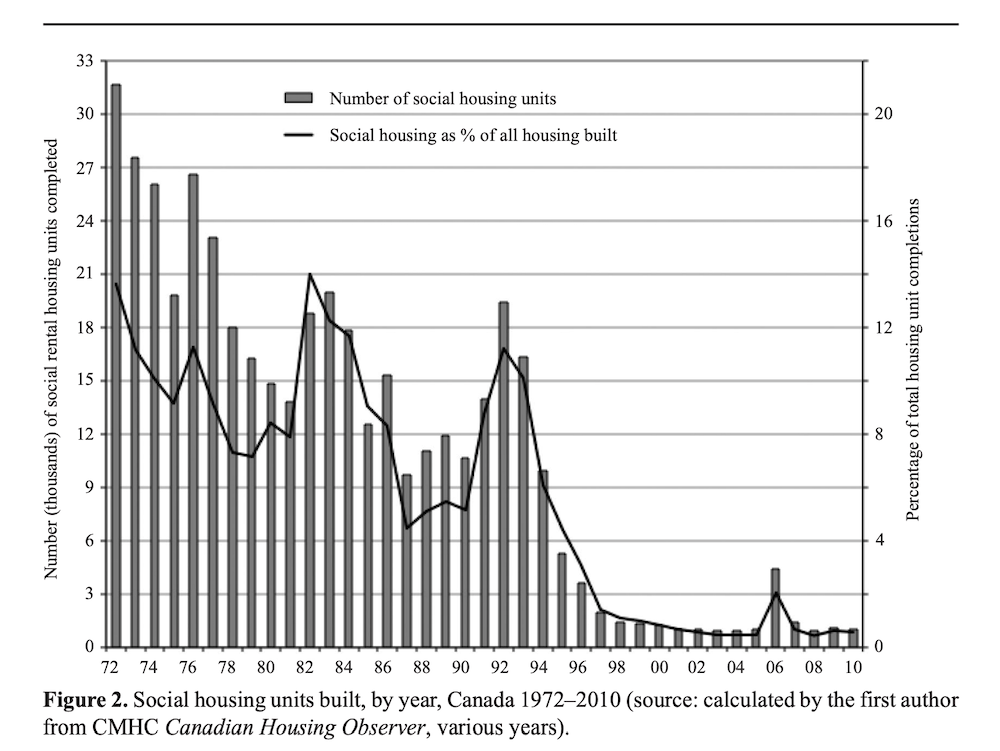
  • A Brief History of BC’s Housing Dumpster Fire The federal government got us into this mess. Here’s how it can get us out. (Tyee)

social-housing-chart.png

House Hunt Victoria Home Affordability, Big Shiny Tunes, and Quantitative Easing

Tuesday morning news drop

  • An oral history of Big Shiny Tunes: the CD that defined a Canadian era Over 13 years and 17 editions, BST became the most popular Canadian compilation of all time (CBC)

  • World’s Largest Carbon-Sucking Plant Starts Making Tiny Dent in Emissions Startups Climeworks and Carbfix are working together to store carbon dioxide removed from the air deep underground. (Bloomberg)

  • No longer a rainforest: B.C.’s Sunshine Coast improvises to survive long-term drought Farmers, gardeners, brewers and regional managers are banding together in a beautiful partnership to both store and distribute water across the extraordinarily parched coastal region, just north of Vancouver. As the area’s reservoirs continue to shrink, residents are experimenting with new ways to manage their relationship with watersheds. (Narwhal)

  • Revolt of the Workers Exploited by apps. Attacked by thieves. Unprotected by police. The city’s 65,000 bikers have only themselves to count on. (Verge)

  • ‘Quantitative Easing’ Isn’t Stimulus, and Never Has Been Nearly 13 years since the Fed launched “quantitative easing” (aka “QE”), it is still misunderstood: One major camp believes it is inflation rocket fuel. The other deems it essential for economic growth. But both groups’ fears hinge on a fatal fallacy: presuming QE is stimulus. It isn’t, never has been. (RCM)

  • Are Central Bankers Ready for Payments Theater? If the Fed and other banks adopt a CBDC, they will inevitably become involved in disputes about what is and isn’t acceptable economic activity (Coindesk)

  • Why Financial Manias Persist We’re on year 12 of bubble predictions. The thing is actual stock market bubbles are relatively rare. (A Wealth of Common Sense)

  • In defense of the “gentrification building” The new multifamily buildings in your neighborhood actually slow displacement. (Vox)

  • A different way to look at affordability Factoring out the real estate bubble of 1981, affordability of single family homes in Victoria has been steadily deteriorating for decades. That is not surprising in a densifying city, and I don’t expect this long run trend to change anytime soon. Affordability by that measure is worse now than it’s been since 1982. (House Hunt Victoria)

Victoria-single-family-home-affordability.png
victoria-single-family-home-affordability-mortgage-paymentt.png

Big City Salaries, Eating Out, Big Bank Competition in Canada, and the Twin Towers

Monday morning news drop

  • Workers Want to Do Their Jobs From Anywhere and Keep Their Big-City Salaries Employers see remote work as an opportunity to save money by cutting pay; employees argue that their work has the same value no matter where they do it (Wall Street Journal)

  • How Eating Out Has Changed, From the Menu To the Tip Early-bird dinners, sturdier pizzas, noisier streets: The pandemic has brought a host of new developments that could last awhile. (New York Times)

  • 'We’ve been preparing for this': Big banks gear up to compete as new challengers loom From open banking to trends such as buy now, pay later, the financial services landscape is shifting. Will Canada's big banks be ready? (Financial Post)

  • 2020 Was Almost Worse Than 2008 In a crisis like the one that hit the world in March 2020, only one thing will restore confidence: limitless cash. An excerpt from Shutdown: How Covid Shook the World’s Economy. (The Atlantic)

  • What Has the Stock Market Taught Us Since 2010? (1) We are in the midst of a paradigm shift. It is different this time. Markets have fundamentally changed. The top performers are going to continue outperforming. (2) Everything is cyclical so it’s time to be a contrarian. It’s not different this time. We’ve seen this movie before. Nothing works forever and always. (A Wealth of Common Sense)

  • LuLaRoe Exposed: Inside an Alleged Billion-Dollar “Pyramid Scheme” Lawsuit-plagued clothing company LuLaRoe—famous for its leggings—is the subject of Amazon’s new docuseries LuLaRich, premiering September 10. (Vanity Fair)

  • After 9/11, the U.S. Got Almost Everything Wrong A mission to rid the world of “terror” and “evil” led America in tragic directions. (The Atlantic)

  • The Silent Partner Cleaning Up Facebook for $500 Million a Year The social network has constructed a vast infrastructure to keep toxic material off its platform. At the center of it is Accenture, the blue-chip consulting firm. (New York Times)

  • How To Remember Minoru Yamasaki’s Twin Towers Perceived as symbols of strength after their destruction on 9/11, the Twin Towers and their Japanese American architect were once criticized in racist and sexist terms. (Bloomberg)

  • The Rise of the Twin Towers Photo Essay (Bloomberg)

streaming-wars-music-subscribers.jpg

Videos of the Week, Interest Rates, and the Great Resignation

Friday morning news drop and videos of the week

  • Bank of Canada plans to raise interest rate before moving to reduce bond holdings Bank of Canada governor Tiff Macklem says the central bank plans to increase interest rates before it reduces the size of its government bond holdings, although its timing on the rate hike will depend on the economic recovery. (CTV)

  • The Biggest Truth Most Leaders Misunderstand About ‘the Great Resignation’ Want your employees to stick around? Flexibility is just the minimum. (Inc)\

  • What You’re Getting Wrong About Burnout The burnout crisis is here, but many managers are failing to address the root causes of stress for employees. (MIT Sloan)

  • 5 Reasons Your Employees Don’t Understand Your Company’s Vision We don’t have a north star.” Despite hours of work developing a business’ visions, mission, and strategy, executives are often surprised by this comment from their employees. Often these senior leaders jump right back into off-site, trying to finesse statements and make things clearer, only to discover the problem still exists. There are five underlying issues for this complaint in employees. First, there is a lack of communication. Explaining the vision once isn’t enough. It must be delivered in a variety of ways — and repeated. Second, some vision and strategy statements are at a high, 50,000-foot-view level, rather than making sure the message is adapted for delivery at all levels of the organization. Third, decisions and individual actions may not be aligned with the commitment communicated. Fourth, team members may dislike or disagree with the vision. Finally, change, by definition, is disruptive. Employees worry about the additional work that might come with the new vision. (HBR)

  • What we talk about when we talk about gentrification The worst problems are in the neighborhoods that aren’t gentrifying. (Vox)

  • Business is Booming Every time you think 21st-century technology has plucked all the low-hanging fruit, you’re surprised at the next one. When you purchase a home, the lender requires you to buy an insurance policy ensuring that you have title to the house. In case, ya know, somebody knocks on your door and says hey, “My great-great-grandparents owned this house.” I’ve now paid title on my home 3 times in under 3 years (thanks to the refi). I recently listened to the CEO of Doma, they’re trying to clean up the problems to a solution that hasn’t changed in a hundred years (Irrelevant Investor)

  • Biden’s SEC is ready to regulate cryptocurrency The Securities and Exchange Commission (SEC) — led by Gary Gensler, who taught a class on cryptocurrency at MIT — is trying to make the case that it can and will regulate whatever cryptocurrency investment schemes it decides fall under its purview. The relative newness and rapid expansion of the cryptocurrency industry have put it in a regulatory gray area. The Internal Revenue Service (IRS) classifies crypto as property. The Commodity Futures Trading Commission (CFTC) considers crypto to be a commodity. And the SEC has said that digital assets “may be securities, depending on the facts and circumstances.” (Recode)

  • The Screen in Your Car Is Beckoning “Infotainment” systems are becoming flashy, feature-packed distractions—and carmakers are just getting started. (Slate)

  • How a Viral Video Bent Reality A conspiracy film energized the “9/11 truther” movement. It also supplied the template for the current age of disinformation. (New York Times)

  • Cameras, Drones and X-Ray Vans: How 9/11 Transformed the N.Y.P.D. Forever Two decades after the attack on New York City, the Police Department is using counterterrorism tools and tactics to combat routine street crime. (New York Times)

  • Looking back on the legacy of Sasha and John Digweed It’s been 13 long years since the duo last played together in Australia. We sat down with them to chat through their incredible journey so far. Chances are you’ve heard of the names Sasha and John Digweed. Separately they are still two of underground electronic music’s most loved and enduring DJs. But together they are a force of nature that has reached an almost mythical status. (Red Bull)

Videos of the Week

Reimagining Slopestyle MTB | Brandon Semenuk REALM Brandon Semenuk is back! This time, he reimagines the true essence of Slopestyle MTB by designing four unique features in hopes of advancing and promoting creativity in the sport, and allowing riders to bring their own creative riding styles to the table. 🛠 .

TOM DUGAN | Odyssey BMX - The Hell Are You DUGAN? Tom Dugan made his way out to California for a week to chill with the crew, ride bikes, and meet new property owners. Featuring Justin Spriet and Broc Raiford too. Enjoy!

GABRIEL CHAVEZ AT DIRT WORLD

UNITED BMX - Clement Santos-Silva - BIENVENUE

SUBSTANCE BMX - PROPER NORTH

The Dime/Vans Video Alexis, Dustin, Leon, Una plus plenty more from the Dime and Vans camp spread the hype from Canada to NYC. Oh yeah, it’s good.

Marcus Shaw's "RÅDZ" éS Footwear Part Marcus grinds away the granite at Oslo’s City Hall with the precision of a sculptor. That switch crooks closer is timeless.

Element Skateboards "Gabriel É Pro!" Part Already a household name in Brazil, Gabriel’s bringing his act Stateside, wreckin’ sets and the O-Side hubba while earning a pro board in the process. This is how it’s done.

Massive Surf Hits Teahupoo, Tahiti, Friday August 13th 2021 Friday, August 13th, 2021 was a day that’ll go down in Teahupoo surf history. Documented by the legendary Tim McKenna, featuring chargers like Kauli Vaast, Nathan Florence, Jerome Sayhoun, Eimeo Czermak, JB Prunier, O’Neill Massin, Ramzi Boukiam, Justine Dupont, Lucas

Shipping Containers, Miserable Tennis Pros, and Victoria Building Permits Skyrocket

Thursday morning news drop

  • How the pandemic turned humble shipping containers into the hottest items on the planet 18 months into the Covid-19 pandemic, global shipping is still in crisis, with backlogs looming over the peak holiday shopping period. One look at the market for steel shipping containers, and it’s clear that a return to normal won’t happen any time soon. Demand for goods, meanwhile, has soared — giving the network of ships, containers and trucks that deliver merchandise around the world little time to catch up. (CNN)

  • The One Thing Successful Private Equity Firms Have in Common Eight industry leaders reveal how they’ve built their private investment empires. (Institutional Investor)

  • Most stocks are duds (yes, you read that right) Highlighting the riskiness of individual stock selection, recent research has demonstrated that around the globe the majority of individual common stocks have generated long-run shareholder losses relative to a Treasury-bill benchmark. The implication is that the large, long-term equity risk premium delivered by the broad stock market was attributable to outsize gains generated by a relatively few high-performing stocks. (Evidence-Based Investor)

  • Crypto’s Rapid Move Into Banking Elicits Alarm in Washington The boom in companies offering cryptocurrency loans and high-yield deposit accounts is disrupting the banking industry and leaving regulators scrambling to catch up. (New York Times)

  • The Other Afghan Women In the countryside, the endless killing of civilians turned women against the occupiers who claimed to be helping them. (New Yorker)

  • Why Does Playing Tennis Make So Many Pros Miserable? Naomi Osaka is taking an indefinite break from tennis as she struggles to find meaning and joy from playing. It’s a sadly familiar script for the sport. (New York Times)

  • The Gentrification of Blue America Economists trying to understand the rise and fall of regions within a country often rely on some form of economic base analysis. The idea is that a region’s overall growth is determined by the performance of its export industries — that is, industries that sell mainly to customers outside the region, such as the technology firms of Silicon Valley and the Los Angeles entertainment complex (or, here in New York, the financial industry). Growth in these industries, however, generates a lot of growth in other sectors, from health care to retail trade, driven by the local spending of the base industries’ companies and employees. (New York Times)

  • Can Progressives Be Convinced That Genetics Matters? The behavior geneticist Kathryn Paige Harden is waging a two-front campaign: on her left are those who assume that genes are irrelevant, on her right those who insist that they’re everything. (New Yorker)

  • Why U.S. Housing Prices Aren’t as Crazy as You Think I remain firmly entrenched in the camp that this isn’t another housing bubble. There are structural and market forces that are causing these price gains, even if it all feels out of hand. But there’s another reason the housing market isn’t as crazy as you think — housing prices in the rest of the developed world have outpaced prices in the U.S. for some time now. (A Wealth of Common Sense)

  • Value of building permits skyrockets in Greater Victoria Greater Victoria building permit values rise 27% while Canada as a whole sees a 4% decline (Goldstream News)

victoria-average-housing-prices-1994.PNG