Digital Privacy, Tax Policy, Inflation, and Nirvana's Nevermind at 30

Monday morning news drop

  • The Battle for Digital Privacy Is Reshaping the Internet As Apple and Google enact privacy changes, businesses are grappling with the fallout, Madison Avenue is fighting back and Facebook has cried foul. (New York Times)

  • How Accounting Giants Craft Favorable Tax Rules From Inside Government Lawyers from top accounting firms do brief stints in the Treasury Department, with the expectation of big raises when they return. (New York Times)

  • The Energy Future Needs Cleaner Batteries They rely on the specific qualities of certain elements to work. The highest-performing lithium-ion batteries on the market today require cobalt, and cobalt is hard to come by. To deal with climate change and power the cars of tomorrow, we’ll have to solve the cobalt problem. (Businessweek)

  • The Pandemic and Climate Crisis Have Shown the Costs of Inaction The past year has laid bare a great many problems that are past due for solutions, including some we already know how to fix. It’s time to stop messing around and do it. (Businessweek)

  • Does Your Favorite Brand Have a Hidden Message? Why computing developed such an Easter egg addiction is unclear, though several catalysts spring to mind: the in-joke meme-rich culture of coding; the joy of experts talking over the heads of users; the quest for credit when programmers were traditionally anonymous; and the painstaking process of compiling code which inspires pains to be taken inside the code. What every company can learn from Alfred Hitchcock, Sherlock Holmes and NASA. (Bloomberg)

  • America’s meat supply is cheap and efficient. Covid-19 showed why that’s a problem. In the wake of pandemic disruptions, even big meatpacking states are exploring ways to create smaller, regional alternatives to our highly centralized meat industry. (Politico)

  • Is the Seller’s Market for Houses Over? Slowing sales, a decline in over-asking contract prices, and fewer bidding wars in many areas are among recent shifts. 59% of Home Offers Written by Redfin Agents Faced Bidding Wars in August—the Lowest Level Since 2020 (New York Times)

  • What to Do in the Case of Sustained Inflation: An important distinction must be made between inflation hedges and stores of value. The former aim to track the short-term fluctuations in inflation or track inflation very precisely. In this category we have instruments such as inflation-indexed bonds and inflation caps. Of more interest to long-term investors should be assets that act as a store of value (those that maintain or even increase their real purchasing power notwithstanding times of inflation). (GMO)

  • File Not Found: A generation that grew up with Google is forcing professors to rethink their lesson plans. It’s possible that the analogy multiple professors pointed to — filing cabinets — is no longer useful since many students Drossman’s age spent their high school years storing documents in the likes of OneDrive and Dropbox rather than in physical spaces. It could also have to do with the other software they’re accustomed to — dominant smartphone apps like Instagram, TikTok, Facebook, and YouTube all involve pulling content from a vast online sea rather than locating it within a nested hierarchy. (The Verge)

  • The digital death of collecting. How platforms mess with our tastes. In the digital era, when everything seems to be a single click away, it’s easy to forget that we have long had physical relationships with the pieces of culture we consume. We store books on bookshelves, mount art on our living-room walls, and keep stacks of vinyl records. When we want to experience something, we seek it out, finding a book by its spine, pulling an album from its case, or opening an app. The way we interact with something — where we store it — also changes the way we consume it. (Kyle Chayka Industries)

  • An Insider from the Purdue Pharma Bankruptcy Speaks Out A new memoir by a victims’ advocate describes a process that seemed fixed from the start. (New Yorker)

  • Nevermind at 30: How the Nirvana album shook the world Thirty years after its release, Seattle rock trio Nirvana’s breakthrough album Nevermind retains an evocative power. When I hear its opening notes, I’m rocketed back to a teenage house party in suburban London; in that darkened parlour, I could feel guitars and machines fighting for my soul. (BBC)

Videos of the Week, Supply Chains, Cheap Meat, and Rural Alberta's Low Vaccine Rates

Friday morning news drop and videos of the week

  • Americans Have No Idea What the Supply Chain Really Is Much of the country’s pandemic response has treated us as somehow separate from the rest of the world and the challenges it endures, but unpredictably empty shelves, rising prices, and long waits are just more proof of how foolish that belief has always been. (The Atlantic)

  • How A Single Missing Part Can Hold Up $5 Million Machines And Unleash Industrial Hell “You’ve got 99 of the 100 parts you need, and you have work-in-process that’s stuck,” says Tim Fiore, who conducts a monthly survey of factory managers for the Institute for Supply Management. (NPR)

  • Where’s the Cheap Beef? The rising prices at the supermarket checkout are a problem with no simple explanation. But Democratic hopes may depend on finding the right answer. (Atlantic)

  • German parties make final push to win support as Merkel era ends Voters head to polls on Sept. 26 after campaign focused on climate, COVID-19 and economy (CBC)

  • This rural Alberta county has a first-dose vaccination rate of only 45%. Here's why

    Some don't trust government, media, while others worry about the impact of misinformation (CBC)

Videos of the Week

A Look Back: Dogtown and Z Boys Dogtown and The Z Boys found an audience outside of the traditional skateboard community. Tony Alva, Peggy Oki, Stacy Peralta and more from the OG Zephyr scene break down why it worked and what was missing.

Trail Tales - The Outlaw Sport: The history and legacy of trail building in Vancouver’s North Shore mountains is incredible, few places on earth have had as much impact on the mountain biking community as these Canadian mountains. Follow Geoff Gulevich and legendary trail builder Todd “Digger” Fiander on their quest to sanction mountain biking trails with the local government. With the evolution of mountain biking as a sport, came the due diligence of preserving the land for future generations to enjoy.

Team Shredits Vol. II - Elijah Barron

This ICONIC FEATURE sparked my passion for FREERIDE MTB

FELIX PRANGENBERG // WORLD OF UNCERTAINTY - ÉCLAT BMX Éclat PRO Felix Prangenberg is having one hell of a year, and the year is far from over. Enjoy the result of Felix's one month stay in California, captured by Grant Castelluzzo. The style and creativity from this kid is something you're not going to be seeing from anyone else so sit back and enjoy Felix doing what he does best.

MARTTI LAINEVOOL - 'YET TO COME' | DIG BMX

Kurt Cobain, Evergrande Debt Crisis, Market Corrections, and Global Gas Prices

Thursday morning news drop

  • My Time with Kurt Cobain Befriending a rock star isn’t necessarily as cool as you’d think—particularly when tragedy happens. (New Yorker)

  • Evergrande Debt Crisis Is Financial Stress Test No One Wanted China’s real estate powder keg threatens President Xi’s drive for stability—and may yet force a too-big-to-fail moment with global implications. (Businessweek)

  • No More Apologies: Inside Facebook’s Push to Defend Its Image Mark Zuckerberg, the chief executive, has signed off on an effort to show users pro-Facebook stories and to distance himself from scandals. (New York Times)

  • Banking the Poor: Lending Without Collateral There’s a disconnect that sits at the heart of banking: the people with the highest demand for loans aren’t the ones banks want to lend to. More often than not, it’s because they don’t have collateral – and there’s nothing a bank likes more than collateral. (Net Interest)

  • The Consequences of a Market Correction The average peak-to-trough drawdown for the S&P 500 in a given calendar year since 1928 is around -16%. There have been 53 double-digit drawdowns overall in this time frame. The average loss for those corrections is -23%, lasting more than 200 days from peak to trough. Over the past 93 years the U.S. stock market has fallen 20% or worse on 21 different occasions. (A Wealth of Common Sense)

  • A decade of the Tim Cook machine In all the enthusiasms, arguments and panics around tech, Apple is the $2tn elephant in the corner, mostly silent and serenely indifferent to the news cycle. It just ships – and it ships market-leading products, with metronomic precision, at massive scale, on a decade-long strategic roadmap. It also likes lecturing its peers. But is there another Jesusphone? (Benedict Evans)

  • Endless to-do list? Here’s how not to waste your life Most approaches to time management make things worse. Start by acknowledging your limits (Financial Times)

  • Global Gas Price Surge Threatens to Dent the Economic Recovery Natural gas prices are undergoing a historic surge, and it’s bad news for everyone from ceramic makers in China to customers of patisseries in Paris. The cost of the fuel is already at record seasonal highs in most major markets and looks likely to rise further, threatening to dent the recovery from the Covid-19 pandemic. (Bloomberg)

pricepressure.jpeg

Supertowers, Ransomware, Evergrande, and Minor League Baseball

Wednesday morning news drop

  • The Canadian Construction Association has taken a stance. The Canadian Construction Association recently sent out an email to all its members. In it, CCA Mary Van Buren clarified the association’s stance on vaccinations. (On-Site)

  • Luxury Supertowers Are Going Even Higher (Don’t Mind the Swaying!) Advances in concrete, elevators, and engineering have created a new breed of buildings. (Businessweek)

  • Financing a Net Zero Economy: The Consequences of Physical Climate Risk for Banks This report offers detailed recommendations to guide the banking industry in fully measuring, analyzing, and acting against threats posed by the physical risks of climate change. It sets out a practical roadmap to help banks conduct risk assessments and incorporate climate risks into their day-to-day decision-making. (Ceres)

  • Is Taiwan Next? In Taipei, young people like Nancy Tao Chen Ying watched as the Hong Kong protests were brutally extinguished. Now they wonder what’s in their future. (New York Times)

  • What the Bloody Hell is Happening with Evergrande? Shenzhen-based The Evergrande Group ($EGRNF) is China’s second largest property developer by sales and the 122nd largest developer in the world by revenue according to the 2021 Fortune Global 500 List. (Petition)

  • America Is Being Held for Ransom. It Needs to Fight Back. The digital scourge known as ransomware — in which hackers shut down electronic systems until a ransom is paid — is worse than ever. To combat the ransomware problem, the Biden administration has so far taken a two-prong approach: concerted diplomacy with nations harboring cybercriminals and expanded defensive capabilities at home. (New York Times)

  • Minor Threat MLB puts the farm system out to pasture (Harpers)

Victoria Condo Real Estate, Evergrande, and Facebook's Misinformation

Tuesday morning news drop

  • Why everybody’s hiring but nobody’s getting hired America’s broken hiring system, explained. (Vox)

  • Teetering property developer Evergrande sparks contagion fears for China's economy Company with $300 billion US debt load poised to miss key interest payment (CBC)

  • Why Buying the Dip is a Terrible Investment Strategy Previously I’ve written about why buying the dip can’t beat dollar cost averaging, even if you were God. (Dollars and Data)

  • The Crashes That Nobody’s Talking About The stock market is having a very good year. The S&P 500 printed 53 new all-time highs through the end of August, which is the most to that point in any year ever. Year-to-date, the index is up more than 20%. But as always, you have to look inside the index to understand that not every stock is moving in the same direction. (Irrelevant Investor)

  • This Ain’t It The index has been within 5% of its all-time high for the last 220 days. This streak, which looks like it’s coming to an end, is the 8th longest, going back to 1950. (Irrelevant Investor)

  • Peter Thiel’s Origin Story His ideology dominates Silicon Valley. It began to form when he was an angry young man. (Intelligencer)

  • Troll farms reached 140 million Americans a month on Facebook before 2020 election, internal report shows “This is not normal. This is not healthy.” (MIT Technology Review)

  • The Algorithm Tweaks Won’t Save Us What do you do about Facebook? (Galaxy Brain)

  • Jon Stewart Isn’t Laughing: He understands if you are delighted by his return to TV. But like the subjects he’ll cover on Apple’s ‘The Problem With Jon Stewart,’ his comeback is a little more complicated: “It’s ‘The Daily Show,’ but less entertaining — but also maybe more complete.” (Hollywood Reporter)

  • A lot of salmon died’: Ahousaht Guardians look to watershed restoration amid B.C.’s dangerously dry summer The province’s prolonged drought is exacerbating the damage done to Bedwell River by decades of forestry around Tofino. Now, First Nations and conservation groups are teaming up to protect salmon and bring the watershed back to life (Narwhal)

  • The condo outlook When the pandemic hit, it was clear pretty early that detached house prices would be very resilient to any potential drops. Prices were rising before, and COVID shifted preferences towards more space. The condo market was more uncertain, with sales depressed until last fall and prices unstable. However since last November it was also evident that the condo market was going to see a leg up in prices. Condos have been on a tear since then, jumping about 15% in price. (House Hunt Victoria)

rental_starts-victoria-bc-real-estate.png
victoria-homes-not-owner-occupied-dwellings.png

Scottie Barnes, Wrestling With Fashion, ESG Investing, and Instagram is Toxic for Teens

Monday morning news drop

  • What's Good, Toronto? It feels like we’re about to do something special together - Scottie Barnes. I wanted to say right off the bat, the way this fanbase has already embraced me…. I’m really starting to feel like a Raptor for real. Like I have my own part to play in the next chapter of this story. I don’t feel like I even have the words yet to say how much this all means to me. (The Players Tribune)

  • Long Live the Wrestling Promo Look It's been a long time since pro wrestlers were style icons outside the ring—but that seems to be changing, one plaid scarf at a time. (GQ)

  • Why the Empire State Building, and New York, May Never Be the Same It once symbolized an urban way of working, and the city’s resilience. In the pandemic’s second year, the future of the world’s most famous skyscraper is in doubt. (New York Times)

  • The Trillion-Dollar Fantasy: Linking ESG Investing to Planetary Impact Here’s what’s wrong. Investors are finally taking ESG investment seriously. But as currently practiced, most ESG investing delivers little to no social or environmental impact. (Institutional Investor)

  • The Exponential Age will transform economics forever It’s hard for us to fathom exponential change – but our inability to do so could tear apart businesses, economies and the fabric of society (Wired)

  • Wall Street Influencers Are Making $500,000, Topping Even Bankers Finance firms have long struggled to reach young and new customers — until now. (Bloomberg)

  • Peter Thiel Gamed Silicon Valley, Donald Trump, and Democracy to Make Billions, Tax-Free In an exclusive excerpt from The Contrarian, a new biography, the disruption-preaching power broker is revealed as just another rich guy desperate to keep his fortune from the IRS. (Businessweek)

  • The tangled history of mRNA vaccines In late 1987, Robert Malone performed a landmark experiment. He mixed strands of messenger RNA with droplets of fat, to create a kind of molecular stew. Human cells bathed in this genetic gumbo absorbed the mRNA, and began producing proteins from it. Sinc then, hundreds of scientists had worked on mRNA vaccines for decades before the coronavirus pandemic brought a breakthrough. (Nature)

  • Dinosaur Cowboys Are Hunting for the Next $32 Million T. Rex Fossils have become a hot new asset class. Paleontologists aren’t thrilled, but for Clayton Phipps and his peers, it’s a living. (Businessweek)

  • Why Americans Die So Much U.S. life spans, which have fallen behind those in Europe, are telling us something important about American society (The Atlantic)

  • Facebook Knows Instagram Is Toxic for Teen Girls, Company Documents Show Its own in-depth research shows a significant teen mental-health issue that Facebook plays down in public (WSJ) and (NBC)

  • Social Media Is Attention Alcohol A fun product has the same downsides as booze. Instagram’s own internal research makes the case better than any critic. (The Atlantic)

Videos of the Week, Construction Tradespeople Shortage, and Housing

Friday morning news drop and videos of the week

  • Canada faces skilled labour crunch when 700,000 tradespeople retire this decade, warns RBC Workforce will see a 10,000-worker deficit in 56 nationally recognized so-called Red Seal trades over next five years (RBC)

  • America’s Inflation Story Is Entering a New Phase Idiosyncratic price spikes due to reopening and troubles in the motor vehicle supply chain are fading or reversing. But keep an eye on housing, health care, and restaurants. (The Overshoot)

  • Future Returns: Navigating the Municipal Bond Market The benefits of owning the highest quality of these tax-free securities relative to Treasuries or investment-grade corporate bonds have diminished as the rush to munis has pushed prices higher, and yields lower. But high prices, and low yields, haven’t quashed investor interest in munis. (Penta)

  • Fossil fuel subsidies are one of Canada’s biggest climate conundrums: where do the parties stand? In 2009, when Canada and other G20 nations first pledged to tackle fossil fuel subsidies, a collective promise was made to do away with ‘inefficient’ subsidies. But the term inefficient has never been defined, giving governments and political parties during this election a significant amount of wiggle room (Narwhal)

  • Most fossil-fuel reserves must remain untapped to hit 1.5 °C warming goal Modelling suggests that many planned coal, oil and gas extraction projects will not be viable if the world hopes to achieve climate targets. (Nature)

  • The housing theory of everything Western housing shortages do not just prevent many from ever affording their own home. They also drive inequality, climate change, low productivity growth, obesity, and even falling fertility rates. (Works in Progress)

  • Green Party Housing Platform The Green Party’s pitch about re-focusing CMHC’s core mandate is bold, and their platform focuses a lot on homelessness. However, most of the Green Party’s commitments lack nuance, and many encroach on provincial/territorial jurisdiction. I get the impression party officials have spoken extensively to grassroots activists, and less so to experienced practitioners. (Nick Falvo)

  • It’s getting harder for people to believe that Facebook is a net good for society A new series of reports from the Wall Street Journal, “The Facebook files,” provides damning evidence that Facebook has studied and long known that its products cause measurable, real-world harm — including on teenagers’ mental health — and then stifled that research while denying and downplaying that harm to the public. Perhaps the latest Facebook scandal might stick. (Recode)

  • What’s Behind the Wave of Immersive Van Gogh Exhibits There are nearly 40 Impressionist-ish installations across the U.S., thanks to “Emily in Paris.” Do the exhibitions live up to the hype? (Bloomberg)

  • An interview with Mary-Kate and Ashley Olsen The sisters, who by then needed no introduction as childhood stars turned tween idols, started The Row at just 18 years old. Their backgrounds were unexpected training grounds for a career in fashion. Not that they would ever talk about that time in too much detail. (i-D)

Videos of the Week

John John in Europe -- LE VIEUX MONDE EN ROUGE

If I was goofy -- JJF surfing the other way

Alex Volokhov - Svoboda: Svoboda is a Slavic word tied to an expression of freedom. Mountain bike athlete Alex Volokhov conveys that sense of creativity through his own riding and trail-building, with values further ingrained into him from the considerable time he spent with the late Jordie Lunn. The cumulative months spent completely alone in the pouring rain hauling dirt or digging through difficult roots are completely justified in the pursuit of creation, and giving life to an idea built from the ground up. Director: Liam Mullany.

RESURGENCE | Anthony Messere Building upon a decade of competing at the highest level of freeride and slopestyle competitions around the world, Anthony Messere’s riding career is undergoing a resurgence; still boosting to the moon off a left hip, but to a new level of enjoyment and creativity aboard Polygon Bikes.

GABRIEL CHAVEZ AT DIRT WORLD

Best BMX Riding from the Battle of Hastings2021

FELIX PRANGENBERG // WORLD OF UNCERTAINTY - ÉCLAT BMX

Emerica's "THIS" Video Figgy and Collin go back to back, getting buck on bumps and big sets while Dixon and the team jump in to make it a family affair. Don’t blow it—you gotta see THIS.

Shintaro Hongo "WKND" Part Any wall, anywhere, Shintaro puts four down on every surface in his path, while Nikolai, Tanner and Uncle B pop in to add to the hype.

Homegroan by Nate Galligani From the bricks of EMB to the Oakland Courthouse, The Bay’s hallowed grounds provide the perfect backdrop for Drake Johnson, Jonathan Perez, Nico Hiraga, Tory Hereford and friends to get down.

Benny Milam's Summer Dream | ENCHANTED FOREST At Trollhaugen Resort in Dresser, Wisconsin, snowboarders like Benny Milam have developed an innate ability to sniff out features and lines in unexpected places, and make the most of the little things while dreaming big.

Inflation Hits 4.1% in August, Vaccine Requirements in Construction, and Couchsurfing

Thursday morning news drop

  • Inflation rate spikes to 4.1% in August, highest since 2003 Homeowner replacement cost index rising at fastest pace in more than 30 years (CBC)

  • Canada’s big construction players announce vaccination requirements PCL Construction and EllisDon will soon implement vaccination verification requirement programs. (On-Site)

  • Why the Greens’ Housing Platform Is the Best They’re the only party who, instead of fuelling costs, prioritizes non-market housing. (Tyee)

  • You Can’t Stop Evictions If You Don’t Pay People’s Rent The rollout of emergency rental assistance serves as a reminder that policy design needs to be responsive to the needs of those it is meant to serve—in this case both tenants and landlords (Slate)

  • ‘Just Get Me a Box’: Inside the Brutal Realities of Supply Chain Hell Logistics managers are battling the pandemic, a labor shortage, and huge demand to get goods to your front door. (Businessweek)

  • Federal election promises for zero-emission vehicles have a catch As Canadian political parties campaign on increasing zero-emission infrastructure, mining reform advocates warn of the environmental implications of expected rapid growth in mineral extraction (Narwhal)

  • The Megadrought Is Forcing Ranchers to Slaughter Far More Animals Analysts believe that the problem doesn’t stem from the farms or the livestock, but rather the onerous ripples of the heat: “The heat and lack of moisture/rainfall leads to a lack of feed and water, which can make it hard to keep the cattle healthy. … Cattle ranchers have been hauling water to areas where natural water sources have been dried up and have been feeding hay to make up for a lack of forage. … Without that water, heat exposure and exhaustion would cause a lot of harm to the cattle.” (Slate)

  • Paradise lost: The rise and ruin of Couchsurfing.com The once-utopian accommodations site, now headed by an alum of surveillance-analytics firm Palantir, has gone back on its always-free ethos. (Input)

inflation-hits-4-percent-canada.PNG

Norm MacDonald, The True Cost of Carbon, and The Pedestrian Mall

Wednesday morning news drop

  • Norm Macdonald’s 8 Funniest Bits, From Turd Ferguson to the Moth Joke (Videos) Comedian died on Tuesday at age 61 after a private bout with cancer (Wrap)

  • Norm Macdonald, Still in Search of the Perfect Joke He has won a cult following by playing the wise fool, but his comedic ambitions are much greater than that. If he could only hold down a job. (New York Times)

  • Inflation Is Popping From Sydney to San Francisco. It May Be a Good Sign. Inflation has surged across advanced economies. The shared experience underlines that price gains come from temporary drivers — for now. (New York Times)

  • We’ve been radically underestimating the true cost of our carbon footprint The Biden administration needs to factor in climate change’s cost in human lives — and what we owe to future generations. (Vox)

  • How the Pandemic Helped Us Recover From the Great Recession For certain industries, 2021 will be their biggest revenue numbers ever, whether it’s in motorcycles or boats or certain other industries. They never recovered from 2006, their prior peak revenue. And in 2021, some of these companies think they’re going to have even higher revenue than that. And so in some weird way, the pandemic has actually led to the recovery from the last recession. (Slate)

  • Lessons From the Rise and Fall of the Pedestrian Mall Car-free shopping streets swept many U.S. cities in the 1960s and ’70s, but few examples survived. Those that did could be models for today’s “open streets.” (CityLab)

  • Why most gas stations don’t make money from selling gas With gas prices climbing up, you may think station owners are getting greedy. But the economics behind the pump tell a different story. (The Hustle)

  • Ebooks Are an Abomination If you hate them, it’s not your fault. If you hate ebooks like I do, that loathing might attach to their dim screens, their wonky typography, their weird pagination, their unnerving ephemerality, or the prison house of a proprietary ecosystem. If you love ebooks, it might be because they are portable, and legible enough, and capable of delivering streams of words, fiction and nonfiction, into your eyes and brain with relative ease. (The Atlantic)

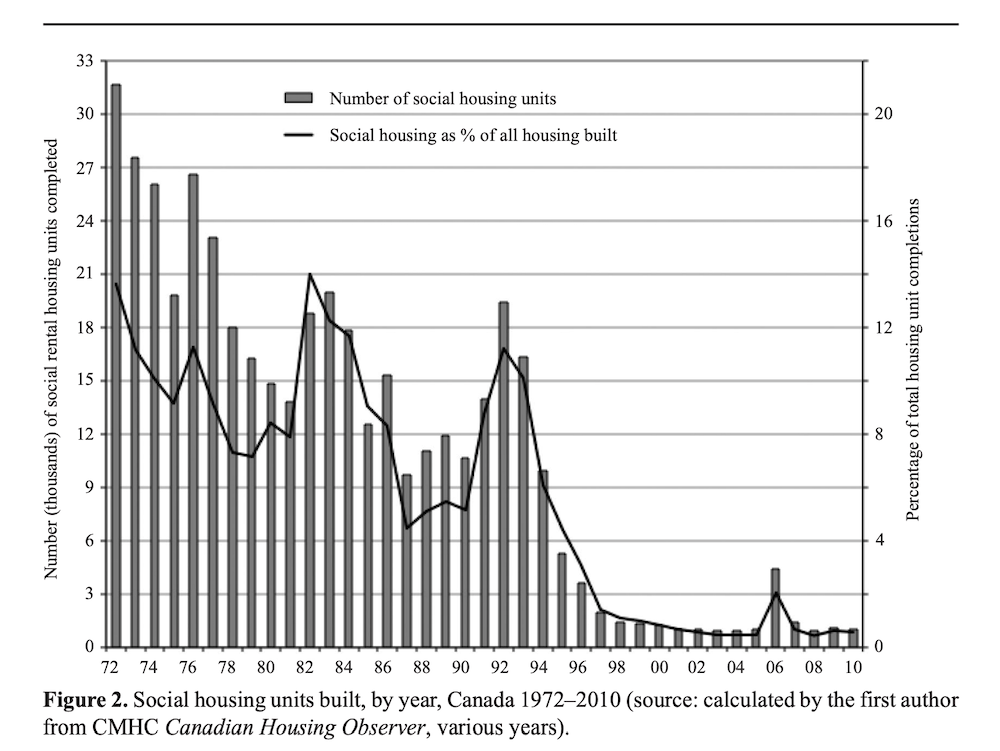
  • A Brief History of BC’s Housing Dumpster Fire The federal government got us into this mess. Here’s how it can get us out. (Tyee)

social-housing-chart.png

House Hunt Victoria Home Affordability, Big Shiny Tunes, and Quantitative Easing

Tuesday morning news drop

  • An oral history of Big Shiny Tunes: the CD that defined a Canadian era Over 13 years and 17 editions, BST became the most popular Canadian compilation of all time (CBC)

  • World’s Largest Carbon-Sucking Plant Starts Making Tiny Dent in Emissions Startups Climeworks and Carbfix are working together to store carbon dioxide removed from the air deep underground. (Bloomberg)

  • No longer a rainforest: B.C.’s Sunshine Coast improvises to survive long-term drought Farmers, gardeners, brewers and regional managers are banding together in a beautiful partnership to both store and distribute water across the extraordinarily parched coastal region, just north of Vancouver. As the area’s reservoirs continue to shrink, residents are experimenting with new ways to manage their relationship with watersheds. (Narwhal)

  • Revolt of the Workers Exploited by apps. Attacked by thieves. Unprotected by police. The city’s 65,000 bikers have only themselves to count on. (Verge)

  • ‘Quantitative Easing’ Isn’t Stimulus, and Never Has Been Nearly 13 years since the Fed launched “quantitative easing” (aka “QE”), it is still misunderstood: One major camp believes it is inflation rocket fuel. The other deems it essential for economic growth. But both groups’ fears hinge on a fatal fallacy: presuming QE is stimulus. It isn’t, never has been. (RCM)

  • Are Central Bankers Ready for Payments Theater? If the Fed and other banks adopt a CBDC, they will inevitably become involved in disputes about what is and isn’t acceptable economic activity (Coindesk)

  • Why Financial Manias Persist We’re on year 12 of bubble predictions. The thing is actual stock market bubbles are relatively rare. (A Wealth of Common Sense)

  • In defense of the “gentrification building” The new multifamily buildings in your neighborhood actually slow displacement. (Vox)

  • A different way to look at affordability Factoring out the real estate bubble of 1981, affordability of single family homes in Victoria has been steadily deteriorating for decades. That is not surprising in a densifying city, and I don’t expect this long run trend to change anytime soon. Affordability by that measure is worse now than it’s been since 1982. (House Hunt Victoria)

Victoria-single-family-home-affordability.png
victoria-single-family-home-affordability-mortgage-paymentt.png