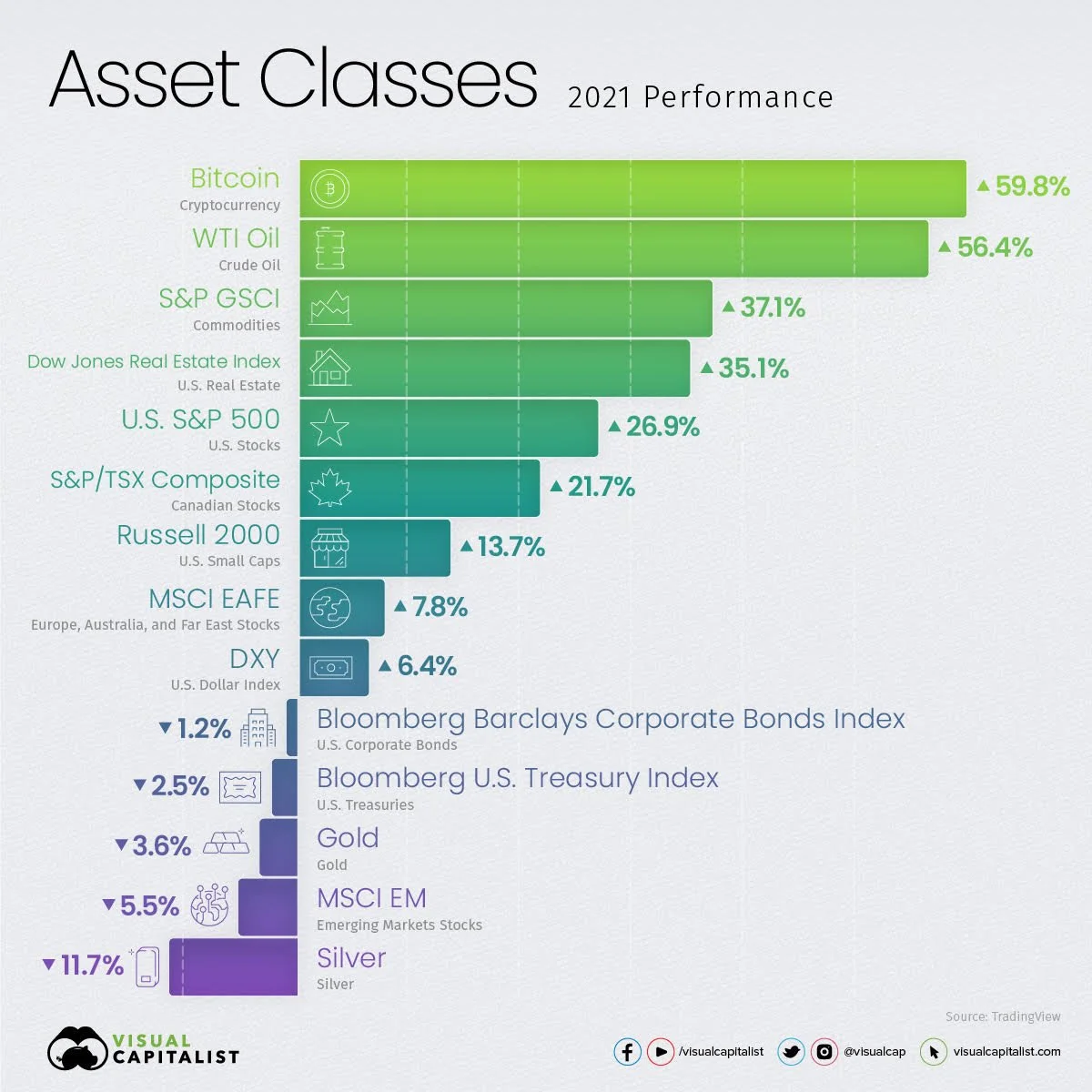
Employee's Job Market, Car Prices Increasing, and Negative Bond Returns

"Eat at a local restaurant tonight. Get the cream sauce. Have a cold pint at 4 o’clock in a mostly empty bar. Go somewhere you’ve never been. Listen to someone you think may have nothing in common with you. Order the steak rare. Eat an oyster. Have a negroni. Have two. Be open to a world where you may not understand or agree with the person next to you, but have a drink with them anyways. Eat slowly. Tip your server. Check in on your friends. Check in on yourself. Enjoy the ride." ― Anthony Bourdain

Wednesday morning news drop

  • Want a 19% Pay Boost? Get a New Job City hiring is bouncing back from Covid, recruiter says Number of jobs available in 2021 now same as in 2019 (Bloomberg)

  • As Employers Scramble to Fill Jobs, Workers Relish a Feeling of Power With plenty of companies hiring, workers are quitting their jobs in droves and starting their own ventures. ‘I refuse to accept a position that’s just a position.’ (Wall Street Journal)

  • New Car Price Keeps Climbing, with Average Now at Almost $47,100: Reduced supply, increased demand: It all adds up to higher prices for the new-car-buying public. (Car and Driver)

  • Rolls-Royce, Bentley, BMW Sales Surge as Cheaper Brands Lag Behind Luxury sales boom as car makers shift scarce chip and raw materials toward high-margin models (Wall Street Journal)

  • New law means significant tax relief when you pass your business on to your kids Under the old law, business owners took an extra tax hit if they sold to their children (Financial Post)

  • Housing affordability 'likely to get worse before it gets better' as listings hit all-time low 'There are currently fewer properties listed for sale in Canada than at any point on record' (Financial Post)

  • After ruining Android messaging, Google says iMessage is too powerful Google failed to compete with iMessage for years. Now it wants Apple to play nice. (Ars Technica)

  • iMessage is the glue that keeps me stuck to the iPhone The accidental social network. (The Verge)

  • What it’s like to make $100k+ walking dogs: The economics of dog walking can be lucrative — but the profession comes with a myriad of wild encounters. (The Hustle)

  • One Thing Covid Can’t Stop: Alcohol Sales: A welcome companion during lockdowns, booze has rebounded to pre-pandemic levels. (Businessweek)

  • Investment in building construction on the rise Investment in building construction hits $18 billion in November. (On-Site)

  • On Inflation, Trust the Market No indicator is perfect, but the market is right a lot more often than the zeitgeist. (Fisher Investments)

Pandemic Burnout and Work, Sustainable Fashion Myth, and Climate Change

Tuesday morning news drop

  • Your work is not your god: welcome to the age of the burnout epidemic The reason why so many of us are at the end of our rope? We allowed work to be what gave our lives meaning. (The Guardian)

  • 11 Trends that Will Shape Work in 2022 and Beyond We’ve been living through the greatest workplace disruption in generations and the level of volatility will not slow down in 2022. New Covid variants will continue to emerge and may cause workplaces to temporarily go remote again. Hybrid work will create more unevenness around where, when, and how much different employees are working. Many employees will be greeted with real wage cuts as annual compensation increases fall behind inflation. These realities will be layered on top of longer-term technological transformation, continued DE&I journeys, and ongoing political disruption and uncertainty. (Harvard Business Review)

  • More than 1 million fewer students are in college. Here’s how that impacts the economy. Compared with the fall of 2019, the last fall semester before the coronavirus pandemic, undergraduate enrollment has fallen a total of 6.6%. That represents the largest two-year decrease in more than 50 years. (NPR)

  • The Myth of Sustainable Fashion Few industries tout their sustainability credentials more forcefully than the fashion industry. But the sad truth is that despite high-profile attempts at innovation, it’s failed to reduce its planetary impact in the past 25 years. Most items are still produced using non-biodegradable petroleum-based synthetics and end up in a landfill. So what can be done? New ESG strategies such as the use of bio-based materials, recycling, and “rent-the-runway” concepts have failed. Instead, we must stop thinking about sustainability as existing on a spectrum. Less unstainable is not sustainable. And governments need to step in to force companies to pay for their negative impact on the planet. The idea of “win-win” and market-based solutions has failed even in one of the most “progressive” industries. (Harvard Business Review)

  • The past seven years have been the hottest in recorded history, new data shows Global temperatures in 2021 were among the highest ever observed, with 25 countries setting new annual records, according to scientists from NASA, NOAA and Berkeley Earth (Washington Post).

  • Protecting voting rights isn’t enough to save democracy Election law expert Richard L. Hasen on the problem of election subversion — and what can be done to stop it. (Vox)

  • COVID Hospitalization Numbers Are as Bad as They Look Many supposedly “incidental” infections aren’t really incidental, and cannot be dismissed. (The Atlantic)

  • We’re All ‘Experts’ Now. That’s Not a Good Thing. It is no wonder that so many of us think that we can parse vaccine trial data, compare personal protective equipment, write school policy and call career scientists idiots on Facebook. We are know-it-alls because we are responsible for knowing everything. And God forbid we should not know something and get scammed. If that happens, it is definitely our fault. (New York Times)

Toxic Culture and the Great Resignation, Pandemics, and Canada's Supreme Court

Monday morning news drop

  • Toxic Culture Is Driving the Great Resignation Research using employee data reveals the top five predictors of attrition and four actions managers can take in the short term to reduce attrition. (MIT Sloan)

  • A new era for the American worker American workers have power. That won’t last forever. More than any other time in recent memory, the present moment offers many Americans a chance to make work better. American employees in 2022 have more leverage over their employers than they have had since the 1970s, the result of a confluence of factors. The pandemic that began in 2020 has prompted a widespread reevaluation about what place work should have in the lives of many Americans, who are known for putting in more hours than people in most other industrialized nations. There’s also been a groundswell of labor organizing that began building momentum in the last decade, due to larger trends like an aging population and growing income inequality. This movement has accelerated in the past two years as the pandemic has brought labor issues to the fore. (Vox)

  • Canada’s Supreme Court is off-balance as ‘large and liberal’ consensus on the Charter falls apart The nine top judges are more divided than ever on the question of how broadly or narrowly to interpret Canadians’ constitutional rights – and while the PMs who appointed them are a factor, that doesn’t tell the whole story (Globe and Mail)

  • Shift to net-zero emissions likely to drive higher inflation, economists say Economists around the world already are warning of greenflation, higher energy prices and consumer costs as the global economy shifts to cleaner energy sources (Financial Post)

  • An Evangelical Climate Scientist Wonders What Went Wrong . “For many people now, hope is a bad word,” says Hayhoe, the chief scientist for the Nature Conservancy as well as a professor of political science at Texas Tech. “They think that hope is false hope; it is wishful thinking. But there are things to do — and we should be doing them.” (NYT Magazine)

  • As Fintech Eats Into Profits, Big Banks Fight Back in Washington Traditional finance and digital upstarts alike claim the other side has an unfair advantage. (Businessweek)

  • Vanguard fires fresh salvo in asset management fee war Group to cut costs on investment funds by $1bn over next four years, chief executive Tim Buckley says. (Financial Times)

  • From living rooms to landfills, some holiday shopping returns take a ‘very sad path’. More than half a trillion dollars. That’s the estimated value of all the stuff that U.S. shoppers bought last year only to return it — more than the economy of Israel or Austria. (NPR)

  • Imagining the unimaginable: The U.S., China and war over Taiwan One way to avoid conflict may be to understand just how destructive it would be. (Grid)

  • Seven ways Republicans are already undermining the 2024 election The next attempted coup will not be a mob attack, but a carefully plotted and even technically legal one. Instead of costumed rioters, the insurrectionists are men in suits and ties. (The Guardian)

  • Longer-Run Economic Consequences of Pandemics What are the long-term effects of pandemics? How do they differ from other economic disasters? We study major pandemics stretching back to the 14th century. Significant macroeconomic after-effects of pandemics persist for decades, with real rates of return substantially depressed, in stark contrast to what happens after wars. Capital is destroyed in wars, but not in pandemics; pandemics instead may induce relative labor scarcity and/or a shift to greater precautionary savings. (Federal Reserve Bank of San Francisco)

  • After the Beanie Baby bubble burst What happens when the frenzy ends and the world doesn’t value your valuables? At the height of Beanie Baby mania in the 1990s, plenty of people genuinely believed the toys might be the key to their retirement or their kids’ college tuition. Some people stole litters of them, and at least one person was reportedly killed in a Beanie-related dispute. Now, when cleaning out their basements or going through bins left behind by their grandparents, some people decide to check in — just in case — to see if they’re sitting on a gold mine of ’90s relics. Most of the time, they aren’t. (Vox)

  • The ‘Future of Food’ Is Already Here — but How Dystopian Is It? At the Food on Demand conference in Las Vegas, the food service industry laid out its vision for a future in which customers never have to wait. Just don’t think too hard about how that’d work. (Eater)

  • The secret MVP of sports? The port-a-potty The concept of mobile restrooms evolved slowly over the years, with centuries of civilizations essentially just doing small tweaks on the chamber pot. The need for portable bathrooms rose in the late 1800s as more and more American jobs drifted into large-scale mining and building projects. An abandoned copper mine in northern Michigan from the turn of the 20th century was recently discovered in remarkably preserved condition, including a wooden box that had been used by miners as their underground bathroom. For miners and construction workers who desperately needed bathrooms while on the job all day, finding a tree or a wooden box often was the best they could do 100 years ago. (ESPN)

Videos of the Week, iMessage and the Green Bubble, and the Omicron Wave

Friday morning news drop

  • Libor, Long the Most Important Number in Finance, Dies at 52 Bankers used it until the end. Regulators say good riddance after its infamous fall. (New York Times)

  • Why Apple’s iMessage Is Winning: Teens Dread the Green Text Bubble The iPhone maker cultivated iMessage as a must-have texting tool for teens. Android users trigger a just-a-little-less-cool green bubble: ‘Ew, that’s gross.’ (Wall Street Journal)

  • Artists say NFTs are helping thieves steal their work at a jaw-dropping rate NFT art sales are booming. Just without some artists’ permission. NFTs were hyped as a way to make sure artists get paid for their work. Now, many creators are struggling to stop a wave of piracy. (NBC News)

  • The Architecture of Tomorrow Mimics Nature to Cool the Planet It’s not just about minimizing environmental harm, but finding ways to regenerate construction materials and restore natural habitats. (Bloomberg)

  • ‘Cage-Free’ Is Basically Meaningless, and Other Lies Your Egg Carton Is Telling You All the language you see printed on a carton of eggs are supposedly there to help you make your egg-related purchases. (Lifehacker)

  • Four charts that analyze how omicron’s wave compares to previous coronavirus peaks The United States continues to see a huge spike in coronavirus cases driven by the omicron variant, with numbers surging to double that of the previous January 2021 peak. (Washington Post)

Videos of the Week

CREATIVE SPACE | Max Fredriksson In Creative Space, Max films at an indoor skatepark, to avoid the harsh Swedish winter. The short edit takes us away from the big jumps and focuses on perfection and creativity that some of us only dream of doing.

Haro Sessions - North Carolina - Day 2: Crew: Ryan Nyquist, Dennis Enarson, Matthias Dandois, Alex Leibrock, and Michael Mogollon. Day two of our trip to Wilmington, North Carolina we head to a local concrete park for way more laughs than riding, but there was riding in there for sure. Michael, Alex, and Nyquist all killed the park as Dennis manned the camera while was on the DNR list from casing the box jump 36 times in a row at Ryan's ramp the day before. We found a gritty street spot under a bride down by the river where Matthias filmed a promo for his upcoming La Bastille Frame release and Michael decided to ride a water landing because that's the new hot thing. We ended the day at maybe the nicest indoor bowl in the world, or one of the nicer ones at least.

éclat - Catching L's: The éclat team hit the highway and took a trip to sin city... Vegas! Missed flights, bloody noses, and a broken van to name a few. The L's piled up. Ty Morrow, Julian Arteaga, Bruno Hoffmann and Pat Freyne kept things moving as they scoped out the offerings in the desert.

Nick Matthews' "Venture X Uprise" Part Nick Matthews' "Venture X Uprise" Part

Nightmare's "Instrument" Video The brutal trailer hinted at the bloodshed and disfigurement, but nothing could prepare us for this Nightmare. These kids are insane.

Micah Evangelista - Bourn: The idea of “home” resonates differently for everyone. For some, your hometown can be a place you’re trying to escape from, but for others it has a magnetic pull that can’t be broken. In this two-year film project, Micah and his mother Julianne reflect on some of the moments and mindsets that have shaped his skiing and his youth. In an entirely foot-powered journey through the Mt. Baker backcountry, he now returns to some of his favourite zones and features with an eagerness to explore them like never before. A film by Micah Evangelista and Doug Jambor. Featuring: Micah Evangelista, Julianne Evangelista, Sophia Rouches, Cody Cirillo, Lucas Wachs, Hank Kennedy, and Cameron Munn.

U.S. Inflation Rises to Yet Another 40-year High of 7%

Thursday morning news drop

  • U.S. inflation rises to yet another 40-year high of 7% The U.S. inflation rate is at its highest level in 40 years and showing no signs of slowing down, new data revealed Wednesday. Higher than previous month's high of 6.8% and in line with expectations (CBC)

  • Trying to make sense of inflation? So is everybody else Markets zig-zag as everyone waits to see how seriously the Fed takes new U.S. data on rising prices (CBC)

  • The Bond Market Refuses to Accept Economic Reality Traders are working off an outdated playbook that assumes this recovery will resemble the sluggish one coming out of the financial crisis. (Bloomberg)

  • High gas prices, oilpatch labour crunch, pipeline friction: The year ahead in energy The last two years have taken energy markets on a wild ride, with oil prices crashing through the basement at the outset of the pandemic and climbing to more than $85 US a barrel last fall. Industry expects busier 2022 as policy-makers sharpen focus on 'net-zero' plans (CBC)

  • Four reasons you’re seeing empty grocery store shelves The omicron surge, extreme weather and record December sales are among the reasons that toilet paper aisle is looking shaky again. (Washington Post)

  • Why Grocery Store Shelves Are Bare. Again. Supply chains are made of people. (Slate)

  • Look Ahead to 2032, at the Very Least: In this season for forecasts and resolutions, investors will be better off if they are able to think 10 or more years ahead, our columnist says. (New York Times)

  • 50 Company Stocks to Watch in 2022 From Airbnb to Volkswagen, keep an eye on these global stocks this year. Factors include growth prospects, management changes, and planned releases of noteworthy products and services. The impact of the Covid-19 pandemic was important, as were growing sales of electric vehicles, the transition to clean energy, China’s increasing regulatory scrutiny, power shortages, and opportunities in the metaverse. (Businessweek)

  • What Is Antivirus Company Norton Even Doing Mining Crypto on Your Computer? when a prominent antivirus firm takes a turn toward cryptocurrency, it’s certainly possible to interpret that move as a sneaky money grab. That was the general gist of Cory Doctorow’s tweet about Norton Crypto this week, in which he pointed out that Norton takes a cut of the cryptocurrencies its users mine (15% percent of the crypto allocated to each miner). But perhaps the more interesting question is what it says about the market for antivirus software that one of the most prominent manufacturers of those products is now going the way of Kodak. (Slate)

  • Half a Billion in Bitcoin, Lost in the Dump For years, a Welshman who threw away the key to his cybercurrency stash has been fighting to excavate the local landfill. (New Yorker)

  • Where buyers came from in 2021 The full year buyer origin data is out, so let’s take a look at what changed and what didn’t about where Victoria buyers moved from in 2021. Remember, this is filled out by agents and is in response to the question “Where is the buyer currently residing?“. That means it’s not a measure of buyer citizenship, and of course it’s always debatable whether someone who moved here to rent for 6 months before purchasing should be considered a local or out of town buyer (in these data they would very likely be considered local). Nevertheless it’s an interesting dataset given it’s been running for 18 years and it seems to match pretty well with both other data sources on migration from StatsCan (figure below) and changes in market activity. (House Hunt Victoria)

Construction Costs Are Up Across North America

Wednesday morning news drop

  • Construction costs up across North America Over the past 12 months, (bid) construction costs have risen by 7.42 per cent in North America, says Rider Levett Bucknall (RLB) in its latest Quarterly Construction Cost Report (QCR). In Canada, costs in Toronto grew more than 13 per cent between October of 2020 and October of 2021. Further west, in Calgary, cost increases were north of 10 per cent. (Rider Levett Bucknall)

  • Lessons From the Tech Bubble It’s one thing to study the past after it was written, it’s another thing to experience it in real-time. Telling future generations about the lockdown cannot possibly convey what it was like to experience it. Looking back at how crazy the numbers got during the dotcom bubble is informative, but data doesn’t tell the whole story. (The Irrelevant Investor)

  • Are We Bullish Enough? Two years ago I made a prediction that got me laughed out of the room. Before we were ever wearing masks, being socially distant, or discussing web3, I argued that, “If history were to repeat itself…the S&P 500 would be 4x higher by 2030 than where it is today.” (Of Dollars and Data)

  • The 3 Biggest Risks to the Market Right Now The biggest risks are often the ones we don’t see coming but the smaller risks can still cause some short-term discomfort. You could always say war or some other crazy variant or a collapse of civilization as we know it but I’m going to focus on market-related risks here. (A Wealth of Common Sense)

  • World’s Biggest Crypto Fortune Began With a Friendly Poker Game With $96 billion, Binance CEO Changpeng Zhao is closing in on tech titans including Facebook’s Mark Zuckerberg and Google’s Larry Page and Sergey Brin. (Bloomberg)

  • Why Tesla Soared as Other Automakers Struggled to Make Cars The yawning disparity between the performance of the electric car company and established automakers last year reflects the technological change roiling the industry. (New York Times)

  • 2024 Chevrolet Silverado EV Revealed with 664 HP, 400-Mile Range Chevy faces off against the F-150 Lightning with its new electric truck. The high-end RST model will offer 664 horsepower and a 10,000-pound towing capacity. (Car and Driver)

  • Sustainability: Where fashion is heading in 2022 Last year, a lot of planning was done around fashion sustainability — but less action. The biggest theme as we head into 2022 is the interconnection between carbon emissions, equity and supply chain. (Vogue Business)

  • How Mo Salah Became the New King of Football Mohamed Salah is the best player in the world right now. The world just hasn’t admitted it yet. (GQ)

The Great Resignation, Housing Market, and Canadian Oil Subsidies

Tuesday morning news drop

  • Quitting is just half the story: the truth behind the ‘Great Resignation’ Workers left their jobs at historic rates, with a record 4.5m quits at the end of November – but it happened against an economic picture that remains difficult to interpret (The Guardian)

  • What We Learned About the Economy in 2021 For once, the government tried overheating the economy. For better and worse, it succeeded. (Upshot)

  • Supply-Chain Issues Leave New Homes Without Garage Doors and Gutters: Home builders blame bottlenecks for huge backlog of uncompleted homes (Wall Street Journal)

  • U.S. Cities With the Most High-Density Housing Builders respond to market conditions when determining what types of structures to build. When demand—and prices—for single-family residences are high, builders are less likely to work on high-density projects. For most of the decade after the Great Recession, high-density units accounted for about one-third of new authorized units, peaking at 38.4% in 2015. (Construction Coverage)

  • Foreign Buyers Own 1 In 10 Recently Built Condos In Canada, 1 In 20 Homes In Total Canadian real estate might have a lot more foreign owners than previously thought. Diving through Statistics Canada (Stat Can) data, we found non-resident participation in homeownership soared in 2020. Non-resident buyers have a small share in property transfer records, but foreign capital is pouring in. In the four provinces tracked, about 1 in 10 recently built condos have a foreign owner. (Better Dwelling)

  • Electric cars aren’t just vehicles. They’re big batteries. To get more Americans in electric vehicles, we all need to realize they can do much more than just get us around. (Recode)

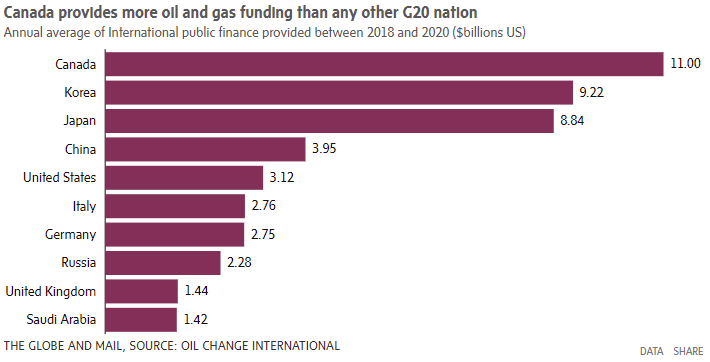
  • Canada has committed to halt financing to the oil and gas industry. To understand what that really means, watch for the fine print A global movement to permanently separate the oil and gas industry from the public purse appears to be gaining momentum, with an overarching objective of repurposing funds to promote renewable energy (Globe and Mail)

Covid's Impact on Health Systems, the Super League Debacle, and Catching an Insurrectionist

Monday morning news drop

  • How the American health system is holding up compared to Canada with Covid Omicron is revealing flaws everywhere — and providing lessons about what can be fixed (CBC)

  • The Omicron LeBrons Want to Stay in the NBA They signed 10-day contracts when the league was ravaged by Covid. Now some of the NBA’s temps are sticking around. The latest variant was their lucky break. (Wall Street Journal)

  • The Great Resignation: Why more Americans are quitting their jobs than ever before We've all seen signs in front of shops, restaurants, and factories: "we're hiring!" "Help wanted!" And now, the Omicron variant is taking a toll on the already depleted workforce. We've wondered how there can be so many open jobs when nearly every employer seems to be offering better pay, benefits and even signing bonuses. (60 Minutes)

  • Titans of Carmaking Are Plotting the Overthrow of Elon Musk Volkswagen and Toyota are coming for Tesla, laying out $170 billion worth of investments to stay on top. (Bloomberg)

  • America needs immigration to grow and thrive The morphing of immigration into a culture-war wedge issue represents a huge economic risk for the United States of America. Immigration isn’t just important for our identity and culture; it’s also crucial for our economy. There are a number of reasons for this, but they all come down to the challenge of an aging, shrinking population. And right-wing culture warriors like Amy Wax are standing in the way. (Noahpinion)

  • ‘There’s no room for error’: The humble tugboat’s crucial role in easing a global crisis Each day on the water, he sees evidence of a seemingly insatiable demand in the comings and goings of container ships, automobile carriers, oil tankers, even the Chiquita banana boat. “Those of us who work out here see everyone’s lives writ large,” he says. “Every day we get a firsthand view of the size and scale of the American economy and American consumerism. Not many appreciate this when they go to the market and buy individual. (Los Angeles Times)

  • How we fixed the ozone layer: When it comes to stories of progress, there aren’t many environmental successes to learn from. Although there are some local and national successes – such as the large reductions in local air pollution in rich countries – there are almost none at the global level. Yet there is one exception: the ozone layer. Humanity’s ability to heal the depleted ozone layer is not only our biggest environmental success, it is the most impressive example of international cooperation on any challenge in history. The story behind humanity’s greatest environmental success is too rarely told and too often taken for granted. This is how humanity fixed the ozone layer and why it matters. (Works in Progress)

  • 100 ways to slightly improve your life without really trying Whether it’s taking fruit to work (and to the bedroom!), being polite to rude strangers or taking up skinny-dipping, here’s a century of ways to make life better, with little effort involved … (The Guardian)

  • To catch an insurrectionist Everyone thought it was cool to take selfies doing crimes until the FBI got all their data from Google and said hello. (Recode)

  • The Super League Debacle Forced Manchester United’s American Owners to Listen to Fans After the Glazer family moved to upend European soccer, supporters of their storied club got a chance to exert some local control. (Bloomberg)

  • How Jessica Simpson Almost Lost Her Name The pop star’s billion-dollar fashion brand fell into the hands of the wrong company. After a two-year battle, she finally bought it back. (Bloomberg)

  • Inside the mind of an NFL kicker The NFL playoffs start next weekend and here's one safe bet: at least a few games will come down to football's great secret hiding in plain sight. We speak of kickers, who score about a third of the points in the NFL, but only get a small fraction of the respect. (60 Minutes)

Videos of the Week, Bond Markets, the Metagame, and Buying Crashing Growth Stocks

Friday morning news drop

  • What Happens When Bonds Lose Money With the Federal Reserve focused on fighting inflation, rate hikes could mean losses for the “safe haven” side of your portfolio. (Businessweek)

  • Rules for Buying Crashing Growth Stocks Reasonable people can differ about what’s causing the selloff. If you wanted to blame it on crazy multiples coming back down to earth, momentum, or anything else, I wouldn’t argue. The question is, what does one do about it. (Irrelevant Investor)

  • With so many cryptocurrencies, why do any of them have value? Doubts grow about the long-term value of cryptocurrency in 2022 as number of tokens expands. (CBC)

  • Money in the Metaverse: In a virtual world full of virtual goods, finance could get weird. (New Yorker)

  • Why You Should Ignore the Metagame In every game there are always two games being played. One is the game itself. The other is the game about the game. This is called the metagame. (Of Dollars and Data)

  • ‘It Takes More Than Money’: Inside Alliance Bernstein’s Efforts to Retain Diverse Talent Amid the great resignation, the asset manager’s two-year-old coaching program is yielding good results. (Institutional Investor)

  • How Bad Are Plastics, Really? Plastic production just keeps expanding, and now is becoming a driving cause of climate change. (The Atlantic)

  • Tesla Model S Goes 752 Miles with a Prototype Battery from a Michigan Startup This 'proof of concept' was meant to show that very long-range, environmentally sustainable battery packs can exist—and ONE, Inc., is about to start building one. (Car and Driver)

  • The clear and present danger of Trump’s enduring ‘Big Lie’ Call it an insurrection or a coup attempt, it was fueled by what’s known as the “Big Lie”: the verifiably false assertion that Trump won. Joe Biden won 306 votes in the Electoral College, while Trump received 232. In the popular vote, Biden won by more than 7 million votes. (NPR)

  • Beyond the riot, Jan. 6 was a dangerously close call. How Trump’s plot nearly succeeded: But this was a close call. Attempts by Trump and his followers to overturn the results of the 2020 election — multi-dimensional efforts of which the assault on the Capitol building was only one element — came dangerously close to succeeding. (ABC News)

Videos of the Week

Sage Cattabriga-Alosa - Daybreak: One thing about backcountry skiing I love is the experience of the early morning mission. There is an element of unknown anticipation and excitement that hangs in the air as you head out, and details are revealed at first light. On the bike those types of mornings have an equal reward. Daybreak is an ode to those mornings.

Dual Slalom at Dimmos - 50to01 and Friends A 2 min little banjo dual at Dimmos on the Fifty track. Big trains, big slams, big grins. Cheers to everyone who came along, and see ya'll for more smiles in 2022!

Brayden Barrett-Hay - New Territory: For most of his life, Barrett-Hay has lived in Eastern Canada, riding his dirt jump bike at home and at the local indoor park. But recently, after many years of competing and establishing himself as a professional mountain bike rider, he felt the need for a change. So, he packed up his bikes and headed west to Vernon, BC. Now in the mountains of Western Canada, he has the advantage of an abundant mountain bike scene with terrain to ride his dirt jumper, downhill, and trail bikes. Watch Brayden bring some of his dirt jump / skate park-style to the mountains in his latest video, New Territory.

DYLAN STARK 2021 MIXTAPE MTB & BMX Every year I make a mix of all my favorite clips from videos or instagram posts for you all to enjoy, Sadly most of the clips nowadays are filmed vertical for "reels" so a lot of footage was unusable and this video isn't as long as they normally are. This video is a compilation of all the best clips of the year put to a soundtrack. Thanks so much for all the support on youtube and instagram over the year, This is for you to enjoy and hopefully motivate you to get outside and ride! Thanks for watching and cant wait to see what 2022 brings!

Jammed Sandwich ft. Erik Elstran: Erik Elstran is back with the third instalment of his self-filmed "Selfstran" series... and what a tasty treat it is.

Alex Donnachie - Fall For The City: Alex Donnachie smashes out another classic Glasgow street part in his newest video 'Fall For The City'... In late September when Alex said he wanted to try and get a video filmed locally before the end of the year, you'd know how optimistic that might seem if you've seen the weather Scotland gets during that time. But once again Glasgow delivered the goods, and in the course of two short months dodging the rain and waiting for spots to dry up, Alex pieced together another classic in the place he now calls his home town. So on what is the last day of the fall season, sit back and enjoy the madness. Video: Dave Sowerby.

Round It Out - Cinema BMX In North Carolina: Watch Chad Kerley, Nathan Williams, Garrett Reynolds, Dakota Roche, and Corey Martinez put their mark on some under-appreciated southeastern spots for the lens of Will Stroud.

Cold Call: Tony Hawk He might stay in nice hotels and drive a car that's probably also a helicopter, but the Birdman still shreds backyard pools and suffers bone-breaking slams like any skate rat. Dude's tough as nails.

OASEN: A Vans Snowboarding Film | Snow | VANS OASEN is Swedish for OASIS ; a pleasant area in the midst of a difficult place or hectic situation. A refuge. In this uncertain time, and in life in general, everyone is constantly searching for their Oasis. Snowboarding defines that escapism. Vans’ Europe Snowboarding team’s latest film, Oasen, is made with the intention of inspiring others to go out and find their own Oasen, wherever that may be.

Filmed in Austria, Switzerland and Sweden, and driven by one of our most inspiring riders; Benny Urban, Oasen follows a tight crew of good friends on their quest to push the boundaries of street riding through creativity and good times. Opening up the city through a fresh creative outlook, with a heavy influence from a deep love of skateboarding, The Vans Euro Snow team is proud to present Oasen.

Omicron in Canada, Bull Markets, Toyota Tops GM, and Property Assessments

Thursday morning news drop

  • Canada is flying blind with Omicron as COVID-19 testing drops off a cliff Hospitalizations, positive-test rates and wastewater can help track spread (CBC)

  • Is This the Greatest Bull Market in History? From the bottom in early March of 2009 the S&P 500 is now up well over 800% on a total return basis: That’s nearly 19% per year for going on 13 years now. (Wealth of Common Sense)

  • The Case Against Crypto Why crypto assets are such a destructive force and why forceful regulation is beeded to halt this financially corrosive enterprise from spreading further into markets. (Stephen Diehl)

  • Millennials Are Finally Spending Like Grown-Ups The U.S.’s largest generation is buying houses and cars. That’s going to have consequences for inflation. (Bloomberg)

  • Toyota Topped G.M. in U.S. Car Sales in 2021, a First for a Foreign Automaker After struggling to produce cars because of a global computer chip shortage, automakers are trying to move quickly to making electric vehicles. (New York Times)

  • Good-bye, Goldman Sachs Getting a job there was a dream. The pandemic changed my perspective. (New York Magazine)

  • Dazzling Images of the Northern Lights Travel blog Capture the Atlas‘ selected the 25 best photos from photographers around the world and the results are as incredible as you can imagine in the annual Northern Lights Photographer of the Year list. (My Modern Met)

  • Vancouver Island assessment values soar on 2022 property roll Property assessment notices will start hitting B.C. mailboxes this week. (Times Colonist)