Market Corrections, Bitcoin is a Ponzi Scheme, and Led Zeppelin

Monday morning news drop

  • Underestimating the Red Queen Organisms allocate energy between growth and maintenance and repair. They stop growing when maintenance requires all of the energy. Substitute capital for energy and companies appear to follow a similar trajectory. This is important because you can anticipate a company’s growth only if you understand how much capital it spends on growth versus maintenance. (Morgan Stanley)

  • Some Things I Remind Myself During Market Corrections It’s intellectually stimulating to work through these reasons if you like talking about the markets (like I do). But the reasons for the correction doesn’t really matter in the grand scheme of things. Sometimes stocks go down. It happens. You don’t know when and you don’t know why but you know it’s going to happen. Plan accordingly. (A Wealth of Common Sense)

  • An Anatomy of Bitcoin Price Manipulation While cryptocurrencies have grown in popularity and market capitalization, the volatility of the price has not diminished. One recurrent feature of crypto price is the BART pattern, where periods of low volatility are punctuated by spikes of extreme volatility. The name comes from the resemblance to Bart Simpson’s head: (Single Lunch)

  • Cryptocurrency Is a Giant Ponzi Scheme Cryptocurrency is not merely a bad investment or speculative bubble. It’s worse than that: it’s a full-on fraud. (Jacobin)

  • Biden’s offshore wind plan is also a jobs plan Europe has already invested in offshore wind power. Now the US is getting onboard. (Vox)

  • Green Jobs Have a Nice Future … But Fossil Fuel Work Will Persist While oil and gas workforces are projected to shrink, they aren’t expected to vanish for some time. (Chief Investment Officer)

  • Why more Americans than ever are starting their own businesses Workers are quitting their jobs to become their own bosses. (Vox)

  • Fake vaccine cards are everywhere. It’s a public health nightmare. Thousands of fake vaccine card vendors threaten to gut the effectiveness of U.S. vaccine mandates, a Grid investigation reveals. Major platforms and app stores aren’t stopping them, law enforcement isn’t catching them, and political leaders are AWOL. (Grid)

  • Big Hot Sauce Wants More Hot Sauce Spice king McCormick’s acquisitions of Frank’s RedHot and Cholula give it the edge to own “the next ketchup.” McCormick has a way to go before it can make hot sauce as big as ketchup. The latter market is nearly $2 billion larger worldwide, according to Euromonitor. Whereas Heinz faces relatively little competition for its flagship product, the hot sauce business is full of small-batch sellers, private labels marketed by grocery stores, and family-led brands with loyal followings such as McIlhenny’s Tabasco, Huy Fong sriracha, Baumer’s Crystal, and Tapatío, all of which seem to have the same objective as McCormick. (Businessweek)

  • Microsoft avoided the latest round of Big Tech antitrust scrutiny. Then it bought a company for $69 billion. Microsoft has had a relatively smooth ride through the scrutiny and criticism that has plagued its four Big Tech rivals — Amazon, Apple, Facebook, and Google — over the last few years, even though it’s worth more than most of them. This conspicuous merger threatens to upend that. How Microsoft’s 20-year-old antitrust battle prepared it for today’s techlash. (Vox)

  • Was Larry Summers Right All Along? How the ultimate Establishment figure became the preeminent critic of the Biden era’s economic consensus. (New York Magazine)

  • Plastic-Free Shopping Is Going Mainstream A partnership between America’s largest supermarket chain and a reusable packaging company is the latest sign that no-waste shopping is catching on. (Reasons To Be Cheerful)

  • Why oil and gas heating bans for new homes are a growing trend With growing push toward electric heating, gas industry touts carbon-neutral gas (CBC)

  • Led Zeppelin Gets Into Your Soul The musicians were diabolically bad as people, and satanically good as performers. Led Zeppelin’s talent and daring went way beyond the capabilities of the headbanging deadweights who hung off the group’s example in the nineteen-seventies and eighties. Yes, Led Zeppelin was “heavy”—to hear “Communication Breakdown” or “Good Times Bad Times” or “Rock and Roll” or “Black Dog” or “Dazed and Confused” for the first time was to hear danger, perilous boundaries, the dirty roar on the other side of music. Page got extraordinary kinds of distortion and fuzz from his guitar, and Bonham hit his snare and his gigantic bass drum killingly. But I liked the fact that Led Zeppelin’s members were, above all, heavy musicians; their talents as virtuoso performers made sense in the largely classical musical world that had shaped me. (NewYorker)


Videos of the Week, and Quantitative Easing and Interest Rates

Friday morning news drop

  • So Long, QE. I'm Sure We'll See You Again Soon Over the past two recessions, asset purchases went from exotica to ho-hum tools of monetary policy. Don’t be surprised to see the practice return. (Bloomberg)

  • The Fed will hike rates this year - but this is what’s going to be the bigger surprise There are too many rate hikes priced in, but the big deal is the end of QE and the onset of QT [Quantitative Tightening]. Farewell to the “wealth effect” on spending. (Globe and Mail)

  • Central banks talk about inflation, but are they losing credibility when interest rates don't budge? Central bankers are optimistic on jobs and inflation but vague on timeline for hikes (CBC)

  • How to Survive When Stocks Behave Badly The stock market’s swings have been startling. Unfortunately, it’s wise to prepare for much worse. (New York Times)

  • Crypto collapse erases more than $1 trillion in wealth, forcing a reckoning for everyday investors Some are rethinking their plans; others say they are invested for the long term (Washington Post)

  • 8 Surprising Lessons a Real Estate Editor Learned Buying Her First House It took us nine months of scouring the market in three states, touring dozens of homes, losing multiple bidding wars, and rescinding another offer on a fixer-upper that would need more work than we could afford to put in, before my partner and I finally closed on our home late last year—a cute, renovated Cape Cod outside of New York City. And, now that my homebuying odyssey is over, I wanted to share what I learned—things that no amount of writing about the housing market could teach. (Realtor.com)

  • Venture Capital Becomes a Tech Battleground Between China, U.S. U.S.-trained VCs built China’s tech sector, but now the Communist Party calls its shots (Wall Street Journal)

  • Peloton’s big whoops: The pandemic was the best thing that happened to Peloton until it was the worst. (Vox)

  • The Fall of Aaron Rodgers: From smart Jeopardy! host and likely regular season MVP to vaccine-denialist playoff loser. (GQ)

Videos of the Week

"FORM" || feat. John John Florence Thank you to everyone who contributed to this project. It took many different shapes over the years to get to where it is now. It was originally started in December 2017 as a film that focused more on a group of friends who grew up learning to surf Pipeline. Through different creative rounds, and a couple years on the shelf, it eventually evolved into an idea that followed the imagined point of view of Pipeline, with a perspective narrated by local musician Paula Fuga. It was a fun challenge to create a visual history of the wave, but this is not meant to be a complete story. There are too many people to name who have become a part of Pipeline's history over the years; they could never be fit into one short film. Thank you again to everyone who helped us put this together. The project is dedicated to Derek Ho, and those like him who have dedicated their life to surfing Pipeline.

JAWS PUMPING XL PADDLE SESSION!!! A very strong swell pushed along the north facing shores of Hawai'i today. Jaws was pumping with great conditions and a whole lot of big waves. The early morning started off with a lot of non stop energy and light offshore wind, the waves were around 10-12 ft with bigger sets. Right away Tyler Larronde cracked the ice with Ian Walsh as they caught the first few waves of the day. Everyone was really going for it and pushing the limits of paddle surfing at Jaws! Here are the highlight rides from todays XL paddle session. The waves were pumping all day long !

Dan Foley - Cultcrew 2021 Rehash: Foley is always fun to watch.

Kieran Reilly - Triple Flair: British BMX heavyweight Kieran Reilly has spun his way into the BMX history books landing the world’s first triple flair. To make it happen the crew built a custom roll-in and ramp at Asylum Skatepark in Nottinghamshire, England, where Kieran spent days on end attempting the trick, taking heavy hits one after another. The learning curve was steep, painful, and in the end, breathtakingly successful.

BSD - Rory McLean: Creative pegless BMX street riding from the mind of Rory McLean. Video: Jacob Campbell.

Austyn Gillette’s “Re Est” Globe Skateboarding Part We’ve known for months, but this vid officially announces Austyn’s spot on Globe Skateboarding. He celebrates by unleashing his finesse across the planet with Sammy, AK and Appleyard making it a family affair.

Interest Rates Hold, Are you Investing or Speculating, and the Business of Going Viral

Thursday morning news drop

  • Bank of Canada maintains policy rate, removes exceptional forward guidance The Bank of Canada today held its target for the overnight rate at the effective lower bound of ¼ %, with the Bank Rate at ½ % and the deposit rate at ¼ %. With overall economic slack now absorbed, the Bank has removed its exceptional forward guidance on its policy interest rate. The Bank is continuing its reinvestment phase, keeping its overall holdings of Government of Canada bonds roughly constant. (Bank of Canada)

  • Are You Investing or Merely Speculating? The evidence is incontrovertible: the big money in investing is made not in the short-term wiggles but in the big moves, which only come with patience and time. The longer your holding period, the more time you have to compound, and the higher your prospective returns… (Compound Advisors)

  • Market Crash Hands Defeat to Traders Who Warred With Wall Street With stocks and crypto tumbling, inflation soaring and the Fed poised to tighten policy, what’s a trading revolutionary to do? (Bloomberg Wealth)

  • This is Normal 2 out of every 5 years has experienced a double-digit correction but still finished the year with double-digit gains. (Wealth of Common Sense)

  • What Really Happens When Workers Are Given a Flexible Hybrid Schedule? Who goes into the office and when largely depends on where employees fall on the org chart. (Businessweek)

  • Idaho Is Sitting on One of the Most Important Elements on Earth: The clean-energy revolution is unleashing a rush on cobalt, reviving old mines—and old questions—in a remote forest. (The Atlantic)

  • What Does a Gas Country Do Without Gas? The Dutch Can Answer. The Netherlands is retrofitting pipelines to transport hydrogen — a risky strategy given the fuel isn’t expected to be cost-competitive before 2030 (Bloomberg)

  • Exxon is using an unusual law to intimidate critics over its climate denial America’s largest oil firm claims its history of publicly denying the climate crisis is protected by the first amendment. (The Guardian)

  • Is Old Music Killing New Music? Old songs now represent 70 percent of the U.S. music market. Even worse: The new-music market is actually shrinking. (The Atlantic)

  • The trouble with beekeeping: Honeybees are not in need of saving — and they could be causing problems for the native pollinators who are. (Grid)

  • You go viral overnight. Now how do you get rich? Inside the fledgling cottage industry helping influencers make money. (Vox)

Bitcoin Volatility, Investing Volatility, Google AI, and the NFL Playoffs

Wednesday morning news drop

  • Bitcoin throws an interest rate tantrum like a 13-year-old Bitcoin is growing up. The original cryptocurrency turns 13 this year and is showing signs of becoming a more mature financial asset – but watch out for the teenage tantrums. This drift towards the mainstream, driven by the big bets of institutional investors, has seen bitcoin become sensitive to interest rates and fuelled a sell-off in the coin this month as investors braced for a hawkish Federal Reserve policy meeting. (Globe and Mail)

  • The Rise of the Crypto Mayors This new political breed accepts paychecks in Bitcoin. The mayors also want to use buzzy new tech like NFTs to raise money for public projects. (New York Times)

  • Nasdaq Days Like This Once Were Common. During the Dot-Com Crash Nasdaq Index hasn’t wiped out loss of almost 5% since early 2001; Late-day rally latest lurch in volatile market this year. (Bloomberg)

  • Intangible Value One of the reasons why traditional value investing has struggled over the past few years is because the way it measures a business is incomplete. It relies on things that show up on a financial statement like revenue or PP&E. But a lot of value accrues off the balance sheet. This is what Kai focuses on. Getting a more complete picture of the value of a company by quantifying intangibles; Brand equity, human capital, intellectual property, and network effects. (Irrelevant Investor)

  • Is This the End of the Go-Go Years? We humans are pattern-seeking creatures so it makes sense that we would continually look to the past to help us explain the present or future. Assuming we understand exactly what’s going to happen based on what’s already occurred helps put our minds at ease, even if we all know predicting the future is impossible. (A Wealth of Common Sense)

  • Why Is Silicon Valley Still Waiting for the Next Big Thing? The tech industry has grown ever more rich off big ideas that were developed more than a decade ago. New things like quantum computing and self-driving cars could take a while. (New York Times)

  • Four-day weeks and the freedom to move anywhere: Companies are rewriting the future of work (again) As omicron spreads, more companies are adopting creative approaches and using technology to help mitigate workplace inequity (Washington Post)

  • Why is Ukraine such an economic failure? One obvious culprit is the war itself, which since 2014 has chilled foreign investment and forced the government to divert resources toward the military. In my overview of the post-Soviet countries, I concluded that Rule #1 for economic development was not to piss off Vladimir Putin. But looking at the graphs above, it’s very clear that that can’t be the whole story, because Ukraine’s problems began well before 2014. (Noahpinion)

  • Google AI Research: Themes from 2021 and Beyond Over the last several decades, we’ve witnessed a lot of change in the fields of machine learning (ML) and computer science. Early approaches, which often fell short, eventually gave rise to modern approaches that have been very successful. Following that long-arc pattern of progress, expect to see a number of exciting advances over the next several years, advances that will ultimately benefit the lives of billions of people with greater impact than ever before. (Google AI Blog)

  • Four Classics, All With Walk-Off Endings, Deliver The Best NFL Playoffs Weekend Ever In 25 hours on the greatest playoff weekend in the 102-year history of professional football, the headlines, one by one, kept overtaking the last one: (NBC Sports)

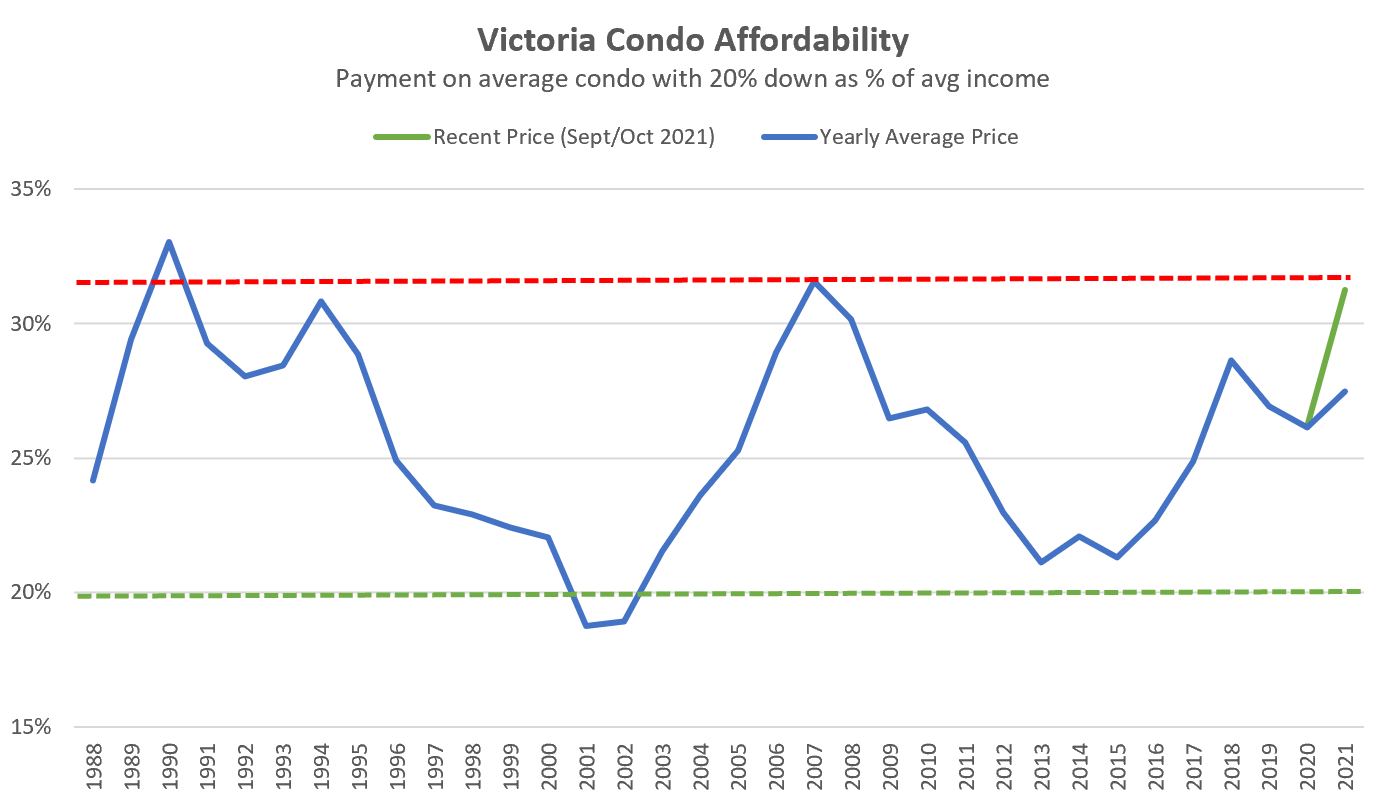
  • What happened to the real estate cycle? Back in 2018, the mortgage stress test was introduced. Nearly overnight it knocked about 20% of the buyers out of a pretty hot market and stopped price gains from continuing. After prices had jumped 40% in two years, the stress test and gradually rising rates put the market on a pretty steady cooling pace for a solid 18 months. I puzzled somewhat about why the hot market had only lasted 2 years when it usually goes for longer, but I thought the stress test had changed the game and we were likely on track to keep cooling down for a few more years. That was clearly wrong. And while it’s tempting to ascribe the missed forecast to the pandemic and associated firehose of stimulus, the reality is that prices would have risen substantially even without it. That was clear two years ago, after interest rates had dropped and market conditions were pointing to hefty price gains before anyone had heard of COVID. The pandemic with its increases in out of town buyers and rock bottom rates turbocharged a trend that was already in place. (House Hunt Victoria)

China trying to buy influence in Canada

Canadian Housing Market is Betting Interest Rates Never Rise

Tuesday morning news drop

  • Canada's housing market is betting interest rates will never rise. The low interest rate loans that are helping propel one of the world’s frothiest property markets could also be what make it burst. For 12 consecutive years, Canada’s housing market has soared to record heights. Tight inventory, particularly in Toronto and Vancouver, has made property price appreciation and bidding wars among the most aggressive anywhere. This has pushed Canadians into playing a very dangerous game. (Bloomberg)

  • How Often Should You Expect a Stock Market Correction? Since 1950, the S&P 500 has had an average drawdown of 13.6% over the course of a calendar year. Over this 72 year period, there have been 36 double-digit corrections, 10 bear markets and 6 crashes. This means the S&P 500 has experienced on average a correction once every 2 years (10%+) a bear market once every 7 years (20%+), a crash once every 12 years (30%+) (Wealth of Common Sense)

  • ‘It’s All Just Wild’: Tech Start-Ups Reach a New Peak of Froth How crazy is the money sloshing around in start-up land right now? It’s so crazy that more than 900 tech start-ups are each worth more than $1 billion. In 2015, 80 seemed like a lot. It’s so crazy that hot start-ups no longer have to pitch investors for money. The investors are the ones pitching them. It’s so crazy that founders can start raising money on a Friday afternoon and have a deal closed by Sunday night. It’s so crazy that even sports metaphors fall short. There’s more money and more bubbly behavior; Investors insist it’s rational. (New York Times)

  • The Market is an Expensive place to Find Out Who You Are. Netflix has 70% more subscribers, twice as much revenue, five times as much income — and the same market cap. Investors don’t care about what you’ve done, they care about what they think you’re going to do. By 2018, investors had pulled forward all of the growth. They did this by assigning too high multiple to its underlying fundamentals. And today, like all growth stocks, Netflix is being rerated. (Irrelevant Investor)

  • Tales From Crypto: A Billionaire Meme Feud Threatens Industry Unity A dispute over “web3” in the cryptocurrency industry was publicly exposed in a Twitter spat between Jack Dorsey and Marc Andreessen. Here’s what it’s all about. (New York Times)

  • Makeup and Money: The Persuasive Pull of Beauty Influencers In the world of big cosmetics companies, authenticity has become a currency (Walrus)

  • The true cost of policing N.J. officers averaged $123K a year, adding tens of thousands of dollars to their paychecks with little oversight. (NJ.com)

  • How the Refrigerator Became an Agent of Climate Catastrophe: The evolution of cooling technology helps to explain why supposed solutions to global warming have only made the situation worse. (New Yorker)

Interest Rate Hikes, Microsoft Purchase of Activation, and Solar Power

Monday morning news drop

  • Debt-Strapped Canadians Brace for a Risky Rate-Hiking Cycle Borrowing costs could begin steady climb as soon as next week Moves will test central bank and free-spending Trudeau team (Bloomberg)

  • Microsoft’s Purchase of Activision Blizzard Encapsulates an Industry in a Single Deal The deal, announced Tuesday and expected to close in 2023, touches on every hot-button gaming-industry issue, from consolidation to workplace reform to Netflix-style libraries to speculation around the “metaverse” (The Ringer)

  • The true cost of Amazon’s low prices Critics say the “everything store” does too much. Is 2022 the year antitrust hawks come for Amazon? (Vox)

  • Maple syrup meltdown: in a changing climate, what’s to become of Canada’s sweetest commodity? A global maple syrup shortage has led to a massive withdrawal from Quebec’s reserves — but an even greater threat to the supply is looming (Narwhal)

  • How Shohei Ohtani Made Baseball Fun Again Not since the days of Babe Ruth has one of baseball’s greatest hitters also been one of its finest pitchers. Now, the reigning MVP is opening up for the first time about his singular place in modern baseball. (GQ)

  • How to kill a god: The myth of Captain Cook shows how the heroes of empire will fall In the 18th century, the naval explorer was worshipped as a deity. Now his statues are being defaced across the lands he visited. (The Guardian)

  • What happens when the world’s most populous country starts to shrink? Chinese officials hoped for a baby boom, but China experienced only a baby blip. That could pose major challenges for the government. (Grid)

  • The forgotten medieval habit of ‘two sleeps’: For millennia, people slept in two shifts – once in the evening, and once in the morning. But why? And how did the habit disappear? (BBC)

  • The excruciatingly long, slow ‘death’ of coal The dirtiest power source surged in 2021. Even in the U.S., where economics makes it is essentially impossible to build new coal power infrastructure, easing off the fossil fuel is hard. (Grid)

  • Solar power will account for nearly half of new U.S. electric generating capacity in 2022 In 2022, we expect 46.1 gigawatts (GW) of new utility-scale electric generating capacity to be added to the U.S. power grid, according to our Preliminary Monthly Electric Generator Inventory. Almost half of the planned 2022 capacity additions are solar, followed by natural gas at 21% and wind at 17%. (US Energy Information Administration)

Videos of the Week, Inflation, Interest rates, and Heat Pumps

Friday morning news drop

  • Something Has to Give in the Housing Market. Or Does It? There appears to be no quick reprieve coming for rising prices: “It’s not a bubble, it really is about the fundamentals.” (NY Times)

  • Oil producers are flush with cash. Now what will they do with it? Revenues and cash flow expected to hit record levels this year if oil prices stay strong. (CBC)

  • Day Traders as ‘Dumb Money’? The Pros Are Now Paying Attention Last year, an army of day traders turned markets upside down. This year, professional fund managers are finding that they had better keep tabs. (Wall Street Journal)

  • Wall Street’s Pandemic Bonanza Most Americans have missed out on the asset-price boom created by the policy response to the pandemic. Not so the big banks. (New Yorker)

  • Soaring inflation shatters Bay Street consensus on interest rate liftoff Some now say we could see borrowing costs rise as early as next week (Financial Post)

  • ‘They’re going to hike really aggressively’: Experts predict major interest rate increases this year to tame soaring inflation Bank of Canada will try to cool the real estate market which is a key driver of inflation. (Toronto Star)

  • In an Inflationary Environment, Value Stocks Offer a Refuge Persistent inflation and rising interest rates are giving value stocks an edge over growth equities. (Institutional Investor)

  • How Norway Popularized an Ultra-Sustainable Heating Method No other country has more heat pumps per capita, a cheap, highly efficient tool to keep homes warm — and carbon footprints small. (Reasons To Be Cheerful)

Videos of the Week

The Ghost Ski Resorts - Fortress: When Fortress Mountain closed in 2004, the once vibrant ski resort quickly became a remnant of the past. Two decades later, the far side chair, frontside chair, and day lodge remain standing. While the guests have disappeared, ghosts remain. Inside the derelict structures are stories of ski culture and community. Skiers Mark Abma and Callum Pettit explore the past and ponder the future at this once iconic Alberta destination.

A Conversation: The film is built around a conversation between Academy Award-winning filmmaker Jimmy Chin and Ugandan-born snowboarder Brolin Mawejje. Their conversation tells a story about their unlikely career paths and diversity in the outdoor industry; building into Brolin’s own uncertainty about his goals to snowboard in the Olympics.

Power - The Story Of Brad Simms: From humble beginnings to BMX royalty, Brad's story is something to admire. He’s had some major setbacks and continues to push through it all. I don’t think people realize how much work and dedication he puts into his craft. Brad is comfortable and controlled on any bike you put in front of him. His love for bikes shines in every Instagram post, every video part, and anytime you see Brad on a bike. Sit back and enjoy Power - The Story Of Brad Simms.

Jo Gass - Con Leche: The French and style go hand in hand. Jo Gass has the latter oozing from every pore of his body and after a year and a half, and six nasty injuries, he's back on our screens for United. Jo rules!

Gavin Bottger's "Scuddle" Part He might be young, but Gavin handles the City’s hills and carves up pools like a lifer. Age don’t mean nuthin’.

Nick Garcia's "Flowers for Mom" Element Part Nick puts it all on the line, dodging poles at full speed and inventing techniques in the process. You know his mom's proud with this one.

Candide Thovex - Yellow Snow: Random shots of Candide skiing around Switzerland. Filmed by Aziz Benkrich and Franck Moissonier.

Canada's Inflation at 30 Year High of 4.8%

Thursday morning news drop

  • Canada's inflation rate rises to new 30-year high of 4.8% Grocery prices increasing at fastest pace in more than a decade (CBC)

  • Lumber Prices Are off the Rails Again. Blame Climate Change. “This is a supply-side problem. This is unlike any other market that any of us lumber traders have ever experienced.” (Atlantic)

  • Housing starts slow in Canada amid record shortage of homes for sale The December pullback could add to concerns about soaring home prices (Financial Post)

  • Why Is Canadian Architecture So Bad? Buildings from the past fifty years have been largely uninspiring. Why don’t we take good design seriously? (Walrus)

  • After Another Great Year for Stocks, Peril Lingers Inflation and the coronavirus did not hold back the stock market last year, but in 2022, investors face new worries. (New York Times)

  • The Market is Tightening Cheap money impacts the winners, both individuals, and corporations. It’s hard to say with certainty that low borrowing rates have contributed to stock market inequality, but maybe there’s something there. (Irrelevant Investor)

  • Bill Nygren Market Commentary | 4Q21 Price is what you pay, value is what you get.” -Warren Buffett. I recently participated on a panel discussing topics that most concerned investors. Of course, I was asked for Oakmark’s view on cryptocurrency. As you could guess, my answer was that we won’t buy it because we have no idea how to value it. To my surprise, another panelist, a bull on crypto, said they completely agreed with me that its value can’t be defined, but that’s exactly why they own it. If a crypto coin is worth somewhere between $0 and $500,000, then they want to own it at $50,000. Today, it’s become so commonplace for price to become completely untethered from value that investors now actively seek out such assets rather than avoid them. (Oak Mark Funds)

  • China’s looming property crisis threatens economic stability A growing number of Chinese property developers are facing financial strain, while property sales and home prices in China are falling sharply. The Chinese government, worried that an engine of growth is losing steam, is struggling to keep the property sector afloat. Evergrande is a leading indication that China’s model of property-led growth is unsustainable and needs to change. (Peterson Institute for International Economics)

  • Microsoft is buying one of the biggest names in games — if Washington lets it Microsoft-Activision is like Disney-Fox. Maybe bigger. (Vox)

  • André Leon Talley, Editor and Fashion Industry Force, Dies at 73 Called “a creative genius,” he was the rare Black editor at the top of a field that was mostly white and notoriously elitist. (New York Times)

Employee's Job Market, Car Prices Increasing, and Negative Bond Returns

"Eat at a local restaurant tonight. Get the cream sauce. Have a cold pint at 4 o’clock in a mostly empty bar. Go somewhere you’ve never been. Listen to someone you think may have nothing in common with you. Order the steak rare. Eat an oyster. Have a negroni. Have two. Be open to a world where you may not understand or agree with the person next to you, but have a drink with them anyways. Eat slowly. Tip your server. Check in on your friends. Check in on yourself. Enjoy the ride." ― Anthony Bourdain

Wednesday morning news drop

  • Want a 19% Pay Boost? Get a New Job City hiring is bouncing back from Covid, recruiter says Number of jobs available in 2021 now same as in 2019 (Bloomberg)

  • As Employers Scramble to Fill Jobs, Workers Relish a Feeling of Power With plenty of companies hiring, workers are quitting their jobs in droves and starting their own ventures. ‘I refuse to accept a position that’s just a position.’ (Wall Street Journal)

  • New Car Price Keeps Climbing, with Average Now at Almost $47,100: Reduced supply, increased demand: It all adds up to higher prices for the new-car-buying public. (Car and Driver)

  • Rolls-Royce, Bentley, BMW Sales Surge as Cheaper Brands Lag Behind Luxury sales boom as car makers shift scarce chip and raw materials toward high-margin models (Wall Street Journal)

  • New law means significant tax relief when you pass your business on to your kids Under the old law, business owners took an extra tax hit if they sold to their children (Financial Post)

  • Housing affordability 'likely to get worse before it gets better' as listings hit all-time low 'There are currently fewer properties listed for sale in Canada than at any point on record' (Financial Post)

  • After ruining Android messaging, Google says iMessage is too powerful Google failed to compete with iMessage for years. Now it wants Apple to play nice. (Ars Technica)

  • iMessage is the glue that keeps me stuck to the iPhone The accidental social network. (The Verge)

  • What it’s like to make $100k+ walking dogs: The economics of dog walking can be lucrative — but the profession comes with a myriad of wild encounters. (The Hustle)

  • One Thing Covid Can’t Stop: Alcohol Sales: A welcome companion during lockdowns, booze has rebounded to pre-pandemic levels. (Businessweek)

  • Investment in building construction on the rise Investment in building construction hits $18 billion in November. (On-Site)

  • On Inflation, Trust the Market No indicator is perfect, but the market is right a lot more often than the zeitgeist. (Fisher Investments)

Pandemic Burnout and Work, Sustainable Fashion Myth, and Climate Change

Tuesday morning news drop

  • Your work is not your god: welcome to the age of the burnout epidemic The reason why so many of us are at the end of our rope? We allowed work to be what gave our lives meaning. (The Guardian)

  • 11 Trends that Will Shape Work in 2022 and Beyond We’ve been living through the greatest workplace disruption in generations and the level of volatility will not slow down in 2022. New Covid variants will continue to emerge and may cause workplaces to temporarily go remote again. Hybrid work will create more unevenness around where, when, and how much different employees are working. Many employees will be greeted with real wage cuts as annual compensation increases fall behind inflation. These realities will be layered on top of longer-term technological transformation, continued DE&I journeys, and ongoing political disruption and uncertainty. (Harvard Business Review)

  • More than 1 million fewer students are in college. Here’s how that impacts the economy. Compared with the fall of 2019, the last fall semester before the coronavirus pandemic, undergraduate enrollment has fallen a total of 6.6%. That represents the largest two-year decrease in more than 50 years. (NPR)

  • The Myth of Sustainable Fashion Few industries tout their sustainability credentials more forcefully than the fashion industry. But the sad truth is that despite high-profile attempts at innovation, it’s failed to reduce its planetary impact in the past 25 years. Most items are still produced using non-biodegradable petroleum-based synthetics and end up in a landfill. So what can be done? New ESG strategies such as the use of bio-based materials, recycling, and “rent-the-runway” concepts have failed. Instead, we must stop thinking about sustainability as existing on a spectrum. Less unstainable is not sustainable. And governments need to step in to force companies to pay for their negative impact on the planet. The idea of “win-win” and market-based solutions has failed even in one of the most “progressive” industries. (Harvard Business Review)

  • The past seven years have been the hottest in recorded history, new data shows Global temperatures in 2021 were among the highest ever observed, with 25 countries setting new annual records, according to scientists from NASA, NOAA and Berkeley Earth (Washington Post).

  • Protecting voting rights isn’t enough to save democracy Election law expert Richard L. Hasen on the problem of election subversion — and what can be done to stop it. (Vox)

  • COVID Hospitalization Numbers Are as Bad as They Look Many supposedly “incidental” infections aren’t really incidental, and cannot be dismissed. (The Atlantic)

  • We’re All ‘Experts’ Now. That’s Not a Good Thing. It is no wonder that so many of us think that we can parse vaccine trial data, compare personal protective equipment, write school policy and call career scientists idiots on Facebook. We are know-it-alls because we are responsible for knowing everything. And God forbid we should not know something and get scammed. If that happens, it is definitely our fault. (New York Times)