America and Child Poverty, the War in Ukraine, and the Tech Selloff

Monday morning news drop

  • Why America Has Been So Stingy In Fighting Child Poverty For decades, many American economists were pretty much obsessed with trying to document the ways in which welfare programs discouraged work, or broke up families, or encouraged pregnancy, while ignoring all the benefits that society gets from having kids grow up in a more financially secure environment. Aizer, Hoynes, and Lleras-Muney analyze research papers in America’s top academic journals since the 1960s, and they find that prior to 2010, fewer than 27 percent of all articles about welfare programs even bothered to try and document their benefits. (NPR)

  • War in Ukraine: How we got here — and what may come next The road to war was long and complicated. The way out may be, too. (Grid)

  • Putin And Ukraine Vladimir Putin’s invasion of Ukraine is entirely about what a country and its people are permitted to be (Globe and Mail)

  • The impact of throwing Russia out of Swift The messaging network has become the embodiment of the “weaponisation of finance” (Financial Times Alphaville)

  • Scammy Instagram ‘war pages’ are capitalizing on Ukraine conflict Beware: Despite their claims, these accounts are not run by journalists on the ground. (Input)

  • What happens when Americans stay in the same house forever? Americans used to move a lot; now they don’t. It could be causing a social crisis. (Vox)

  • Tech Selloff Hints at Deep Cracks in Glamour Stocks Shares of highly valued, rapidly growing companies with little or no profits are suffering declines typically associated with financial meltdowns and other crises. (Bloomberg)

  • Unfunded Liabilities: How Three Public Pensions Found Themselves in Crisis And how they are clawing their way out. (Chief Investment Officer)

  • The professor who beat roulette: How a renowned researcher beat the odds, stumped casino owners around the world, and walked away with a fortune. (The Hustle)

Videos of the Week, Putin and Ukraine, and Shopify's Evolution

Friday morning news drop

  • Why is Russia invading Ukraine and what does Putin want? For months Russia’s Vladimir Putin denied planning to attack Ukraine, but on Thursday he announced a “special military operation” in the country’s Donbas region. The announcement on live television was followed by reports of explosions in Ukraine’s capital Kyiv as well as other parts of the country. (BBC)

  • Autopsied bodies and false flags: How pro-Russian disinformation spreads chaos in Ukraine In Russia, military might and KGB-inspired disinformation go hand in hand. (Grid)

  • Efficiency Rules – The future of retail The future of retail is all about customer productivity. At Canadian Tire Hillside, owner Justin Young is thinking outside the box to create an in-store experience that is efficient, engaging and technologically informed. (Douglas)

  • It’s Ugly Out There Since 1950, the S&P 500 has declined 10% from its highs 25 times. Twelve times it fell more than 20%. A coin toss that a correction turns into a bear market. It’s important to point out that most investors don’t have all of their money in the S&P 500. The numbers don’t adequately convey the stress felt by some investors, so let me break it down… (Irrelevant Investor)

  • S&P 500 Charts Are So Bad Even Bulls Are Looking to Adjust Bets Stocks under pressure on Ukraine-Russia tensions, hawkish Fed S&P 500 living on edge of support, says Piper’s Craig Johnson (Bloomberg)

  • Shopify’s Evolution Even with a toehold in the consumer space, though, Shopify has remained a company that is focused first-and-foremost on its merchants and its mission to “help people achieve independence by making it easier to start, run, and grow a business.” That independence doesn’t just mean one-person entrepreneurs either: good-size brands like Gymshark, Rebecca Minkoff, KKW Beauty, Kylie Cosmetics, and FIGS leverage Shopify to build brands that are independent of Amazon in particular. (Stratechery)

  • What It’ll Take to Get Electric Planes off the Ground The lithium-ion battery is good for moving cars short distances, but aviation requires longer-lasting power. Maybe we need to try other elements. (Wired)

  • The Millions of People Stuck in Pandemic Limbo: What does society owe immunocompromised people? Close to 3 percent of U.S. adults take immunosuppressive drugs; at least 7 million immunocompromised people—a number that’s already larger than the populations of 36 states, without even including the millions more who have diseases that also hamper immunity, such as AIDS and at least 450 genetic disorders. (The Atlantic)

Videos of the Week

Chaos in Duluth | Red Bull Heavy Metal 2022 Highlights After a nearly two-decade hiatus, Red Bull Heavy Metal is back - and heavier than ever. Taking place at the iconic Cascade Park in Duluth, MN, Red Bull Heavy Metal played host to 40 of the world’s top rail riders in a day-long street snowboarding competition unlike any other.

Sage Cattabriga-Alosa - Hallways: "The experience of skiing chutes, couloirs, ridges, and corridors are also correlated to the way bike trails snake and wind through the land. What we do on the trail is fun, but it's the 'where we are' factor that really grabs me in either environment."

CHAD KERLEY - THE WAY OF THE MASTER - LOCKDOWN RAW CUT

CULTCREW/ CHAD CURTIS/ 2022 One of the coolest things in BMX is the unique individuals that make up this community...Chad Curtis is exactly this, super original, passionate, creative, BMX lifer...Stoked to finally show you some of his shredding...

DYLAN RIEDER 5 years since Dylan Rieder passed away. In my opinion he was the coolest to ever step on a skateboard, and the world is so much less cool without him.

Cold Call: Felipe Nunes Hop on the mission with Felipe as he tackles a behemoth bank ride and comes back for more. Grit doesn't even begin to describe this guy.

Cold Call: Bob Burnquist Bob shows us around the compound, hoppin' the channel switch in his concrete bowl and closing out at the Mega.

Andy Anderson Joins Etnies Skate Team

MASHER: Houston Gregson treks down to Texas, catching clips with T-Hawk, The Muscle, Rune, Andy Mac and more. This crew can kill some ‘crete.

The Great Retirement, Home Building, and Living With Covid

Thursday morning news drop

  • The Great Resignation is also the Great Retirement of the Baby Boomers. That’s a Problem. Employers are dependent on the outsize baby boomer cohort, whose exit is contributing to growing shortages of workers everywhere, from nursing to school bus drivers to the service industry. It’s not just 22-year-old baristas who have had it with working conditions. Those understaffed stores? Retailers became increasingly reliant on older workers in the wake of the Great Recession. Many are now making an exit. (Washington Post)

  • 4 Bed, 3 Bath, No Garage Door: The Unlikely Woes Holding Up Home Building Supply-chain complications are giving the industry and buyers fits. (New York Times)

  • Is There a Way Out of America’s Impossible Housing Mess? The first step, according to economist Jenny Schuetz, is recognizing there is more than one housing crisis. (Slate)

  • Chrystia Freeland, Minister of Everything, has big plans for Canada’s economic future In an alternate universe, you would know Chrystia Freeland only as a writer and journalist, as an eminent authority on Vladimir Putin and the oligarchs who feed off him, perhaps eventually as the editor-in-chief of this newspaper or the Financial Times. You would see her on talk shows, on the lecture circuit, publishing another award-winning book examining the ways of wealth and power. That was the train she was on in 2013, when she decided to jump the track and enter national politics. Since being elected in 2015, she’s become known as Justin Trudeau’s Everything Minister (Globe and Mail)

  • As food prices soar, communities find innovative ways to feed more people Experts stress charity not a long-term solution to food insecurity in Canadian households (CBC)

  • COVID-19 Isn’t Going Anywhere — And Americans Know It Most Americans believe COVID-19 will persist into the near (or distant) future, but what that means to people’s daily lives is the subject of much more dissent. That’s because understanding COVID-19 as an ongoing reality means something different to everyone. (FiveThirtyEight)

  • COVID Won’t End Up Like the Flu. It Will Be Like Smoking. Hundreds of thousands of deaths, from either tobacco or the pandemic, could be prevented with a single behavioral change. (The Atlantic)

  • Francis Ford Coppola’s $100 Million Bet Fifty years after he gave us The Godfather, the iconic director is chasing his grandest project yet—and putting up over $100 million of his own money to prove his best work is still ahead of him. (GQ)

Practical Performance - The two best cars (wagons) on the market

Interest Rates and Stocks, Rental Vacancy Rates, and Ukraine

Wednesday morning news drop

  • How Do Stocks Perform When the Fed Raises Rates? There have been 8 longer-term rate hiking cycles since 1970 Surprisingly, stocks have held up relatively well on average, with a total return in these periods of 23%. (Wealth of Common Sense)

  • Everyone Thinks Rising Interest Rates Are Bad for Tech Stocks. But Are They? A closer look at the numbers shows that the relationship may not be as clear-cut as many investors believe. (Institutional Investor)

  • Big Tech Makes a Big Bet: Offices Are Still the Future Even as they allow some employees to change how often they come into the office, tech companies are rapidly buying and leasing properties around the country. (New York Times)

  • What We Lose When Work Gets Too Casual The loss of workplace formalities like fixed start and stop times, managerial hierarchies with clear pathways for advancement and professional norms that create boundaries between personal and professionally acceptable behavior only hurt workers. We should not be deceived: Many of these changes mostly benefit employers. (New York Times)

  • Putin’s New Age of Conquest In today’s world, borders are almost never redrawn at the point of a gun. Could the Ukraine crisis change that? (Grid)

  • Inside the High-Stakes Fight to Control the Narrative on Ukraine As Putin searches for a false pretense to invade Ukraine, the Biden Administration has moved to release, in real time, what it knows of Russia’s war plans (New Yorker)

  • How Winter Olympians who hate the cold compete in freezing weather As the Beijing Games carry on through frigid temperatures and frosty conditions, athletes reveal the cold hard truth about competing in a polar climate. (Sports Illustrated)

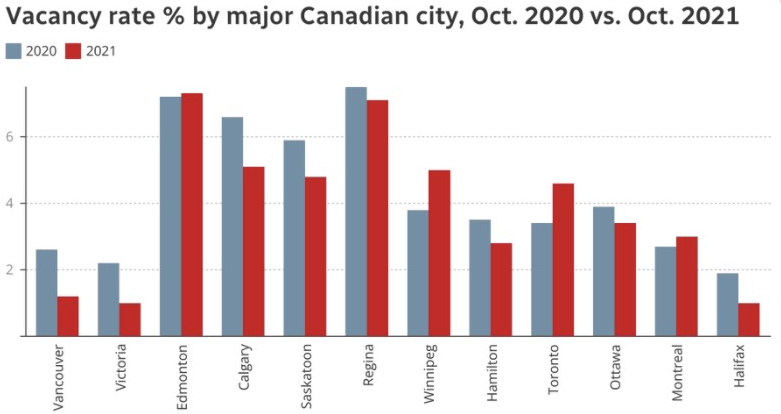
  • Rental reprieve over: vacancy rate returns to 1% Unfortunately, we’ve known for months that the brief reprieve for tenants was already over, with reports of ultra low vacancy rates in purpose built rentals, a rental crisis for returning students, and swarms of applicants for private suites. The recent CMHC rental report confirmed the return of the dire situation, with Greater Victoria vacancy dropping back to the pre-pandemic rate of 1%. (House Hunt Victoria)

Declining Birth Rates, Corporate Pricing, and the Pandemic's True Death Toll

Tuesday morning news drop

  •  March 2020: How the Fed Averted Economic Disaster As markets plunged, Jerome Powell and his colleagues vastly expanded the reach of the central bank, with implications that will be felt for years to come. (Wall Street Journal)

  • Corporate pricing is boosting inflation — but we’re still buying Corporations pass more than increased costs on to consumers. (Vox)

  • Wall Street Is Buying Starter Homes to Quietly Become America’s Landlord Private equity money is pouring into the Phoenix real estate market, turning first-time homebuyers into renters. (BusinessWeek)

  • The Mystery of the Declining U.S. Birth Rate The U.S. birth rate has fallen by 20% since 2007. This decline cannot be explained by demographic, economic, or policy changes. (Econofact)

  • The pandemic’s true death toll: Millions more than official counts: Countries have reported some five million COVID-19 deaths in two years, but global excess deaths are estimated at double or even quadruple that figure. (Nature)

  • China promised Trump a better deal for America; it didn’t actually deliver. While China did ramp up its purchases of U.S. agricultural products, when it comes to buying U.S. products and services overall, it still hasn’t even returned to buying the amount of stuff it had bought from America before the trade war began. (NPR)

  • An incomplete history of Forbes.com as a platform for scams, grift, and bad journalism That “rapper” accused of billions in crypto fraud was also a Forbes contributor. Is it finally time to move past the contributor network? (Nieman Lab)

  • Does China think long-term while America thinks short-term? It’s far from clear that Chinese leaders engage in more long-term thinking than American leaders do. There are plenty of examples to show this. (Noahpinion)

Long Haul Covid Moms, Olympics TV Ratings, and Vancouver Vacancy Rates

Monday morning news drop

  • The Long Haul Symptoms of Being a Covid-Era Mom Male pundits urge us to "go back to normal," but those of us who've endured the grief and isolation of new motherhood during the pandemic know better. (Jezebel)

  • Dreadful TV ratings for Beijing Games should send IOC a message The Olympics that should never have been are over. The challenge is to be sure they never go to tyrannical regimes again. (Montreal Gazette)

  • The New Secret Chicken Recipe? Animal Cells. Here’s an early taste of the laboratory-grown meat that companies are racing to bring to market, and a look at the questions it raises about how we feed ourselves. (New York Times)

  • The Lesson to Unlearn The most damaging thing you learned in school wasn’t something you learned in any specific class. It was learning to get good grades. (Paul Graham)

  • The Everything Town in the Middle of Nowhere: How the tiny town of Roundup, Montana, became a hub in Amazon’s supply chain (The Verge)

  • This Is How To Overcome Regret: 5 Secrets From Research When asked, “How often do you look back on your life and wish you had done things differently?” — you know what people said? (Barking Up The Wrong Tree)

  • Once again, Vancouver region has highest rents, lowest vacancy rate of any major metro area in Canada More students, mobility brought vacancy rates below 2% again; average 2-bed apartment nears $2,500 per month (CBC)

Videos of the Week, Bond Yields, Ikea and Old Growth, and LGBTQ2+ Bars

Friday morning news drop

  • The Bond Market Is Sending a Worrying Message About the Economy Fixed-income investors don’t think the Fed can rein in inflation without stalling the recovery. (Bloomberg)

  • Carolyn Wilkins: Canada must build framework to make crypto as safe as our financial system If done well, we can achieve benefits of financial innovation for households and businesses and avoid build up of systemic risk (Financial Post)

  • Canada’s Biggest Bank Faces Shareholder Vote on Climate Standards The RBC resolution is set to focus on standards for sustainability-linked debt (Bloomberg)

  • Why all of Canada will pay for Doug Ford’s choice to cancel Ontario’s cap-and-trade program Newly public documents reveal the Progressive Conservatives stonewalled Koch Industries' requests for compensation and pushed the global giant to take its complaints to international court (Narwhal)

  • Ikea’s Race for the Last of Europe’s Old-Growth Forest The furniture giant is hungry for Romania’s famed trees. Little stands in its way. (The New Republic)

  • Libfeld vs. Libfeld vs. Libfeld vs. LibfeldTeodor Libfeld arrived in Toronto with nothing and built a multi-billion-dollar real estate company. When he died, his four sons took over and destroyed the empire he created (Toronto Life)

  • It’s a Drag: Many Gay Bars Are Closing, But We Can Still Save Them For over a century, these spaces have been hubs for LGBTQ2+ communities. How can they prepare for new realities? (Walrus)

Videos of the Week

Riding Off Cliffs - Teaser: Reed Boggs stomped his biggest flip ever for 'Riding Off Cliffs,' a 51 foot step down backflip, right before he got a call from Todd Barber letting him know that there was a position available for him to compete at Red Bull Rampage. The full film that follows Boggs in his journey to becoming one of the world's best freeriders will be released this spring.

Denis Yakimov - How It's Made: Denis Yakimov took the BMX world by storm in 2021, especially with the release of his wild Lumpen video part. This year Denis is mixing things up with a departure from Fiend and a new sponsorship announcement on the way soon. In the meantime we've got a look at all the behind-the-scenes clips from his mind-blowing 'Lumpen' part. Those big setups are outrageous. Some of the biggest 3's and 540's you would have seen to date! Look out for this guy in 2022.

Enough: “Enough” features Martin Siman riding in Czech Republic and Berlin.

Candide Thovex - Pretty Tight: Candide skiing some canyons in Crans-Montana, Switzerland. Filmed by Anthony Vuignier and Franck Moissonier.

Aaron Wilson's "Homage" Heroin Part

Bobaj's "Anahí" Chapter 2

Analytics Regulation, Facebooks Sweatshop, Basketball, and Inflation

Thursday morning news drop

  • Europe’s Move Against Google Analytics Is Just the Beginning Austria’s data regulator has found that the use of Google Analytics is a breach of GDPR. In the absence of a new EU-US data deal, other countries may follow. (Wired)

  • Why Trucking Can’t Deliver the Goods The yearly turnover rate among long-haul truckers is 94 percent. And you wonder why you’re not getting your orders on time? (Prospect)

  • Tech Companies Face a Fresh Crisis: Hiring Recruiters in tech are desperate for workers. But candidates are the ones who hold all the power. (New York Times)

  • Inside Facebook's African Sweatshop In a drab office building near a slum on the outskirts of Nairobi, Kenya, nearly 200 young men and women from countries across Africa sit at desks glued to computer monitors, where they must watch videos of murders, rapes, suicides, and child sexual abuse. (Time)

  • Curry, Calm and Collected Steph Curry’s shot revolutionized the NBA, but his greatest weapon may be his ability to find balance. So even as his Warriors struggled to rebound from Kevin Durant’s departure, as he suffered through the worst shooting slump of his career, and as his role in his family changed, the two-time MVP was looking for ways to get back on top. “Just reimagining what impossible is,” he says. (Ringer)

  • Reintroducing the Marvelous DeMar DeRozan He was dismissed as a throwback to the NBA’s “heroball” era and traumatically traded from his adopted hometown of Toronto. Now he’s the best closer in the NBA and the leader of a resurgent Chicago Bulls team. (GQ)

  • In The 1990s, The New York Knicks Fought Everyone — Even David Stern The one play that perfectly crystallizes the 1990s Knicks isn’t the famous dunk by John Starks. It’s not the miraculous four-point play by Larry Johnson in 1999. It’s not the picture-perfect baseline jumper from Patrick Ewing, which was responsible for more points than any other shot in those years. As you might guess, offense has nothing to do with it. (Five Thirty Eight)

  • Inflation surges to three-decade high, adding pressure on Bank of Canada to raise rates Inflation at this pace guarantees a raise in March and puts half-point hike in play (Financial Post)

  • ‘Survival mode’: Inflation falls hardest on low-income Americans Higher costs for the basics — rent, groceries, paper towels — leave families to make hard choices (Washington Post)

Salary Transparency, ESG Accounting Standards, and the MLB Proposal

Wednesday morning news drop

  • Trudeau gives banks power to freeze funds without court order in bid to choke off protest funding New powers give institutions the ability to freeze corporate accounts and cancel insurance tied to trucks that are being used in the blockades (Financial Post)

  • Salary Transparency Is Good for Everybody Laws requiring companies to include salary ranges in job postings are good for women, young workers — and the companies themselves. (Bloomberg)

  • We Need Universal ESG Accounting Standards ESG accounting is a mess. Competing initiatives mean there’s no uniform set of standards for measuring a company’s progress on sustainability. The good news is that a new initiative, the International Sustainability Standards Board, promises to do for sustainability reporting what the International Accounting Standards Board (IASB) does for financial reporting — develop standards for companies to report their performance to investors. Though still fledgling, the ISSB’s ideal outcome would be if it becomes a global standard that integrates the work of all previous standards. Ideally, the SEC and EU can use its standards. Companies should give the ISSB their full support to make these standards the best they can be. (Harvard Business Review)

  • How Do Investors Fail? Which group of people (by age and sex) is least likely to die in the U.S. within the next year? For example, is it newborn girls? Teenage boys? Women in their thirties? Men in their fifties? Before reading on, think about this for a second and take a guess. (Of Dollars and Data)

  • ‘Dead river flowing’: The Jordan River was once brimming with salmon, until three industries changed it forever Restoration efforts are slow going, but changes in industrial practice could help bring it back. (Capital Daily)

  • Resilience is Key Canada’s drug supply chain is more precarious than most of us realize (Walrus)

  • MLB's new proposal to MLBPA addresses 4 core economic issues Major League Baseball made a new proposal to the MLB Players Association on Saturday during a bargaining session in New York City, hoping to move negotiations for a new collective bargaining agreement in a positive direction. (MLB)

  • The dispersion of risk We all know that current prices are extremely high, but it’s anyone’s guess whether they are sustainable. On the one hand, average prices this year are pushing into uncharted territory on the affordability side even ahead of coming rate hikes, while on the other hand those averages are not based on a lot of sales and Victoria real estate has a record of surprising to the upside. (House Hunt Victoria)

Bond Markets, Mark McMorris, and Super Bowl LVI

Tuesday morning news drop

  • Funds on right side of historic U.S. bond market move Hedge funds look to be on the right side of the seismic moves in Treasuries that have propelled short-dated borrowing costs higher, intensified flattening pressures across the yield curve, and ripped up the consensus 2022 U.S. interest rate outlook. (Reuters)

  • As the blockades have shown, anarchy is usually bad for business Disregarding the law is tempting when you're fed up with rules. But chaos has economic consequences (CBC)

  • Mark McMorris Inc: Inside an Olympic snowboarder's business empire The 28-year-old is an action sport athlete entrepreneur, with a sponsorship fiefdom that has crossed over from the purely athletic realm (Financial Post)

  • The Stars Aligned in the Rams’ Super Bowl Win Over the Bengals Sunday’s game was won by superstar players making championship-winning plays. It’s a good thing the Rams had so many of them. (Ringer)

  • The Bengals Nearly Pulled Off a Super Bowl Run For the Ages. What Comes Next? Joe Burrow and Cincinnati took the NFL playoffs by storm before falling just short of a championship. They have the foundation to make it back—but the road ahead won’t be easy. (Ringer)

  • A sublime ode to old-school L.A. hip hop at the 56th Super Bowl halftime show For the first time, rap dominated as Dr. Dre, Snoop Dogg, Eminem, Kendrick Lamar and Mary J. Blige performed (CBC)

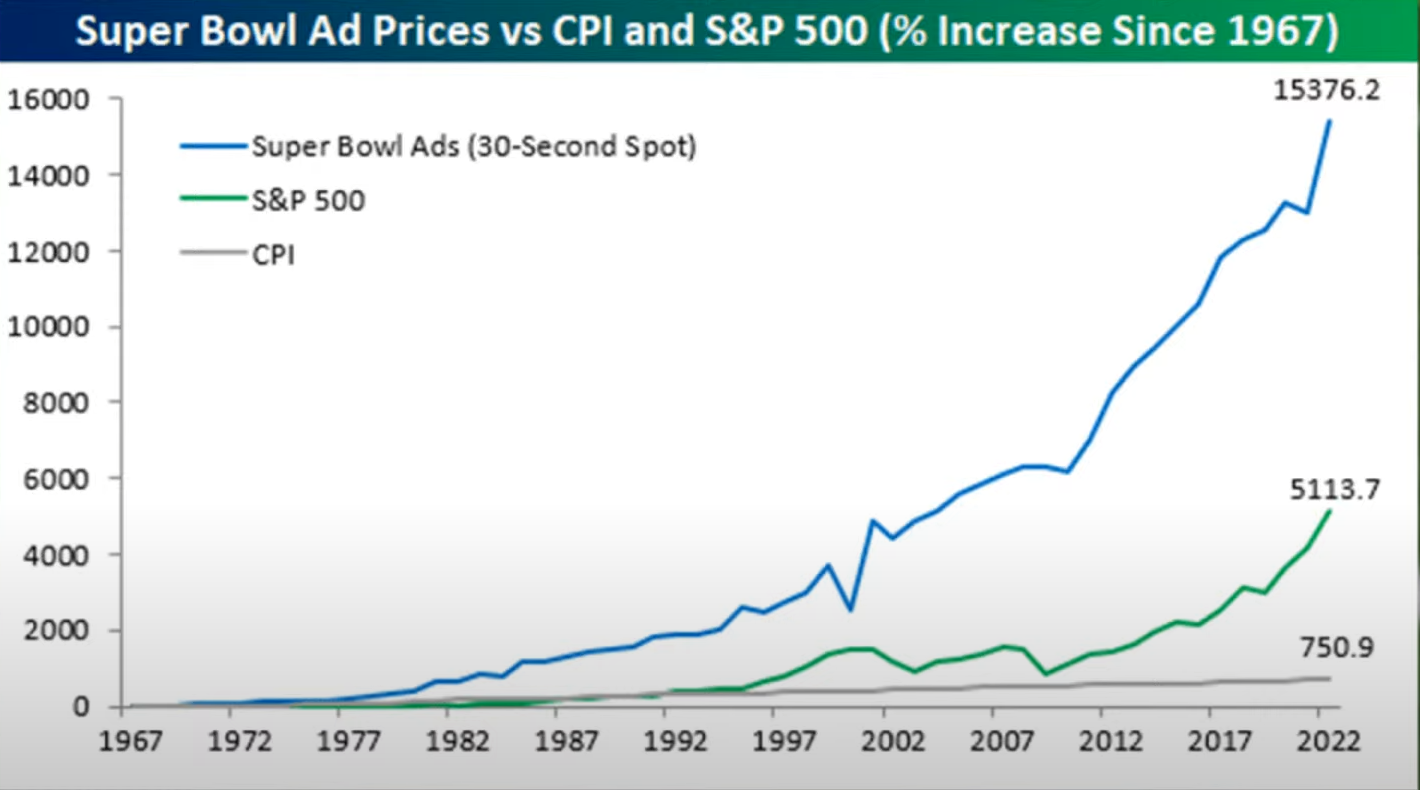
  • Why electric vehicles are so hot in the 2022 Super Bowl ads It’s the “early stages of the biggest transition in the auto industry since the car was first invented.” (Vox)

  • Super Bowl LVI: A comprehensive ranking of the best commercials Super Bowl LVI is in the books, and that means it’s time to relive the best commercials from the big game. More anticipated in some households than the actual Super Bowl, or even the half-time show, are the interstitial advertising spots that break up the periods of play. No matter your level of engagement with the game or your football knowledge, everyone wants to watch the commercials. This year, iconic halftime show aside, the commercials were the most entertaining part of the broadcast. (Sportsnet)

  • Confessions of a Bitcoin Widow: How a Dream Life Turned into a Nightmare My husband started a cryptocurrency empire that made us rich. When he died, I learned it was just a facade (Walrus)