Videos of the Week, Inflation, and Future Stock Market Returns

Friday morning news drop

  • Don’t tell people how to feel about inflation. Everyone is worried about inflation. Of course, they are. We should never tell people how to feel, and that’s true now more than ever. Policymakers must act. (Stay-At-Home Macro)

  • How America’s Farmers Got Cut Out of the Supply Chain As shipping companies concentrate on the most lucrative routes from China to California, almond growers are struggling to transport their wares. (New York Times)

  • The Stock Market’s Future Ain’t What It Used to Be In recent years, investors often got rewarded for taking reckless risks, but in unforgiving markets, it’s harder to recover from mistakes. (Wall Street Journal)

  • 4 Reasons the Housing Market Won’t Crash Many young people did put off settling down for longer than their parent’s generation, but eventually people grow up. They have kids and responsibilities and move to the suburbs. And when this happens most people want to buy a house. That’s exactly what’s happening. Millennials accounted for more than half of all mortgage loan applications in 2021. (A Wealth of Common Sense)

  • U.S. social media giants vowed to remove Russian war propaganda. It’s still there. Grid found dozens of pro-invasion posts and accounts on YouTube, Facebook and Instagram that appeared to violate the companies’ policies and public statements. (Grid)

  • Their Land Was Drowned by a Flood of Hydropower BC sacrificed the Kwadacha Nation’s territory to build a dam. Where does today’s quest for new energy intersect with reconciliation? A special two-part feature. (Tyee)

  • The Return of Coachella and a Glimpse Into Our New Abnormal The most famous music festival in America returned this past weekend, providing a preview of the strange, not-so-distant future (Ringer)

  • The 50 Best Rom-Coms From ‘When Harry Met Sally’ to ‘Forgetting Sarah Marshall’ to ‘Sleepless in Seattle,’ here’s the best of an endlessly watchable genre (Ringer)

Videos of the Week

Dylan Stark - Brakeless: Stark blasting to the moon.

Jeremy Berthier Commencal Segment: A few months ago, Jeremy Berthier left his local Lyon area to ride the legendary Peynier dirt jump trails in the South of France. Here’s his vision of the Perfect Trail.

Nathan Williams - Why Not? Nathan Williams 'Why Not?’ video part is an independent project with Christian Rigal behind the lens. With no deadline in sight the goal was to take some time, make something special and try something different, why not? Filmed from California to Texas, this part is just under 9 minutes of insanity that will leave you wondering what you just saw, and if it was switch?

Matt Ray - MR2: Subrosa pro Matt Ray dropping some new heat. From Massachusetts to Florida, Matt puts his dominant, smooth and dialed riding style on display at every spot he chooses.

The "303 Does PHX" Video Spencer Semien, Trevor Theriault and a killer crew from 303 take on some of AZ's biggest blocks and hottest spots. You gotta see that last lipslide.

Baker Video with Tyson and T Funk Homies, hijinks and heavy moves, Tyson cracks it open with some of his hardest hits in LA before T Funk closes out on his full-speed tear through our City. Not even the cover can prepare you for that China Banks ollie.

Inflation in Canada is 6.7% a 31 year high and Turning Trees into Skyscrapers

Thursday morning news drop

  • Canada's inflation rate jumps to new 31-year high of 6.7% Largest annual increase in cost of living since GST was created (CBC)

  • Hot Economy, Rising Inflation: The Fed Has Never Successfully Fixed a Problem Like This Central bank says it is possible, but many factors are out of its control; ‘they are strikingly behind’ (Wall Street Journal)

  • Bitcoin investors tend to have low financial literacy, according to Bank of Canad research Central bank researchers found that around 5 per cent of Canadians owned bitcoin between 2018 and 2020. That ownership was “concentrated among young, educated men with high household income and low financial literacy.” The researchers also found that bitcoin owners tend to score lower on general financial knowledge. At the same time, “Canadians who are financially literate are more likely to be aware of bitcoin but less likely to own it,” (Globe and Mail)

  • The Tech Bubble That Never Burst It is a familiar refrain. For the past decade, such warnings have cropped up repeatedly in start-up land. The industry is in another bubble, investors and commentators caution, conjuring the 1999 dot-com era and the dramatic collapse and recession that followed. Jobs disappeared, fortunes vaporized, and reputations were tarnished. The message since has carried those scars: The boom times are ending. Buckle in for a rough ride. Yet every time, more money has flooded into start-ups. Instead of a collapse, things got bubblier. (New York Times)

  • Transforming Trees Into Skyscrapers In Scandinavia, ecologically minded architects are building towers with pillars of pine and spruce. (New Yorker)

  • What’s in store for empty downtown office buildings? Business districts have a vacancy problem. The white-collar workers around the US who fled city centers at the start of the pandemic haven’t all come back yet. Even as some large employers like Google and Apple start to roll out back-to-office policies, it’s looking like many of them may never return. (Quartz)

  • Jim Farley Tries to Reinvent Ford and Catch Up to Elon Musk and Tesla Ford’s chief executive is about to introduce an electric F-150 pickup truck that could determine whether the automaker can survive and thrive in an industry dominated by Tesla. (New York Times)

  • The hydrogen energy dream: Automakers, industries, and governments are betting on hydrogen again. Will it work this time? (Vox)

  • Netflix Struggles to Hold Its Place in the Streaming Wars Subscriber fatigue, unwelcome price hikes, and competition from the likes of Disney+ and HBO Max have rattled Netflix. What’s next? (Wired)

  • What Is the Future of America’s Greenest Town? After a tornado, Greensburg, Kansas rebuilt as a shining example of red-state sustainability. It wants to be more than a curiosity. (Reasons to be Cheerful)

  • Anything You Can Do, Pascal Siakam Can Do Better The Toronto Raptors forward has the size to go toe-to-toe with NBA big men and the skill to function as a wing or a point guard. And even after developing from a curiosity to a championship role player to an All-NBA player in the span of six seasons, Siakam isn’t done exploring the limits of his versatility. (Ringer)

Inverted Yield Curve, Wealth and Democracy, and Wealth Inequality

Wednesday morning news drop

  • The Inverted Yield Curve Omen There are few things investors fear more than an inverted yield curve (the relatively uncommon situation where short-term yields are higher than longer-term yields). Why? Because it tends to be a pretty good indicator of future economic weakness. (Compound)

  • America Must Choose Between Great Wealth or Democracy: Biden is now promoting a tax on the top 0.01% and billionaires are already fuming. It’s a start to what’ll be necessary to bring back a functioning democracy & middle class (Hartmann Report)

  • The Gatekeepers who open America to Shell Companies and Secret Corporations With scant oversight, registered agents have long been seen as a weak point in the U.S. financial system (Washington Post)

  • Economics: The Discipline That Refuses to Change. Behavioral economics upended the idea that humans act solely in their rational self-interest. So why do most undergrads barely learn anything about the field? (The Atlantic)

  • For mRNA, Covid Vaccines Are Just the Beginning With clinical vaccine trials for everything from HIV to Zika, messenger RNA could transform medicine—or widen health care inequalities. (Wired)

  • Economic inequality has deepened during the pandemic. That doesn’t mean it can’t be fixed The world is facing a surge in economic inequality accelerated by COVID-19 and exacerbated by the impact of the war in Ukraine. Governments need to initiate urgent change to tackle extreme poverty and narrow the gap between rich and poor, laying the foundations for a more equal and sustainable future. (World Economic Forum)

  • Wait, What if People Did Just Stay Home in Their Pajamas? New neighborhood businesses far from Midtown are thriving. Maybe it’s time to redefine what “comeback” means. (New York Times)

  • Incorrect Ideas About ‘Why We Work’ Warp Our Organizations … And Our Views of Human Nature In 2021, nearly 50 million people in the United States left their jobs voluntarily, a record for the two decades that the Bureau of Labor Statistics has been collecting data. The shift in how we work over the past few years seems to have spurred us to start focusing more on why we work. It laid bare the disconnection between our aspirations for why we go to work and what we experience and do when we’re there. (Behavioral Scientist)

  • The Battery That Flies: A new aircraft being built in Vermont has no need for jet fuel. It can take off and land without a runway. Amazon and the Air Force are both betting on it. So who will be in the cockpit? (New York Times)

  • The Renewable-Energy Revolution Will Need Renewable Storage Can gravity, pressure, and other elemental forces save us from becoming a battery-powered civilization? (New Yorker)

  • The Best and Worst of Coachella 2022 From Megan Thee Stallion’s ruthless new diss track to Arcade Fire’s poignant return to Shania Twain’s surprise guest appearance, here are the most memorable moments from this year’s fest. (Pitchfork)

  • Victoria Housing Market Update After the long weekend it’s worth checking in how the market has been developing so far this month. A small shift has been evident since about mid last month, but if you’re expecting a rapid pullback that hasn’t materialized. Remember that the real estate market usually changes slowly outside of a major shock like the financial crisis or the introduction of the mortgage stress test a few years back. Rather than a sudden event, the market has come under gradually increasing pressure from worsening affordability and increasing rates. (House Hunt Victoria)

Russian Disinformation, Kremlin Propaganda and Russian Data Leaks

Tuesday morning news drop

  • Russian teacher rejected Kremlin propaganda, then paid the price Days after Russia’s Feb. 24 invasion of Ukraine, Andrei Shestakov opened a set of files in a WhatsApp group chat for history teachers like himself in his town in east Russia. (CTV News)

  • The People Who Believe Russia’s Disinformation It’s worth stepping back to consider the various audiences for Russia’s disinformation campaigns and examine where they’re working and where they’re not. (Slate)

  • Russia Is Leaking Data Like a Sieve: Ukraine claims to have doxed Russian troops and spies, while hacktivists are regularly leaking private information from Russian organizations. Since Russian troops crossed Ukraine’s borders at the end of February, colossal amounts of information about the Russian state and its activities have been made public. The data offers unparalleled glimpses into closed-off private institutions, and it may be a gold mine for investigators, from journalists to those tasked with investigating war crimes. Hundreds of gigabytes of files and millions of emails have been made public. (Wired)

  • Are You Rich? How the Wealthy Are Defined Many factors can influence the perception of wealth. (US News)

  • Will the bullwhip do the Fed’s job on inflation? The bullwhip effect is something every supply chain 101 student learns about – the idea that upstream providers overproduce in reaction to a one-time demand shock. (Freight Waves)

  • Tesla-Backed Startup Made Cheap Power a Debt Burden for the World’s Poorest Development banks, venture capitalists, and Elon Musk backed pay-as-you-go consumer financing to bring solar power to African villagers. It hasn’t worked out that way (Bloomberg)

  • Why prepared rotisserie chickens are cheaper than ones you cook yourself Pre-cooked poultry often a bargain compared to buying raw at the same store (CBC)

  • Memphis may have the sweetest water in the world, but toxic waste could ruin it all Across a cluster of low-income, mostly Black neighborhoods, toxic waste sites risk contaminating an aquifer and endangering the lives of residents with noxious emissions. (The Guardian)

  • How the Right Is Bringing Christian Prayer Back Into Public Schools Conservative judges and lawmakers have recast religious neutrality as anti-Christian bigotry. Today, school officials who coerce students into prayer go on the offensive, claiming that any attempt to halt their efforts at religious coercion is actually persecution of their religious beliefs. Supervisors, lawmakers, and judges who attempt to shield children from being indoctrinated are recast as anti-Christian bigots. (Slate)

  • OpenSea: The Reasonable Revolutionary. The marketplace behind NFT mania is just getting started. (The Generalist)

Supply Chain Issues, Twitter, Housing Crisis, and F150 Lightning

Monday morning news drop

  • U.S. companies load up on costly inventories as new supply snarls loom in China Many U.S. companies are in the same position. Inventory levels have gone up in recent months as U.S. port congestion eased and supply chains have begun to untangle. Wholesale inventories surged 19.9% in February on a year-on-year basis, according to figures released by the Commerce Department on Thursday. They were up 2.5% from January. (Reuters)

  • Is Elon Musk really going to buy Twitter for $43 billion? Maybe? If you were in the “it’s possible Musk hasn’t really thought this through at all” camp, you may be right. In an interview today, Musk suggested that, just like his take-Tesla-private non-bid, he may not have the financing secured for this one, either. Meanwhile, Twitter’s board is reportedly considering using a so-called “poison pill” that would make it more difficult for Musk to amass more Twitter shares. (Vox)

  • Understanding the U.S. Housing Crisis in an Era of Inflation Economist Jenny Schuetz offers a practical guide to one of the biggest challenges facing renters and homebuyers: the skyrocketing cost of housing. (CityLab + Green)

  • How Homeownership Changes You: It’s not just a financial commitment. It can alter people’s relationships to a community, a place, and even time. (The Atlantic)

  • America’s Favorite Truck Is About to Test Tesla’s Dominance With this month’s release of the F-150 Lightning, Ford hopes to electrify new and traditional truck buyers alike, and—eventually—to replace its industry-defining gas-powered line. (Bloomberg)

  • Chris Dixon thinks web3 is the future of the internet — is it? Plus, why a16z has spent $3 billion on web3 startups (The Verge)

  • The Wolf of Crypto Jordan Belfort, the inspiration for “The Wolf of Wall Street,” is marketing himself as a cryptocurrency guru. (New York Times)

  • How to succeed Make yourself useful to smart, successful people. That’s how you should spend the first ten years of your career. Surround yourself with smart, successful people and then bet on them. That’s how you should spend the next ten years. And then you’re done, if you want to be done. (Reformed Broker)

  • A day in the life of (almost) every vending machine in the world What’s behind the indestructible appeal of the robotic snack? (The Guardian)

  • Why the Past 10 Years of American Life Have Been Uniquely Stupid It’s not just a phase. The story of Babel is the best metaphor I have found for what happened to America in the 2010s, and for the fractured country we now inhabit. Something went terribly wrong, very suddenly. We are disoriented, unable to speak the same language or recognize the same truth. We are cut off from one another and from the past. (The Atlantic)

  • The Looming Crash Facing Down BC’s Forest Industry Despite record government revenues, the province faces a grim reckoning for years of mismanagement. (Tyee)

  • Why navigating your COVID risk is now harder than ever BA.2 is evading protections like masks and vaccines, but experts say it's not time to abandon precautions (CBC)

Videos of the Week, Russia, Gas Stations, and Music Festivals

Friday morning news drop

  • Bill Browder Warned Westerners Not to Take Russian Oligarch Money. They Should Have Listened. More than 100 hedge funds and private-equity funds have been forced to freeze sanctioned money — but what happens next? (Institutional Investor)

  • This cheeseburger explains your bigger grocery bill American consumers are seeing food prices rise at the fastest rate in decades. Supply chain snarls, labor shortages and climate challenges (plus the conflict in Ukraine) share the blame. (Politico)

  • ‘Russia Is Completely Depoliticized’ A sociologist from Moscow explains how the nation learned to deny reality. (New York Magazine)

  • Russian billionaire is behind mansion that housed Harry and Meghan, leaked files show Offshore trust bought $18M oceanfront estate, known as Mille Fleurs, in 2013. It's been an international enigma for the last two years: Who really owns the lavish Vancouver Island estate where Prince Harry and Meghan wintered in 2020 as they reportedly hashed out their plan to step back from official royal duties? (CBC)

  • Welcome Back to the Office. Isn’t This Fun? Tech companies really want their employees to be happy — or at least less annoyed — about returning. So they’re providing concerts, food trucks and other perks. (New York Times)

  • The death of the gas station As EVs hit the road, gas stations will have to adapt or risk going out of business. (Recode)

  • A Farmer’s Quest to Beat California’s Waves of Drought and Deluge Don Cameron went all in on a trickle-down survival tactic. It could help save America’s agricultural heartland—even if he doesn’t survive the new water war. (Wired)

  • Still Into You As festival season returns in full for the first time since the pandemic started, promoters and artists see that the way forward may be to look backward (Ringer)

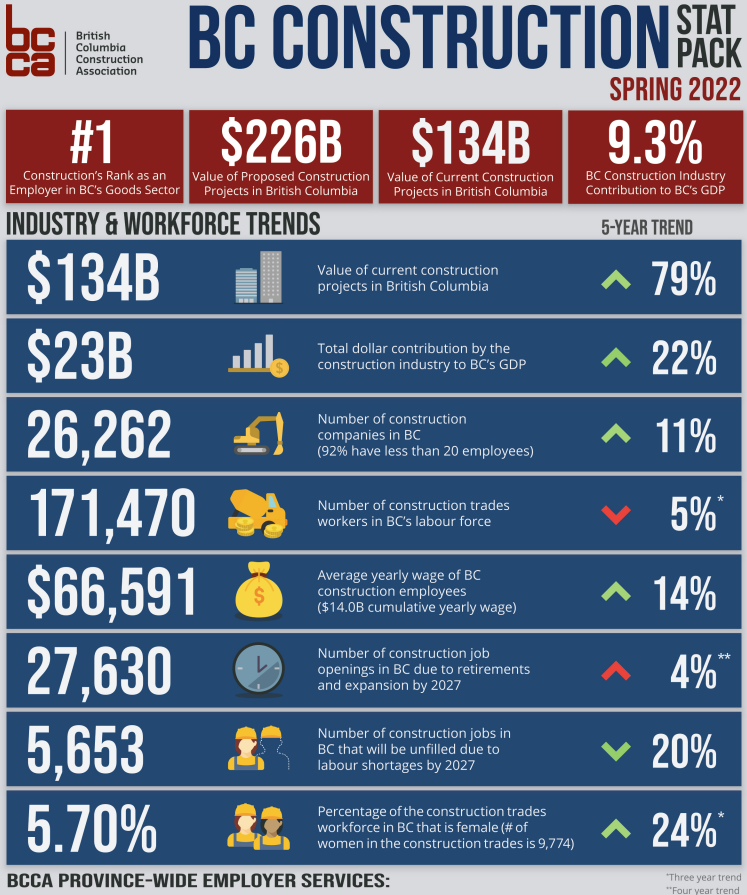
  • 2022 BC Construction Industry Survey Report Workers are getting more skilled, with 76% of survey respondents reporting they are fully credentialed and 12% working on their ticket. More women are receiving subsidized training and mentorship than men, and the number of companies reporting they have diversity policies in place has risen to 84% from 62% just a few years ago. (BC Construction Association)

Videos of the Week

Thirteen Ft. Austin Makson: Video: Liam Morgan.

Islas: A new pegless street riding adventure filmed by Rich Forne around Mallorca, Tenerife, Malaga, and Barcelona. ''Born at the feet of a Volcano and raised by a pack of wolves has created a mystical and humbling human. Few embody his passion and ability on a bike. Rubio has blessed us with his style and grace with his new video part Islas.'' - Rich Forne.

Still Ain't Safe - Dan Kruk: Dan Kruk, the hard 540 king brings us another hitter properly displaying his deep bag of tricks and some infamous So-Cal spots. Hit play and try to wrap your head around some of these combos. They ain't safe.

5 days in the Bay with Ishod A lot of pros would need a year to film what Ishod can knock out in a week.

Double Rock: Jonathan Perez Jonathan unloads on the concrete hubba and gets some back up from Lil Dre, Daniel Dubois and Jack Curtin.

Blake Johnson’s “Part-Ular” Santa Cruz Part Blake's been in Barci for a minute and it's evident with his fluency for flowing lines and beautiful mannies. Mac Dre on the track makes it a must-watch.

Interest Rates Rise, Inflation, Construction Costs, and GAP Store Playlists

Thursday morning news drop

  • Bank of Canada increases policy interest rate by 50 basis points, begins quantitative tightening The Bank of Canada today increased its target for the overnight rate to 1%, with the Bank Rate at 1¼% and the deposit rate at 1%. The Bank is also ending reinvestment and will begin quantitative tightening (QT), effective April 25. Maturing Government of Canada bonds on the Bank’s balance sheet will no longer be replaced and, as a result, the size of the balance sheet will decline over time. (Bank of Canada)

  • U.S. inflation rate keeps heading higher, now up to 8.5% March figure even higher than anticipated due to energy price spike during the month (CBC)

  • Amid push for more housing, construction costs remain 'stratospheric' Residential construction costs in Ottawa jumped 24 per cent from late 2020 to late 2021 (CBC)

  • Don’t Fall for This Real Estate Myth REITs have gotten a bad rap in rising-rate environments, but historical data tells a different story (Institutional Investor)

  • Is The Fed Making a Mistake? This group more or less complains about higher prices but then keeps right on paying them because they can. The problem is it’s probably going to be the bottom 50% that don’t own financial assets that gets hurt the most if we do go into a recession. But the idea is if you can put a dent in the wealth effect and make borrowing more expensive it should slow demand. (A Wealth of Common Sense)

  • Stock Splits Actually Work—Just Not for the Reason Everyone Thinks There have been about 20 splits a year by U.S. issuers over the past decade, says Dow Jones Market Data. “By itself, a stock split should neither create nor destroy any value.” The real heyday of the split was during the late 1990s tech bubble. From 1997 to 2000, an average of 65 U.S. companies divided their shares each year as markets melted up. Split frequency picked up again in the years before the global financial crisis, at the tail end of another long market rally. (Barron’s)

  • ‘We’re a Cult’: Inside Bitcoin’s Shameless Hypefest. Evangelists—and a couple of guys selling bitcoin panties—flocked to a Miami Beach convention center last week. (Daily Beast)

  • Guns, Gains And God: Four Days In Miami With Crypto’s Most Faithful Fans. The forum is also an occasion for the crypto rich to flaunt the sudden, enormous wealth cryptocurrencies have generated. (Bitcoin’s value alone has soared approximately 1,100% since the conference’s 2019 start.) They get the chance to do so in a city offering bountiful opportunities to strut and spend, a place that has deliberately pitched itself as a Mecca for crypto enthusiasts and techno nonconformists. (Forbes)

  • You’re Still Being Tracked on the Internet, Just in a Different Way Apple and Google are pushing privacy changes, but a shift in digital tracking is giving some platforms a bigger advertising advantage. (New York Times)

  • The Guy Who Collected Every Gap Store Playlist Ever Made ‘I’m still obsessed with ‘Cotton Wool (Fila Brazilia Mix)’ by Lamb from the August 1998 playlist. It really captures the feel of the Gap store that year’ (Mel Magazine) and here is his Spotify links to all the Gap Music (Spotify)

Canadian Housing Crisis, Stock Market Rally, Inflation, and Sports Gambling

Wednesday morning news drop

  • Canada wants to build 400,000 homes a year. Who’s going to build them? The government has promised to build about 400,000 homes annually for the next decade. There’s just one problem: It’s not clear there are enough workers to build them. (Global News)

  • Will Ottawa's plan to hike housing supply move the needle on home prices? Groups say they're encouraged by the steps taken, but not everyone is sold on the measures (Financial Post)

  • Paying people to buy an electric car is a really expensive way to cut emissions There are cautionary lessons for Canada here. In last week’s federal budget, Ottawa staked an additional $1.7-billion over three years on subsidies for EV buyers, plus $548-million to encourage businesses to switch to medium- and heavy-duty EVs (Globe and Mail)

  • Why Stocks Are Rallying in the Midst of a War and Soaring Inflation: Investors are confronting one of the most uncertain periods of their lifetimes. Stocks are rallying anyway. The S&P 500 has rebounded 7.6% from its 2022 low in March, cutting its losses for the year to about 6%. (Wall Street Journal)

  • I’ve Got Time to Recover From This Inflation, Right? Inflation hasn’t been this high since the early 1980s. Although this is not unprecedented – before then, it had been 65 years before it even reached those same levels – it is also not a regular occurrence. Hence why the Fed is adjusting the gears a bit higher, allowing the rest of the economy to coast downhill. (Wealth Found Me)

  • The Can’t-Lose Betting Strategy That’s Taking the Gamble Out of Sports Gambling Caesars, DraftKings, FanDuel, and others have been handing out untold millions in sign-up bonuses. Coupon-clipping types are playing them against each other to make risk-free bets. (Bloomberg)

  • Why the Past 10 Years of American Life Have Been Uniquely Stupid It’s not just a phase. (Atlantic)

    How to Stop Procrastinating A science-based system to conquer chronic procrastination (Curiosity Chronicle)

  • Finding the next pandemic virus before it finds us The tricky work of seeking, sequencing, and sharing viruses around the world. (Vox)

  • How Liberia’s frontline health workers are protecting us all Remote regions of sub-Saharan Africa are among the world’s hotspots for new diseases. But Liberia is using an innovative approach to identify outbreaks before they become a problem. (BBC)

  • An ocean of noise: how sonic pollution is hurting marine life Today’s oceans are a tumult of engine roar, artificial sonar and seismic blasts that make it impossible for marine creatures to hunt or communicate. We could make it stop, so why don’t we? (Guardian)

  • The Future of the International Space Station Looks Dire For 30 years the U.S.-Russia partnership at the ISS was above it all. Now the U.S. finds itself in need of a friend, not a foe (Businessweek)

  • Pro-Russia Sentiment on Indian Twitter Draws Scrutiny While India and Russia have long had close ties, researchers say there are signs that social media posts parroting Kremlin talking points may not be legitimate. (New York Times)

  • Vintage Chevy Station Wagon: A Look Back The Chevrolet Nomad The '50s birthed some of the most iconic station wagons ever, and this includes the legendary Chevrolet Nomad. (Hot Cars)

Russia and the War, Corporate Landlords, and Sportswashing

Tuesday morning news drop

  • Putin and Xi Exposed the Great Illusion of Capitalism Unless the U.S. and its allies mobilize to save it, the second great age of globalization is coming to a catastrophic close. (Bloomberg)

  • The war in data, week six: The aftermath of massacres: Russia’s invasion has cost thousands of lives, forced millions to flee and sent shockwaves through the global economy. (Grid)

  • U.S. Hunt for Russian Oligarch’s Office Fortunes HUNT FOR RUSSIAN Their moves during the past decade to hide billions of dollars could thwart sanctions imposed over Putin’s invasion of Ukraine (Washington Post)

  • Corporate landlords are gobbling up U.S. suburbs. These homeowners are fighting back. Using authority that lets them punish homeowners who fail to cut the grass, one predominantly Black neighborhood in North Carolina slows the pace of investor purchases. (Washington Post)

  • How Chief Technology Officers Are Investing Big in the Future A survey of more than 3,000 executives across industries provides a crystal ball into how companies are spending today for tomorrow. (Bloomberg)

  • The Huge Endeavor to Produce a Tiny Microchip As the global chip shortage continues, we take an inside look at how semiconductors are fabricated. (New York Times)

  • The Fortunes of MacKenzie Scott Three decades after worrying about making rent, she is now giving away billions — all while trying to keep herself out of the spotlight. (New York Times)

  • Faster rate hikes, cooling home prices could put the squeeze on HELOC holders HELOC interest rates are variable, and many Canadians pay only the interest, leaving principal amount subject to rising rates (Financial Post)

  • The Rookie Scale: Scottie Barnes May Not Be ROY, but He Has Turned Toronto Around Plus, a deep dive into Evan Mobley’s defensive impact and a look at how Jose Alvarado and Bones Hyland have emerged as key contributors (Ringer)

  • Opinion: Tiger Woods has already won Tiger Woods had already won the minute he walked onto that fairway at the 86th Masters golf tournament on Thursday and, for me, he doesn't need a sixth green jacket prize to prove it. (CNN)

  • Sportswashing Is Everywhere, but It’s Not New Regimes have been using sports to burnish their images or distract from their problematic behavior for centuries. (Sports Illustrated)

Ukraine and Russia, China, Climate Change, and Wastewater Management

Monday morning news drop

  • The wartime president: Ukrainian President Volodymyr Zelenskyy speaks with Scott Pelley in Kyiv On February 24, with the Russian invasion coming at him from three sides, Ukrainian President Volodymyr Zelenskyy reached for his most powerful weapon – his phone. The moment Zelenskyy told his people he refused to flee, Ukraine refused to fall. Leaders don't become legends often, but over these nearly seven weeks, this 44-year-old former comedian inspired his country to stand up to the overwhelming force of Russia. Last Wednesday, we were admitted to Zelenskyy's fortified war rooms to meet the man who stands between the Russian army and the free world. (60 Minutes)

  • ‘This Is True Barbarity’: Life and Death Under Russian Occupation: The town of Trostyanets was occupied by Russian forces for a month before the Ukrainian military liberated it. Residents described weeks of hunger and horror. (New York Times)

  • The Bear Breaks Down: Andrei Soldatov on Russia’s Self-Destruction: “When you have a guy in the Kremlin who is being absolutely delusional about the real situation in Ukraine, you can’t speak in terms of a coherent foreign policy.” (Octavian Report)

  • US right wing figures in step with Kremlin over Ukraine disinformation: False narratives pushed by Tucker Carlson and key Republicans in Congress have been embraced and recycled by Moscow (The Guardian)

  • How a QAnon conspiracy theory about Ukraine bioweapons became mainstream disinformation It started as a fringe belief. Now it's an official stated reason for Russia’s invasion (CBC)

  • Why China stands firmly with Russia — for now Former Australian Prime Minister Kevin Rudd has known China as a student, scholar and head of state. When it comes to China’s “limitless partnership” with Putin’s Russia, he thinks he knows where the red lines are. (Grid)

  • Mortgage Rates Rise, Home Sellers Fear Time Is Running Out to Cash In A growing sense of urgency to list properties before the housing market cools (Wall Street Journal)

  • How Many Billionaires Are There, Anyway? Forbes thinks there are 735 of them in America. Another count finds 927. Whatever the answer, the mystery is revealing — and the number is growing rapidly. (New York Times Magazine)

  • Heaps of money got Disney what it wanted in Florida, until now The Walt Disney Co. has dominated Florida for so long that the very idea of a backlash from the state’s political leaders has been unimaginable. Yet here we are. Republican Gov. Ron DeSantis and his GOP colleagues in the state legislature are threatening to bring the hammer down on the entertainment behemoth. Why? Because Disney is expressing disapproval of their latest effort to pander to their far-right base, the so-called “Don’t Say Gay” law aimed at oppressing transgender people. (Los Angeles Times)

  • Baseball’s Owners Are Winning the Game Behind the Game With the most powerful union in pro sports, why are player salaries falling even as franchise values soar? (Businessweek)

  • A Million Little Pieces: The Race to Rebuild the World’s Coral Reefs: Nearly half of these ocean ecosystems have been wiped out since 1950. One man is on a mission to reverse that—by speed-growing coral in hyperefficient nurseries. (Wired)

  • It’s Time for a Net Zero Building Boom A mix of high-tech and old-fashioned energy efficiency tactics can deliver carbon-neutral buildings, right now. But the U.S. needs to pick up the pace. (CityLab)

  • What’s really holding the world back from stopping climate change The latest UN climate report suggests the world has to end new fossil fuel infrastructure to meet current goals (Vox)

  • Inside the Bitcoin Bust That Took Down the Web’s Biggest Child Abuse Site They thought their payments were untraceable. They couldn’t have been more wrong. The untold story of the case that shredded the myth of Bitcoin’s anonymity. (Wired)

  • How sewage can warn us about the next pandemic The ins and outs of wastewater surveillance. (Vox)

  • Why experts are terrified of a human-made pandemic — and what we can do to stop it As biology gets better, biosecurity gets harder. Here’s what the world can do to prepare. (Vox)