Day Trading Dreamers and Pickleball the Fastest Growing Sport in America

Thursday morning news drop

  • How to Not Panic: Studying history, we come to realize that a lot of what we experience isn’t as unique as we think it is. The U.S. stock market typically declines by at least: 10% every other year 30% every 4-5 years 50%+ once a generation (Of Dollars And Data)

  • The bull market minted millions of day traders. They’re in for a rough ride In early 2021, in the midst of speculative stock market euphoria, a pair of day traders went viral on TikTok with a video explaining their winning strategy. “I see a stock going up and I buy it. And I just watch it until it stops going up, and I sell it,” says the user known as Chad. “I do it over and over and it pays for our whole lifestyle.” (CNN)

  • Earnings Math Catches Up With the Tech Highflyers The sector’s stock selloff signals investors have finally realized that future growth can’t justify ludicrous valuations. (Bloomberg)

  • ‘The haves and have-yachts’: on the trail of London’s super-rich We join sociologist Caroline Knowles on a walk across the economic and class divide of the capital to discover how extreme wealth has reshaped our streets. (The Guardian)

  • Oil Windfall Brings Free College and Day Care to One of the Poorest States New Mexico this year became the first US state to offer free college to its residents and free child care to most families, all on the back of soaring revenue from royalties and taxes on oil and gas production, which are booming on its patch of the Permian Basin. The state now ranks behind only Texas in energy production. (Businessweek)

  • Spies’ night eyes: Once-restricted tech is helping spot Russian troops, Chinese missile sites and raging wildfires Satellites equipped with regular cameras can’t snap shots of most of the planet most of the time: ~70% of the globe is shrouded in clouds, and at any given time about half of the planet also happens to be dark. That’s where a newer kind of satellite comes in. Instead of using cameras to detect visible light, they rely on a technology called synthetic aperture radar (SAR) that beams microwaves at Earth. These microwaves shoot through clouds and don’t know the difference between day and night. (Grid)

  • What People Misunderstand About Red-Pilling: I’ve been doing fieldwork in far-right online communities since 2016. I hang out on white supremacist Telegram channels, comb through QAnon threads on 8kun (formerly known as 8chan), and watch TikToks that claim COVID-19 is a globalist plot. Like most people who work with far-right content, I find it emotionally draining and unpleasant. But I’m also convinced that the mainstream acceptability of extremely racist and conspiratorial beliefs is a threat to American democracy. (Slate)

  • ‘Pickleball Is the Wild, Wild West’: Inside the Fight Over the Fastest-Growing Sport in America There are: Too many leagues. Too many federations. Battling billionaires. Bad behavior. And the growth of a booming sport is on the line. (Sports Illustrated)

Investing in China, the NBA and China, and the Crypto Collapse

Tuesday morning news drop

  • NBA owners, mum on China relationship, have more than $10 billion invested there ESPN examined the investments of 40 principal owners and found that they collectively have more than $10 billion tied up in China. The owners’ myriad ties to the world’s second-largest economy leave their businesses vulnerable if they get on the wrong side of the Chinese government or the public there, according to the analysis. (ESPN)

  • As Global Markets Shudder, Investor Sentiment About China Ranges from Exuberant to Highly Cautious: “It’s important to distinguish between what’s happened with Russia and what might happen with China,” said Andy Rothman, chief investment strategist at Matthews International. (Institutional Investor)

  • The Math Prodigy Whose Hack Upended DeFi Won’t Give Back His Millions An 18-year-old graduate student exploited a weakness in Indexed Finance’s code and opened a legal conundrum that’s still rocking the blockchain community. Then he disappeared. (Bloomberg)

  • A $60 Billion Crypto Collapse Reveals a New Kind of Bank Run: Terra’s coins were supposed to be the future of money. But they relied on confidence—which can vanish in an instant. (Bloomberg)

  • How much longer can Google own the internet? The synonym for search finds itself in big antitrust trouble. (Recode)

  • The Age of Extinction Is Here — Some of Us Just Don’t Know It Yet We’re Crossing the Threshold of Survivability — And There’s No Going Back (Eumondia)

  • The European country where “replacement theory” reigns supreme How Hungary turned replacement theory into state ideology. (Vox)

  • How North Korea Went from ‘Zero COVID’ to 1.2 Million Cases in 72 Hours This time last week, North Korea was still claiming to be one of three COVID-free countries worldwide. Now it’s facing a public health catastrophe. (Vice)

  • The air conditioning paradox How do we cool people without heating up the planet? (Vox)

  • Are luxury sneakers getting too expensive? Is it work paying $2,000 for a sneaker that only cost a few dollars to make? (High Snobiety)

Credit Scores, Stock Market Pains, and Covid in China

Wednesday morning news drop

  • How Credit Scores Can Run—and Ruin—Our Lives You can have a great credit history and still see your score plummet. How did the rating system become so powerful? (CBC)

  • Market Pain Isn’t Over, but You Will Get Through This Head-spinning volatility in financial markets isn’t all that puzzling when you consider the problems the Federal Reserve is grappling with, our columnist says. (New York Times)

  • Was the 1966-1982 Stock Market Really That Bad? This long, drawn out sideways market is one of the ultimate devil’s advocate positions for those that like to argue against stocks being a solid long-term investment. Although this was technically a sideways market we need to put some context around this time frame. (A Wealth of Common Sense)

  • Japan’s living standards are too low: A lot of hard work with not nearly enough to show for it: But underneath the gloss of that fantasy-land exterior, Japan as a whole is not exactly thriving. For decades, the country’s real wages have drifted downward. (Noahpinion)

  • “Covid Zero” is Crushing China Production and consumption both cratered in April. The impact on the rest of the world is uncertain. (The Overshoot)

  • Travel Tips From the Man Who’s Visited Every Country on Earth—and Space Pack a sheet, leave the wedding ring at home, and skip the street food. (Pursuits)

  • “Free Speech” Ought to Mean More than Mocking Trans People Elon Musk, social media content moderation, and a culture of free speech. (The Bulwark)

  • ‘Redemption is a powerful concept’: Hayden Christensen on Star Wars and daring to return as Darth Vader: When he first portrayed Darth Vader in the much-panned Star Wars prequels 20 years ago, fans vented their anger at him. So why is he risking more in a new TV series? He talks about George Lucas, the pressures of fame and his love of bulldozers (The Guardian)

Bear Market Panic, Crypto Chaos, and Revolutionizing Child Care

Monday morning news drop

  • Amateur Investors Rode the Bull Up. Now the Bear Looms. An estimated 20 million people started trading on their own during the pandemic. Some are shifting strategies as stocks tumble, while others are getting out. (New York Times)

  • The stock market’s panicking, but you don’t have to: After the stock market plunged at the outset of the Covid-19 pandemic, it’s been on a pretty good run. The S&P 500 climbed by 16% in 2020 and 27% in 2021. The environment made it perhaps a little easy to forget that bull markets don’t last forever, and the waters can get choppy. As the saying goes, markets often take the stairs up and the elevator down, and we’re on the elevator right now. (Vox)

  • Hedge Trimming: Losing Streaks Coincide Since 1960, there have been 44 individual instances of the S&P 500 index enduring five or more consecutive down weeks. Since 1973, US Treasuries have had 31 such losing streaks lasting at least five weeks. Yet these prolonged sell-offs had never coincided — until the start of May. For the first time in the near 50 years for which we have both data sets, the two sides of a typical 60/40 US portfolio have lost money for five weeks in a row. (Man Institute)

  • Crypto’s Great Reset: How Digital Asset Investors Will Recover From The Market’s $1 Trillion Meltdown: The bottom fell out from one of crypto’s fastest growing blockchains, LUNA, which promised to succeed where bitcoin failed. Its predictable collapse reverberated across the entire crypto market and is forcing investors to pick up the pieces. (Forbes)

  • A Crypto Emperor’s Vision: No Pants, His Rules: Sam Bankman-Fried is a studiously disheveled billionaire who made a fortune overseeing trades that are too risky for the U.S. market. Now he wants Washington to follow his lead. (New York Times)

  • In coal country, a new chance to clean up a toxic legacy: Waste from abandoned and bankrupt mines has contaminated more than 12,000 miles of waterways. Now states are looking at how to extract critical elements from those waters to try to offset the high cost of cleanup. (Washington Post)

  • The case for revolutionizing child care in America Suskind’s core message: creating a nurturing, interactive environment for kids aged zero to 3 is vital for their development — and many kids are getting left behind during this critical period. Kindergarten — and even preschool — may be too late for interventions to try and close an opportunity gap that begins to open up at birth. She argues we need to start much earlier. (NPR)

  • How China uses global media to spread its views — and misinformation From covid to the war in Ukraine, China has ramped up its efforts to influence public opinion across the world. (Grid)

  • The Last of Lehman Brothers: The Long, Slow Death of LEH Is Almost Complete The bank whose collapse marked the beginning of the 2008 financial crisis is only mostly dead. These are the people attending to its last remains ahead of its final court cases. (Bloomberg)

  • B.C. government put on defensive after 'tone deaf' $789M museum upgrade announcement John Horgan's NDP government has faced blistering criticism for its plans for a new Royal B.C. Museum (CBC)

Videos of the Week, Bear Markets, Investments, and Crypto Crash

Friday morning news drop

  • Millennials and Gen Z Invested When It Was Fun. Now They're Riding Out a Crash Crypto astrology is just one unusual example of how younger generations are doing away with traditional investing methods in favor of less time-tested approaches, from meme stocks to crypto to NFTs. (Time)

  • Pimco: Navigating the end of the bond bull market The California-based asset manager is trying to adapt to an era of rising interest rates and passive investing. (Financial Times)

  • A bear market reading list. As you can see the S&P 500 and Dow have yet to officially enter bear market territory, but by every other measure we are in a bear market. For even the most stalwart, a bear market will put you on edge. What is happening and how you should react, a sampling. (Abnormal Returns)

  • A VC Framework for Navigating Down Markets. Conserve cash, extend runway, shift from focusing on growth to focusing on efficiency. Founders crave advice that goes beyond the platitudes and provides a tangible framework to quantify the magnitude of the change in valuations and what it means for their next round and charting their future course. (Future)

  • How a Trash-Talking Crypto Founder Caused a $40 Billion Crash Do Kwon, a South Korean entrepreneur, hyped the Luna and TerraUSD cryptocurrencies. Their failures have devastated some traders, though not the investment firms that cashed out early. (New York Times)

  • Not Your Average Islands The Cayman Islands are home to a thriving culture of art, adventure, and environmental stewardship (Walrus)

Videos of the Week

Brage Vestavik - NÅ! After a long Norwegian winter of hibernation, Brage Vestavik is back and stacking clips with Blur Media.

Revs Project Evolve Women's Day: I headed to Revs for the Project Evolve Women's day run by Becci Skelton, Vero Sandler, and Sian Dillon. The line had just been re-opened a few days before. Vero had already been ripping up the entire line and Natasha Bradley had been getting up to the big booters. Vero shared all her tips with us before myself and Tash set about conquering the line together. As you can see we had a blast helping out each other out and riding together on what must be one of the biggest public jump lines in the UK. That kicker is dreamy, can't wait to go back and ride it again! Thanks to Emily Horridge, Beth Bishop, and Piper for the extra footage and a big shout out to the girls for organizing an amazing day, it was amazing to see so many women shredding, things have changed so much in such a short space of time, it's awesome to see.

Mark Matthews Rides the Jordie Lunn Bike Park Gravity Zone on Opening Day

A NEW STYLE BEST TRICK EVENT - RED BULL FEATURED

Simone Barraco & Anthony Perrin - VANS Unfiltered PARIS 'Offline'

VALENTIN COTOT 2022 - DIG BMX

REASONS TO SMILE - GRANT YOOBIE - DAILY GRIND

Chapter 11 TV - Wood Session

Two Sessions | Dane Micky Matt and Eithan

Bear Markets, Inflation, Cryptoland, and Daniel Ricciardo

Thursday morning news drop

  • Canada's inflation rate inches up again, to new 31-year high of 6.8% Economists had been expecting inflation to crest but instead it went up slightly (CBC)

  • Bear Market Playbook The most important thing right now is not to panic and to stick to your plan, assuming you had one. But every market environment presents an opportunity to do something to improve your portfolio or your total financial picture. These actions can help scratch the urge to DO SOMETHING to ease the pain of seeing red on your statements. It is in our human nature to react to fear, and with careful planning and deliberation, perhaps we can harness that energy into something productive rather than destructive. I call this the bear market playbook. (The Belle Curve)

  • Cautionary Tales from Cryptoland Web3 is off to a rocky start. Optimists may rattle on about progress on the horizon, but at present the space is rife with fraud, hacks, and collapses. In this Q&A with Web3 critic Molly White, creator of the website Web3 Is Going Just Great, White argues that as this technology becomes more mainstream, its ability to do harm — financial, emotional, and reputational — will grow, and fast. (HBR)\

  • All of Those Quitters? They’re at Work. The Great Resignation was in fact a moment many people traded up for a better-paying gig. (New York Times)

  • Tech’s High-Flying Startup Scene Gets a Crushing Reality Check Job cuts and a sour investment climate are hitting big companies like Stripe and Instacart, and may slam smaller ones as damage spreads. (Bloomberg)

  • Canadians love their cars so much that high fuel prices won't make most of us change our ways With fuel prices driving inflation, why are there still so many darn cars on the road? (CBC)

  • Elon Musk Is Acting Like Henry Ford. Uh-Oh. Both auto magnates built dominant companies. Both became global celebrities. Both dove headlong into other pursuits. One lost his edge. So far. (Bloomberg)

  • The Incredible Shrinking Car Dealership The way people buy automobiles is changing—so Honda and other manufacturers are adapting in kind. (Wired)

  • A New York power line divided environmentalists. Here’s what it says about the larger climate fight. States waited too long to decarbonize, and now they have to make tough choices. (Grist)

  • Forgetting the apocalypse: why our nuclear fears faded – and why that’s dangerous The horrors of Hiroshima and Nagasaki made the whole world afraid of the atomic bomb – even those who might launch one. Today that fear has mostly passed out of living memory, and with it we may have lost a crucial safeguard (Guardian)

  • Breaking the Black Sea Blockade: This effort has failed, and while Russian forces are continuing with some probing offensives, these have largely been blocked. The campaign map does not look much different to that of a month ago. NATO’s Secretary General Jens Stoltenberg has said that Ukraine ‘can win this war’, while the UK’s Defence Intelligence, having noted that the Russian army has lost a remarkable third of its original ground combat force, observed that it was now ‘significantly behind schedule.’ This is a story of shrinking objectives. (Comment is Freed)

  • The Last Cigarette Cinema’s most seductive prop A cigarette is an invitation. When, in The Lady from Shanghai, able-bodied Irish sailor Michael O’Hara (Orson Welles) meets Elsa Bannister (Rita Hayworth) in a horse-drawn carriage in Central Park, he offers her a cigarette. “But I don’t smoke,” she says. Still, she wraps his cigarette in a handkerchief and tucks it away as a memento. (American Scholar)

  • Daniel Ricciardo Is America’s First Formula 1 Superstar After the Australian Drive to Survive star fell out of love with F1, he came back stronger—and more popular—than ever. (GQ)

Will Crypto End in Disaster? The Royal BC Museum Might

Wednesday morning news drop

  • What is the point of crypto? Crypto is a solution in search of a problem — or problems. (Vox)

  • Why This Computer Scientist Says All Cryptocurrency Should “Die in a Fire” UC-Berkeley’s Nicholas Weaver has been studying cryptocurrency for years. He thinks it’s a terrible idea that will end in disaster. (Current Affairs)

  • Venture Capitalists Are Aiming to Disrupt Fish Farming: Forever Oceans says it’s built technology that allows it to push into new frontiers for cultivated fish. (Businessweek)

  • Facebook Has a Superuser-Supremacy Problem: Most public activity on the platform comes from a tiny, hyperactive group of abusive users. Facebook relies on them to decide what everyone sees. (The Atlantic)

  • Why Elon Musk can’t just walk away from the Twitter deal His recent tweets may be a renegotiation strategy. (Grid)\

  • The Rich Are Not Who We Think They Are. And Happiness Is Not What We Think It Is, Either. It’s not the small number of well-known tech and shopping billionaires but instead more than 140,000 Americans who earn more than $1.58 million per year. Researchers found that the typical rich American is, in their words, the owner of a “regional business,” such as an “auto dealer” or a “beverage distributor.” (New York Times)

  • Greedflation, gouging and price controls There are really three questions here: Is corporate greed contributing to inflation? Is market power contributing to inflation? Are price controls a good way of addressing market power and/or inflation? (Noahpinion)

  • Inside Mark Meadows’s final push to keep Trump in power: The former congressman played a key role in Trump’s effort to overturn the election, according to his texts, congressional investigations and interviews. (Washington Post)

  • How a Fringe NBA Player Blazed a Trail to Coach the Boston Celtics Ime Udoka beat long odds and made an NBA team after getting a last-minute invitation to training camp. It was a month that would change his life. (Wall Street Journal)

  • How Battle of Alberta has changed since 'brutal, violent' 1991 series “You always knew going into it that there was going to be bloodshed, and it was going to be some of your own,” The sheer violence does not exist anymore, and when the original Battle began there was no question who was the big brother, and who was the little one. (Sportsnet)

  • "Slow-moving disaster": Horgan government slammed over costly Royal BC Museum rebuild When BC’s tourism minister announced a new $800 million rebuild of the Royal BC Museum in Victoria last week, she took great pains to point out all the people who will benefit from the change. (Hive)

Tech Bubble bursting, Social Media, and Twitter's Lost Celebs

Tuesday morning news drop

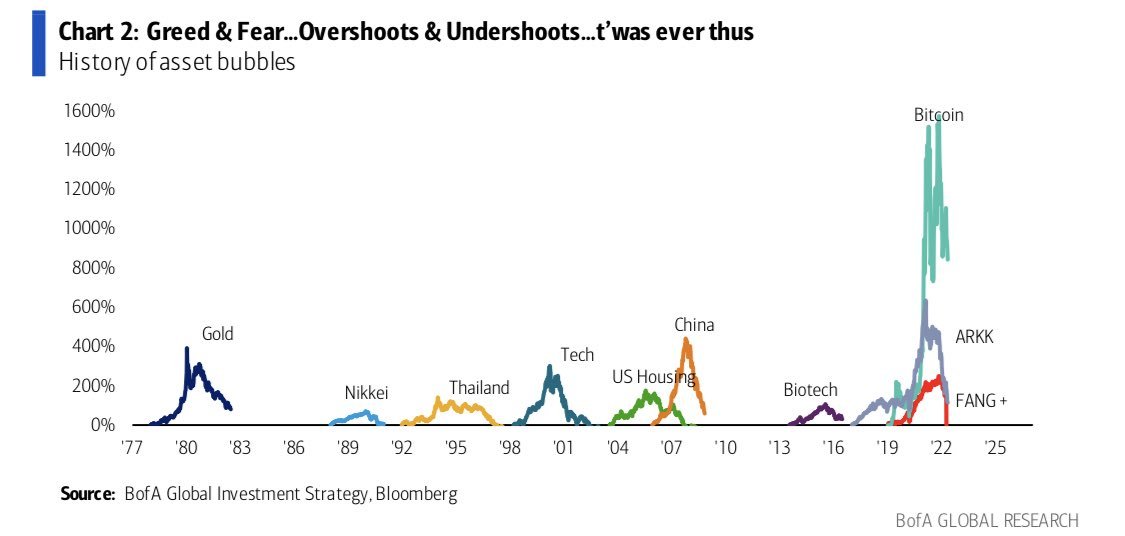
  • Is this another tech bubble bursting? And should you, a normal person, care? There are lots of parallels: Like the dot-com era, the stock boom, which began in 2009 and then super-sized during the pandemic, has been fueled in large part by very low to nonexistent interest rates, which made investors more interested in companies that promised to deliver outsized returns. And like the dot-com era, we’ve seen plenty of companies promise products and results they can’t deliver, like hydrogen-powered trucks. (ReCode)

  • A Stock is Not an Index: Here is where things break down between buying an individual company that has declined a lot and buying an index that has declined a lot—there is no guarantee that the individual company will ever recover. Netflix may never get back to its old highs — or it may slowly decline into the graveyard of market history. With an index fund like the S&P 500, this is unlikely to occur. (Of Dollars And Data)

  • What to Know if You Want to Buy the Stock Market Dip The Federal Reserve is giving the stock market a fright as it ramps up its efforts to control inflation. The volatility may last longer than the past few decades have led investors to expect—but you can still prosper with discipline, patience and courage. (Wall Street Journal)

  • How Twitter lost the celebs: Elon Musk was right that Twitter’s most popular accounts have gone quieter over the years. Hollywood insiders explain what happened — and why Musk’s ownership might only make it worse. (Washington Post)

  • The Isolation of Social Media Social media should promote conversation and exchange, yet increasingly it doesn’t. (Harvard Medicine)

  • Gary Bettman must make the Oilers wear their ‘80s jerseys for the second round Calgary-Edmonton needs to feature the great colors that once punctuated the rivalry (Deadspin)

  • Anybody Can Dribble a Basketball. But Few Can Do It Like This. Three elite dribblers of the past — God Shammgod, Tim Hardaway and Oscar Robertson — share their secrets, and name their favorites now. (New York Times)

Meme Stocks and Market Fundamentals, and Covid Booster Shots

Monday morning news drop

  • The Market Is Wrong, Bro: Stocks go up, stocks go down, and confirmation bias. The market isn’t wrong. It’s just the market. The only thing “right” or “wrong” is how we respond to the market. Be wary of assuming that profitable price movement confirms your ideas, and don’t dismiss every dip as the market being irrational. (Young Money)

  • Twenty Lessons Learned Memes are not fundamentals. You didn’t know this was going to happen. You don’t know what’s going to happen next. Cash is not trash. Past performance is not indicative of future performance — Past behavior is. Investing is hard. (Irrelevant Investor)

  • Elon Musk’s Fixer Is Quietly Tending the World’s Biggest Fortune: Jared Birchall is the right-hand man who does everything from lining up Twitter deal financing to digging up dirt on adversaries. (Bloomberg)

  • The Turkish Drone That Changed the Nature of Warfare: The Bayraktar TB2 has brought precision air-strike capabilities to Ukraine and other countries. It’s also a diplomatic tool, enabling Turkey’s rise. (New Yorker)

  • On Japan’s Front Lines: For millions of Japanese, confrontation between the U.S. and China is already a reality. Japan Is the Front Line of a U.S.-China Conflict (Businessweek)

  • The Children Left Behind by Long Covid: As the world pretends the pandemic is over, at least a half-million children in the U.S. are struggling with the mysterious disease. (Businessweek)

  • Covid deaths no longer overwhelmingly among the unvaccinated as toll on elderly grows Experts say numbers show importance of boosters — and the risks the most vulnerable still face (Washington Post)

  • Are NFTs really art? Collectible and cartoonish, these digital multiples, traded in cryptocurrency, confer membership of an exclusive club – sometimes literally. But do they have any aesthetic value? A critic weighs in. (The Guardian)

  • Wait, Trader Joe was a real guy? Turns out Trader Joe was a real guy, and his shrewd instincts led him to create a counter-culture grocery empire. (CNN)

  • An illustrated history of the iPod and its massive impact The iPod grew out of Steve Jobs’ digital hub strategy. Life was going digital. People were plugging all kinds of devices into their computers: digital cameras, camcorders, MP3 players. (Cult of Mac)

Videos of the Week, and the Crypto Market Crash

Friday morning news drop

  • Crypto markets tumble and investors get their fingers burned Canadian fintech scholar who warned of meltdown says economy will feel impact (CBC)

  • How More Than $1 Trillion of Crypto Vanished in Just Six Months The helium is coming out of bitcoin and other cryptocurrencies as investors shy away from risk (Wall Street Journal)

  • Bitcoin, NFTs, SPACs, meme stocks — all those pandemic investment darlings are crashing Over the last few weeks and months, almost every financial asset has come hurtling back to Earth after high-altitude flights. That includes conventional stocks and bonds, which have spent most of 2022 in the red. But fad assets such as cryptocurrencies, non-fungible tokens (NFTs), blank-check companies, or SPACs, and meme stocks such as GameStop, have taken the biggest hits. (Los Angeles Times)

  • For Tens of Millions of Americans, the Good Times Are Right Now: Their houses are piggy banks, their retirement accounts are up and their bosses are eager to please. When this boom ends, everything will change. (New York Times)

  • The Great Resignation is becoming a “great midlife crisis” Older, more tenured people are increasingly quitting their jobs. (Vox)

  • How Gillette Embraced the Beard to Win Over Scruffy Millennials A new line of mustache waxes, heated razors, and other grooming products has helped the company reverse a decade-long decline. (Businessweek)

  • Surviving the Race to Alaska This motor-free ocean race—with vessels ranging from paddleboards to pedal-assist sailboats—is less about how fast you can go and more about whether you get there at all. (Hakai Magazine)

  • The abortion provider that Republicans are struggling to stop “The algorithms of Google are suddenly becoming the de facto gatekeeper to access to safe abortion services in the US.” (Vox)

  • Money, Problems, Respect: The Early Days of Biggie’s Fame In an excerpt from the new biography ‘It Was All a Dream: Biggie and the World That Made Him,’ author Justin Tinsley explores what it was like for the Notorious B.I.G. as he adjusted to the limelight (Ringer)

Videos of the Week

"Touha" feat. Honza Faistaver: Video: Liam Morgan. Rider: Honza Faistaver. Shot on unceded Coast Salish territory.

Lukas Halahan - Best Bike Ever: Today's special? A hearty helping of Halahan roast with a side of bike check. Dig in.

'SPAINFUL' - DIG BMX X SUBROSA X SHADOW

Hell of a Month - April 2022 From Manderson runnin' double duty to T Funk's big trouble at China Banks, April was a certified scorcher. Revisit all the highlights here.

Enzo Cautela's "Wake N' Bake" Bones Part

Davonte Jolly's "The Necessary Evil" Ep.2

Kevin Braun's "Pier 7" Part Our guy Braun goes berserk at the Pier, breathing new life into hallowed ground.

Seasons Knows with Cooper Qua

Surfing through Portugal - John John Florence Back in Europe, exploring the Portugal coastline for the first time in a few years.

Fiji Tavarua Mason Ho Experience We'd like to interrupt normal scheduled viewing of MASON"S MEDIEVAL MADNESS for a video from our very recent trip to Fiji! Our final episode for Mason's Medieval Madness will drop next week. May Friday the 13th.

Sunshine, No Clouds | Starring, Macy Callaghan.

Race & Surfing - A Brief History With Selema Masekela: Surfing’s history – from Africa to Polynesia to the Americas – is one that’s rich, diverse, and incredibly nuanced. So much so, that we are only beginning to scratch the surface and understand it. Voiced by Selema Masekela, the film explores the varied roots of surfing’s origin and its subsequent cultural evolution into what we recognize today.

DANNY: An Introduction to Offshore Sailing