Videos of the Week, Investing, Baseball Stadiums, and Electric Vehicles

Friday morning news drop

  • Pay Raises Really Are Tied To Switching Jobs The typical worker who changed jobs between April 2021 and March 2022 saw earnings jump by 9.7% from a year earlier, after accounting for inflation, according to the Pew Research Center. (CNBC)

  • Is the US Economy in Recession? Here Are Eight Offbeat Indicators to Watch: From popping the bubbly to shopping for underwear, pundits look at alternative ways to measure sentiment. (Bloomberg)

  • The Price of Admission: Down 5% months don’t happen very often but they’re not completely out of the ordinary. Over the past 96 years, on average, the stock market is down 5% or worse in a month about once a year. (A Wealth of Common Sense)

  • We Built This City High above street level, thousands of hard-hatted men and women are busy constructing the city’s new condos and office towers. Inside the gravity-defying lives of Toronto’s high-rise workers. (Toronto Life)

  • The Baseball Stadium That “Forever Changed” Professional Sports Camden Yards, which opened 30 years ago this summer, is revered for its design and downtown location. But its influence—along with its lessons—extends beyond architecture. (Ringer)

  • The Origins of Covid-19 Are More Complicated Than Once Thought Scientists used painstaking research, genomics, and clever statistics to definitively track two distinct strains of the virus back to a wet market in Wuhan. (Wired)

  • What’s the Deal With Water Bottles? Once you start looking for drinks in standup specials, they’re everywhere … (New York Times)

  • What Should a Nine-Thousand-Pound Electric Vehicle Sound Like? E.V.s are virtually silent, so acoustic designers are creating alerts for them. A symphony—or a cacophony—of car noise could be coming to city streets. (New Yorker)

  • The U.S. made a breakthrough battery discovery The former UniEnergy Technologies office in Mukilteo, Wash. Taxpayers spent $15 million on research to build a breakthrough battery. Then the U.S. government gave it to China. (NPR)
Videos of the Week

Job Switchers, Stock Fundamentals, and Retail Inventory

Thursday morning news drop

  • If This Is a Recession, We Might Not Know for Months As the Federal Reserve continues to raise interest rates in its fight against the highest inflation in more than four decades, economic indicators flash signs of a slowdown and questions abound over what is a recession and whether the U.S. has entered one. (Wall Street Journal)

  • Things Are Clear as Mud This is the weirdest market and economic environment of my career. Michelangelo wouldn’t be able to paint a clear picture of it all. You should always be wary of people with strong opinions about the future, but maybe never more so than right now.

  • Job Switchers Are Earning a Lot More Than Those Who Stay Even if you’re happy at your job, getting a new job for more pay is a good strategy as inflation eats into paychecks. (Wall Street Journal)

  • Why Stocks Took a July Vacay From Fundamentals: A discouraging economy took a backseat to technical and relative valuations. Inflation will have a lot to say about how long that lasts. (Bloomberg)

  • Retail’s ‘Dark Side’: As Inventory Piles Up, Liquidation Warehouses Are Busy: Consumers are buying fewer discretionary goods and returning more. To clear their shelves, retailers are selling to liquidators at steep discounts. (New York Times)

  • Yes, Social Media Really Is Undermining Democracy: Despite what Meta has to say. (The Atlantic)

  • States With Abortion Bans Are Among Least Supportive for Mothers and Children They tend to have the weakest social services and the worst results in several categories of health and well-being. (New York Times)

  • The Supreme Court Is Making America Ungovernable: The West Virginia v. EPA ruling signals a future in which no one in power has the ability to tackle the biggest issues society faces (The Atlantic)

  • ‘US democracy will not survive for long’: how January 6 hearings plot a roadmap to autocracy Trump’s efforts to subvert the elections laid bare the system’s weaknesses, exposing it to greater exploitation (The Guardian)

  • Made-in-Vietnam Electric Vehicles Are Heading to the U.S. Market VinFast is the latest startup to test American EV demand—and with a novel pricing strategy (Wall Street Journal)

  • Inside Ferrari’s Plan to Enter the Electric-Car Market The luxury sports-car company aims to start selling a fully electric vehicle in 2025. Can it do that and still be Ferrari? (Wall Street Journal)

  • Welcome to Chicago, Hot Dog Town, U.S.A. Just don’t even think about asking for ketchup. The Chicago dog has a special place in the city’s heart: a humble, affordable food that anyone can enjoy, across cultures, creeds and proclivities. With French fries, it’s lunch; on its own, a snack. A source of civic pride, the Chicago-style hot dog is a nexus for many people’s. (New York Times)

  • Beavers are heat wave heroes Animals don’t have AC. But they have beavers. (Vox)

  • The myth of Marilyn Monroe: how her ‘sex bomb’ image buries the truth Six decades on, the spectacle of Marilyn Monroe’s tumultuous life and death still holds us in its grip. With a major new biopic on the way, her biographer sorts fact from fiction. (The Guardian)

The Economy, Pandemic Purchases, Vaccines, and Cars

Wednesday morning news drop

  • Was That the Bottom? The Russell 2000 Index of small-cap stocks and the Nasdaq 100 were both down nearly 32% and 33%, respectively, from their highs. That’s a pretty decent bear market. Since that day, the S&P 500 is up 13%. The Russell 2000 has shot up 14% while the Nasdaq 100 has bounced 16%. (A Wealth of Common Sense)

  • If the Economy Is Shaky, Why Are Company Profits Still Strong? Corporate optimism may seem at odds with the Fed’s grim determination to hold back the economy to get inflation down, but earnings tell a story that other data doesn’t. (New York Times)

  • The pandemic impulse purchases we grew to hate From Pelotons to pets, the Covid buys people wish they’d left on the shelves. (Vox)

  • The 100 Wealthiest Americans Lost $622 Billion Since November But they’re still a lot richer than they were before the pandemic. (Businessweek)

  • Corporate Landlords ‘Aggressively’ Evicted Tenants During Pandemic, House Report Says: A new report from a House subcommittee alleges that four companies, including Invitation Homes and Pretium Partners, used harsh tactics to push out thousands of renters. (Bloomberg)

  • The Water Wars Come to the Suburbs A community near Scottsdale, Arizona, is running out of water. Amid the finger-pointing, the real question is: how many developments will be next? (New Yorker)

  • The audacious PR plot that seeded doubt about climate change: Thirty years ago, a bold plan was cooked up to spread doubt and persuade the public that climate change was not a problem. The little-known meeting – between some of America’s biggest industrial players and a PR genius – forged a devastatingly successful strategy that endured for years, and the consequences of which are all around us. (BBC)

  • Why Americans Hate the Media: Why has the media establishment become so unpopular? Perhaps the public has good reason to think that the media’s self-aggrandizement gets in the way of solving the country’s real problems (The Atlantic)

  • These Vaccines Will Take Aim at Covid—and Its Entire SARS Lineage Scientists are developing vaccines to target the virus family that spawned Covid-19. Their efforts could thwart future variants, or even new related viruses. (Wired)

  • How colours affect the way you think Our world is awash with a rainbow of colours, but certain shades can have a surprising impact on our ability to concentrate, our mood and even the flavours we experience. (BBC)

  • How a near-death experience could change the way you live Near-death experiences can occur when someone faces a life-threatening situation such as cardiac arrest or is under deep anesthesia. Some people have reported the feeling of leaving their body and observing their surroundings. For Schiefer, his journey started with what looked like an airplane fuselage. (NPR)

  • Elon Musk’s Antics Turn Owners and Would-Be Buyers Against Tesla The lightning-rod CEO’s public persona — once a big asset — is increasingly a liability in the EV race. (Bloomberg)

  • Why So Many Supercars Have Montana License Plates A legal loophole lets owners of expensive cars avoid taxes and emissions standards in other states. Tightening rules could send the practice into overdrive. (Bloomberg)

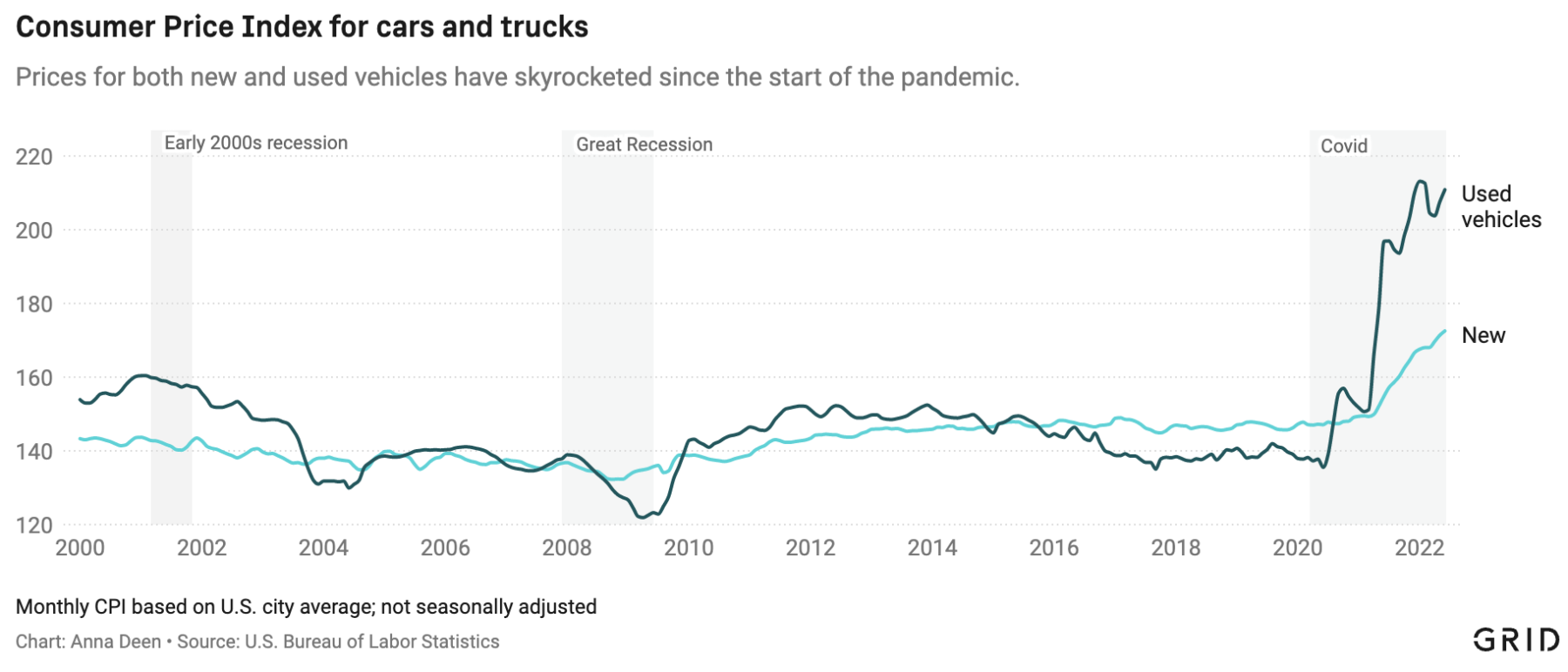
  • Why are cars so expensive now? A look at the reasons behind the skyrocketing prices and ballooning auto loans. Grid found a net increase of nearly $13,000 in the cost of a new vehicle. Where does that extra cost come from? (Grid)

Russian Economy, Interest Rates, AM Radio, and the Doctrine of Discovery

Tuesday morning news drop

  • Actually, the Russian Economy Is Imploding: Nine myths about the effects of sanctions and business retreats, debunked. (Foreign Policy)

  • Why doesn’t the Fed just hike 200bp all at once? The cases for and against bold, abrupt moves (Noahpinion)

  • After the Great Resignation, where did all the Canadian workers go? Stories from across the country tell of people turning to new careers, education and priorities (CBC)

  • Want to lay off workers more smoothly? There’s a startup for that: There’s one startup that is thriving in the market turmoil. And it’s sort of the perfect metaphor for the current state of tech. The company is called Continuum, and it’s cashing in at layoffpalooza. (NPR)

  • Lumber bubble 2.0 just burst Since the beginning of the pandemic, lumber prices have been more volatile than at almost any other time in history, leading to some major headaches for homebuilders and buyers (Fortune)

  • What if the suburbs were just a first draft? Remote work, the arrival of home-owning millennials, and other forces can be an opportunity to remake them for the better. (Vox)

  • An Indigenous scholar on why the Pope needs to address the Doctrine of Discovery Steven Newcomb, Shawnee/Lenape scholar, calls it the 'Doctrine of Domination' (CBC)

  • The Doctrine of Discovery explained and what would happen if the Pope revoked it The idea that Europeans could claim land not belonging to them, which is inherent in the Doctrine of Discovery, paved the way for the Indian Act and residential schools (National Post)

  • Why are cars so expensive now? A look at the reasons behind the skyrocketing prices and ballooning auto loans. Grid found a net increase of nearly $13,000 in the cost of a new vehicle. Where does that extra cost come from? (Grid)

  • How electric vehicles could spell death for the oldest form of radio broadcasting My neighbourhood is lousy with electric vehicles: all flavours of Teslas, scattered Volts and Bolts, a selection of Hyundais and KIAs, a couple of Nissan Leafs (Leaves?) along with some Taycans, at two Polestars that I’ve seen, and at least one Lucid. They’re all loaded with so much fabulous spaceship tech that the mind boggles at what our driving experiences will be in the next 10 years. (Global)

Videos of the Week, Recession, Inflationary Perceptions, and Chip Shortages

Friday morning news drop

  • Housing Affordability Crisis Increases Odds of Recession A prolonged sales slump in the $4 trillion industry would ripple through the economy. (Businessweek)

  • The great slowdown: Why inflation, housing and the labor market might be showing a recession — or something else Massive job growth, employer demand for labor and a booming housing market are all starting to come off the post-covid boom. (Grid)

  • How Bacon and Costco Fish Shape America’s View of Inflation Economic policymakers are razor focused on inflation expectations after more than a year of rapid price increases. Consumers explain how they’re thinking about rising costs. (New York Times)

  • Why This Crash is Worse Than 2020 (and Why It Might Be Over Soon) It’s been a little over six weeks since the S&P 500 officially entered a bear market and U.S. stocks are still 17% below their all-time highs. Naturally, you might be wondering whether our current crash is worse than the one we experienced in March 2020. (Of Dollars and Data)

  • Why do we still bother with active funds? ‘Manager vs Machine’ report finds that passive funds have fared better in choppy markets. (Financial Times)

  • A $9.4 Trillion Results Day Looms in a Test for Stock Market: For analysts, the last Thursday of July is always one of the busiest dates in the calendar. This year, it’s likely to be even more of a stretch. (Bloomberg)

  • The Chip Shortage Is Easing—but Only for Some: Certain chips have caught up with demand, thanks to stockpiling and reduced consumer spending, but the semiconductor supply chain is still snarled up (Wired)

  • The Mets and Yankees Have Traded Places for the Subway Series The Mets are big spenders. The Yankees have folk heroes. New York’s two baseball teams are among the best in the sport—and have swapped identities. (Wall Street Journal)

Videos of the Week

Cost of Housing, Transitory Inflation, Frank Gehry, and Mad Men

Thursday morning news drop

  • U.S. Federal Reserve raises benchmark interest rate another 75 points Move comes after Canada's central bank raised its rate earlier this month (CBC)

  • Victoria eyes changes to new-build bylaw to meet climate goals On Thursday, council heard that the city needs to further decrease building emissions to get on target (Capital Daily)

  • Supply chain issues continue to be a ‘pressure cooker’ in B.C. Chris Atchison, president of the B.C. Construction Association (BCCA) said supply chain disruption and escalating costs of goods are worse than he’s ever seen and there doesn’t appear to be any relief on the horizon. (Journal of Commerce)

  • Why Your House Was So Expensive: Material-cost inflation, anti-building rules, NIMBY attitudes, and barriers to innovation have created a housing-affordability crisis (The Atlantic)

  • I Beg to Differ Howard Marks’s latest memo argues that investors seeking superior performance must have the courage to depart from the pack, even though doing so means accepting the risk of being wrong. Thinking differently and better than others is key to outperformance because in investing, it’s not enough to be right. You have to be more right than most. This means being able to tell when the investment crowd is focused on all the wrong things. (Oaktree Capital)

  • What If Inflation Really Is Transitory? The Case For A Return Of Disinflation/Deflation (The Capital Spectator)

  • Myth of ‘Free’ Checking Costs Consumers Over $8 Billion a Year: US consumers who frequently overdraft drive more than half of the profitability of mass-market checking accounts. (Bloomberg)

  • Spreadsheets Are Hot—and Cranking Out Complex Code: The venerable (and yes, super dull) piece of officeware is getting reinvented as a tool for non-coders to automate and simplify their lives. (Wired)

  • Elder Millennials Have Less Time for Fun: A new report on how Americans spend their days shows 35- to 44-year-olds have fewer leisure hours than anybody else, and less than two decades ago. (Bloomberg)

  • The Claremont Institute triumphed in the Trump years. Then came Jan. 6. After Trump helped revolutionize Claremont from a minor academic outfit to a key Washington player, the think tank is facing blowback for standing by lawyer John Eastman after he counseled Trump on overturning the 2020 election. (Washington Post)

  • Rockstar Games Cleaned Up Its Frat-Boy Culture - and Grand Theft Auto, Too In the summer of 2020, after a police officer killed George Floyd, Rockstar Games quietly shelved a mode of play it had planned to release for its Grand Theft Auto Online game called Cops ‘n’ Crooks. (Bloomberg)

  • Frank Talk At age 93, Frank Gehry, the original starchitect, is as busy as ever, with 17 Projects in the works in 15 cities, including his hometown. He also has a few things to get off his chest (Toronto Life)

  • Mad Men’s Smoke and Mirrors Have Aged Like a Fine Whiskey Fifteen years after the show’s premiere, Peggy, Don, and the Sterling Cooper gang feel more relevant than ever. (Vanity Fair)

Stock Forecasts, Remote Work, Pickleball, and Psychedelic Drugs

Wednesday morning news drop

  • Why You Should Be Wary of Wall Street’s Upbeat Stock Forecasts Amid rising inflation and the threat of recession, corporate earnings are coming under pressure. (New York Times)

  • A Giant Distraction to the Business of Investing: The average drawdown of the top 10 stocks from last fall is a decline of 30.1%. This compares rather unfavorably with the drawdown in the S&P 500 of -17.4%. Only two stocks have a drawdown that beats the S&P 500 — Apple and Visa. Eight out of the top 10 are down more than the market itself. Many of these stocks are down in a big way. (A Wealth of Common Sense)

  • Loans Could Burn Start-Up Workers in Downturn Tech workers took out loans based on the value of their start-up stock in recent years. That may come back to haunt them. (New York Times)

  • The future of remote work, according to 6 experts Make the case for working remotely — but not so much that your job gets outsourced. (Vox)

  • Incognito Mode Isn’t As Incognito As You Might Think: Private browsing (aka incognito mode) is a great way to prevent your web browser from saving what you do. But to call it privacy-focused is a stretch, and while your browser or device doesn’t log your movements in its history and cookies, that doesn’t mean the sites you visit don’t clock your behavior. Despite its name, you’re not really incognito, and you may want to dial back your confidence in what these modes really do. (Wirecutter)

  • New COVID Vaccines Will Be Ready This Fall. America Won’t Be. Respiratory-virus season starts soon, and our autumn vaccine strategy is shaky at best. (The Atlantic)

  • The Three Pillars of Happiness Being happy isn’t just about getting the details right. Here are some truths that transcend circumstance and time. (The Atlantic)

  • Can Pickleball Save America? The sport, beloved for its democratic spirit, could unite the country—if it doesn’t divide itself first. (New Yorker)

  • The High-Stakes Race to Engineer New Psychedelic Drugs As psychedelic therapies for mental health go mainstream, companies are recruiting chemists to create patentable versions of hallucinogens. Critics say it’s all a bad trip. (Wired)

Recessions, Value Investing, Pension Fund Landlords, and F1

Tuesday morning news drop

  • Inverted Yield Curve: A Recession Alarm Is Ringing on Wall Street: An inversion of the bond market’s yield curve has preceded every U.S. recession for the past half century. It is happening again. (New York Times)

  • Good News: Economy Sucks, You’re Screwed, and It’s All Your Fault, Economists Say Make sure you’re doing your part to help fight inflation: accept those wage cuts and worsening working conditions! (Vice)

  • Recession: medicine that’s worse than the disease Some experts say we need a recession to bring high inflation down. That’s incorrect. Their model of the economy and views on what’s causing inflation risk making a bad situation much worse. (Sahm)

  • There Was Never Anything Wrong With Value: How the influence of popular value benchmarks challenges investor faith in the style and even the business of some value managers. (Institutional Investor)

  • Europe is burning like it’s 2052 The extraordinary heat wave in Europe is showing what’s possible already, and what lies ahead under climate change. (Vox)

  • It’s so hot in Europe that roads are literally buckling The world wasn’t built for this heat (Vox)

  • A public pension fund is Canada’s newest mega-landlord The Public Service Pension Investment Board is teaming up with real estate firms and betting on displacement of low-income renters (Breach Media)

  • How ‘Baby Al Capone’ Pulled Off a $24 Million Crypto Heist Ellis Pinsky was a regular suburban teenager until he found his way into the underworld of internet hackers. In his first interview, he details the crime that nearly ruined his life. (Rolling Stone)

  • America Was in an Early-Death Crisis Long Before COVID: Even before the pandemic began, more people here were dying at younger ages than in comparably wealthy nations (The Atlantic)

  • Your phone’s notification settings and the meaning of life Switching to a new phone is easy enough these days. The wheezing older model formed a huddle with the shiny oversized new thing, and within a few minutes had effected a near-complete digital handover. One exception was the notification settings. As they reset to the default, my new phone began to beep and buzz incessantly, like the strange offspring of R2-D2 and a cheap vibrator. (Tim Harford)

  • Why Formula One’s Fastest Team Isn’t Leading The Championship: Ferrari’s Speed Is World-Class. Its Reliability And Strategy? Not So Much. (FiveThirtyEight)

Boomers Leaving the Workforce, Bull Markets, and China's Debt Bomb

Monday morning news drop

  • Where have all the workers gone? Don't blame COVID, economists say Boomers are exiting the workforce in droves, leaving more job vacancies than there are people to fill them (CBC)

  • A New Bull Market Can’t Start Until Investors Give Up For a new cycle to begin, people who bet on the market need to capitulate. Problem is, they’ve forgotten what that feels like. (Wall Street Journal)

  • ‘A bigger paycheck? I’d rather watch the sunset!’: is this the end of ambition? From high-flyers quitting their jobs to Beyoncé singing about work-life balance, people are recalibrating their lives and relationships to their jobs. What’s changed? (The Guardian)

  • What is happening with the housing market? Why big interest rate hikes are scrambling an already strange real estate landscape. The housing market is the most confusing it’s ever been. (Grid)

  • Copious Corporate Cash May Not Be So Great, After All Touted as a bulwark against recession, it could draw down quickly—and it is concentrated at a few big companies. (Chief Investment Officer)

  • China’s debt bomb looks ready to explode Many warning signs suggesting that a debt reckoning is imminent (Nikkei)

  • Pioneering Economist Says Our Obsession With Growth Must End: But what about the counterintuitive possibility that our current pursuit of growth, rabid as it is and causing such great ecological harm, might be incurring more costs than gains? (New York Times)

  • Traffic Jam at 400 Feet: How to Keep the Drone Age From Becoming an Epic Traffic Jam in the Sky. NASA and the FAA are preparing to revolutionize air traffic control for the drone era. (Businessweek)

  • The Jewish Deli: An American Tale Told in Pickles and Pastrami “I’ll Have What She’s Having,” a traveling exhibit on the Jewish delicatessen, looks back at a vibrant institution fueled by immigration and irresistible food. (New York Times)

Videos of the Week, Heat Wave and Climate Change

Friday morning news drop

  • How an Unstable US Threatens Canada’s National Security American political violence could lead to unpredictable spillover events in Canada (Walrus)

  • While Canadians look at European heat wave in awe, we face our own climate challenges We may not have been unusually hot so far this summer, but things may be changing (CBC)

  • Do these heat waves mean climate change is happening faster than expected? General warming predictions are still on track, but recent heat waves are a stress test for the modeling of extreme events. (MIT Review)

  • Americans recognize the climate is changing. But they disagree on why — and what to do about it Polarization remains when it comes to U.S. policies to address effects of climate change (CBC)

  • Great Resignation shows no signs of slowing down: 40% of U.S. workers are considering quitting their jobs — here’s where they’re going Fewer are reverting to traditional office jobs, with a growing number seeking nontraditional roles, or even the opportunity to start a new business.(Fortune)

  • Interest-Rate Pain From Higher Inflation Has Barely Begun: Stocks, houses, corporate borrowers and the federal Treasury may not be ready for a world of much higher real interest rates (Wall Street Journal)

  • In Times of Stress, Female Fund Managers Take Less Risk Than Men — For the Same Performance Fund investors don’t receive compensation for the higher risk that male managers take on, according to new research. (Institutional Investor)

  • Rich Chinese Worth $48 Billion Want to Leave — But Will Xi Let Them? Some 10,000 wealthy Chinese are looking to leave in the wake of punishing lockdowns and an economic slowdown. The question is whether they’ll be able to. (Bloomberg)

  • As professionals flee antiabortion policies, red states face a brain drain Early indications, however, are that they may raise new obstacles to recruiting workers whose skills and qualifications allow them to choose from multiple job opportunities. (Los Angeles Times)

  • Mergers destroy value. Without reform, nothing will change: The M&A playbook of warped incentives, rent extraction and creative accounting is overdue a rewrite. (Financial Times)

Videos of the Week