Paid Sick Leave, Tropical Hurricanes, and TikTok

Wednesday morning news drop

  • Doing Paid Sick Leave Right It’s not just about the number of days. BC should set the highest standard for workers’ rights. (Tyee)

  • How tropical storms and hurricanes have hit U.S. shores with unparalleled frequency A record 18 storms and hurricanes have made landfall in the past two years; climate change could increase these stormy stretches in coming decades (Washington Post)

  • Will TikTok Make You Buy It? In three short years, TikTok has grown in the public imagination from an app for dancing teens into an all-purpose cultural powerhouse, driving trends in music, food, news and politics, and changing the way people communicate online. In the process, it’s also become something else: a place where people buy things. Lots of them. Give any social media platform long enough, and it turns into a mall. (New York Times)

  • Private Equity is Notoriously Opaque. Researchers and Investors Say This is No Longer OK. Without true transparency, it’s hard to prove definitively that private equity works and to make the economic case for it. (Institutional Investor)

  • I Collect Cashflows I collect shares of businesses. Been doing it since my late teens. Not always successfully. I use a certain type of non fungible token called a stock certificate for this. I never lay hands on the certificate, it’s in digital form, living somewhere in the multiverse. A company called DTC makes sure the shares I’ve bought are the shares I get. And then I hold them. Sometimes I will trade them for digital dollars that I also don’t ever see or touch, but then soon after I am trading those dollars for another pile of virtual stock certificates. People will say “You’re crazy, why would you want to buy a fraction of a company you will never touch and hold in your hands?” And I’m like “You just don’t understand.” (Reformed Broker)

  • The fractionalization of everything: Sophisticated Wall Street investors have been using fractionalization for years to mix and match intricate securities from commercial real estate to agriculture futures. Now, fractionalization is making its way to the general public in just about every way imaginable. One interesting caveat to most fractional investments aimed at retail investors is that buyers don’t actually own the things they buy. They’re simply buying a stake in the asset, betting that it will rise in value and they’ll be able to sell their portion at a higher price than what they paid. (Vox)

  • We have no theory of inflation Inflation is the biggest debate in macro. The models don’t work. Forecasting is hard. Forecasting inflation is especially tricky. And economists are, in the main, bad at it. This is, as one might expect, an especially unhappy problem for the economists working in central banks who are guiding policy which is itself targeting a given rate of inflation. (Value Added)

  • After OnlyFans: Sex Workers Search for a Safe Online Platform How the site’s ban on adult work, followed by a backlash-induced reversal, highlights the precarious, stigmatized nature of sex work. (Tyee)

  • ‘A magic world’: An oral history of the Red Hot Chili Peppers’ ‘Blood Sugar Sex Magik’ “Blood Sugar Sex Magik,” featuring “Under the Bridge,” “Breaking the Girl” and “Give It Away,” was released on Sept. 24, 1991, the same day as Nirvana’s “Nevermind.” It would become the Chili Peppers’ critical and commercial breakthrough, eventually selling more than 7 million copies. “Before ‘Blood Sugar,’” says Kiedis, “we were relatively unknown.” After, he continues, “I remember walking down my street in the Hills and cars driving by and hearing our songs coming out of the radio.” (Los Angeles Times)

US Constitutional Crisis, Facebook Scandal, and the Biggest Album Release Dates in Modern History

Tuesday morning news drop

  • The US constitutional crisis is already here Neoconservative Robert Kagan tells us to be afraid, very afraid. That the train has already left the station, that democracy is on its way to extinction as we fiddle while the wildfires burn. (Washington Post)

  • Why this Facebook scandal is different Internal evidence shared by former Facebook product manager Frances Haugen shows Facebook has known — but ignored — the harm it causes. (Recode)

  • Direct Indexing: Let The Games Begin Institutional money has been building custom indexes for a long time, but retail investors are just starting to gain access to it. This was made possible by improvements in technology and especially the advent of free trading. The 30% annual growth in assets is impressive, but at just ~$350 billion, the game has just begun. (Irrelevant Investor)

  • Can We Suck Up Enough CO2 to Cool the Planet? As we speak, giant machines are removing carbon dioxide from the atmosphere in an urgent attempt to slam the brakes on climate change. (Reasons To Be Cheerful)

  • Desalination can make saltwater drinkable — but it won’t solve the U.S. water crisis The water in the ocean is a tempting resource. Removing salt comes with environmental and economic costs, though. (Washington Post)

  • The Geography of Vaccines Analysis of vaccination rates across U.S. metro areas shows how the shots have become the latest flashpoint in a divided America. (Citylab)

  • Kill the Travel Bug: The Case for Staying Put Why we prioritize globe-trotting over all else, even a plague (Walrus)

  • The Biggest Album Release Dates in Modern Music History, Ranked September 24, 1991, is often called the biggest release day in history. We came up with a formula to see whether that was the case. (The Ringer)

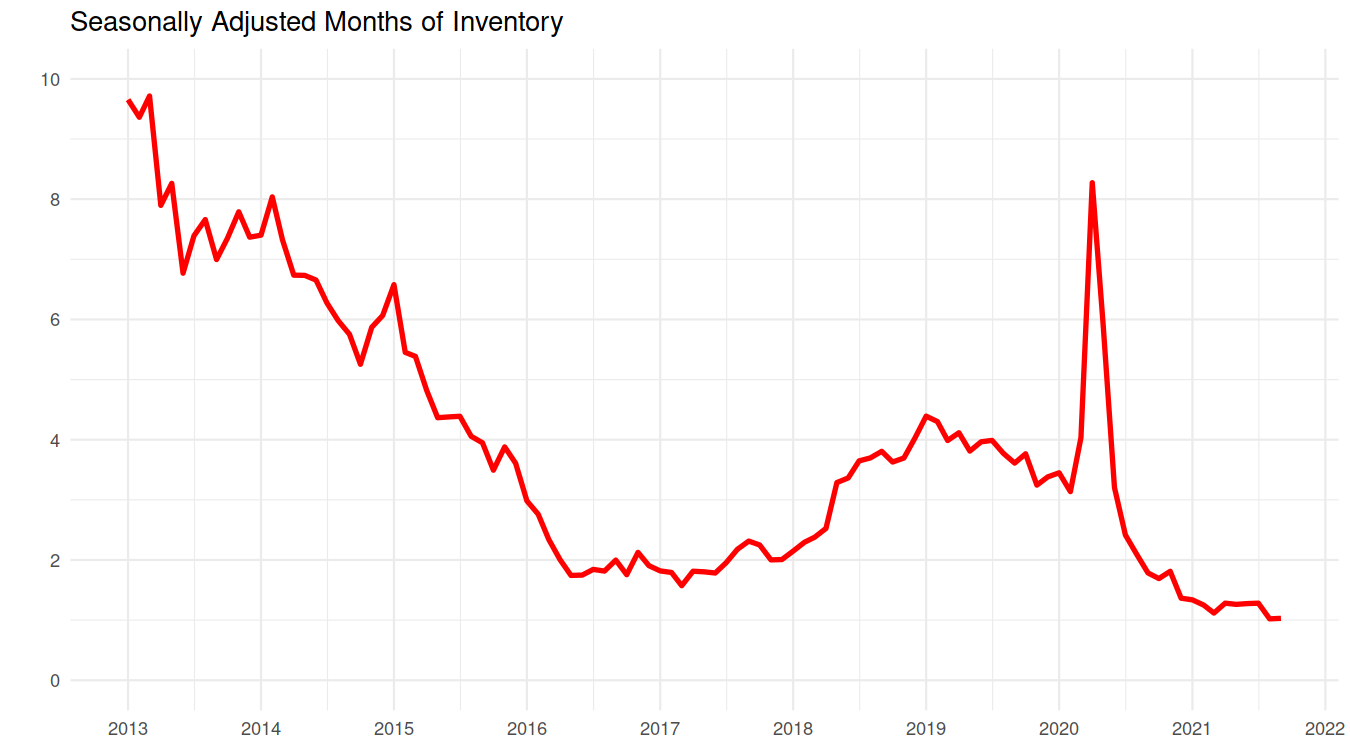
  • September: No sign of any relief in the market Unfortunately the situation did not improve for buyers in September, with new listings continuing to come more slowly than normal for this time of year, while there was plenty of demand to vacuum up anything priced even remotely close to reality. (House Hunt Victoria)

guage_sep2021.jpg
sa_moi3.png

The Pandora Papers, Facebook Whistleblower, Lady Gaga and Tony Bennett's Last Concert

Monday morning news drop

  • Huge 'Pandora Papers' leak exposes secret offshore accounts of politicians, celebrities and billionaires Canadians named in confidential files include former auto-racing and figure-skating champions (CBC)

  • Whistleblower: Facebook is misleading the public on progress against hate speech, violence, misinformation Frances Haugen says in her time with Facebook she saw, "conflicts of interest between what was good for the public and what was good for Facebook." Scott Pelley reports. (60 Minutes)

  • Facebook Struggles to Quell Uproar Over Instagram’s Effect on Teens The social network has been all hands on deck as it grapples with revelations that it knew the harmful effects its Instagram photo-sharing app was having on teenagers. (New York Times)

  • Facebook is Weak and Facebook is in Trouble Not financial trouble, or legal trouble, or even senators-yelling-at-Mark-Zuckerberg trouble. What I’m talking about is a kind of slow, steady decline that anyone who has ever seen a dying company up close can recognize. It’s a cloud of existential dread that hangs over an organization whose best days are behind it, influencing every managerial priority and product decision and leading to increasingly desperate attempts to find a way out. Insiders see a hundred small, disquieting signs of it every day — user-hostile growth hacks, frenetic pivots, executive paranoia, the gradual attrition of talented colleagues. (New York Times)

  • ‘Major’ Oil Spill Off California Coast Threatens Wetlands and Wildlife Southern California beaches, marshland under threat after massive oil spill. A pipeline failure sent at least 126,000 gallons of oil into the Pacific off the coast of Orange County, creating a 13-square-mile slick. Dead fish and birds washed ashore in some areas. (CBC)

  • Alberta acted like the pandemic was over. Now it's a cautionary tale for Canada Saskatchewan faces similar surge in hospitals, while Manitoba is at risk from low vaccination rates. (CBC)

  • The Charter of Rights and Freedoms vs. vaccine mandates — and government inaction on COVID A look at how some sections of the charter might hold up in court (CBC)

  • America’s pandemic is now an outlier in the rich world The one big exception to this story is America at 2,000 covid-19 deaths a day. That is only 40% below the country’s January peak. But the true death toll is even worse. The Economist’s excess-deaths model, which estimates the difference between the actual and the expected number of deaths recorded in a given period, suggests that America is suffering 2,800 pandemic deaths per day, with a plausible range of 900 to 3,300, compared with 1,000 (150 to 3,000) in all other high-income countries, as defined by the World Bank. Adjusting for population, the death rate is now about eight times higher in America than in the rest of the rich world. (Economist)

  • What an end to blind bidding for real estate could look like Majority supported elimination of blind bidding for property in a recent poll commissioned by CBC News (CBC)

  • Canadians are unknowingly buying homes in climate change danger zones, report finds Climate change could boost damage costs by billions; more risk disclosure needed for adaptation (CBC)

  • How Miami Seduced Silicon Valley: Wall Street may not be quaking over Miami’s ascendancy, but in the zero-sum game among cities, San Francisco is indisputably feeling some pain. In July, according to Redfin, Miami was the top migration destination for home buyers in the U.S., while San Francisco had the largest homeowner exodus. Suarez told me about a playful text he recently received from the mayor there, London Breed: “Stop stealing my techies.” He says he replied, “Sorry, London, I love you, but no.” Awash in coders, crypto, and capital, the city is loving — and beginning to shape — its newest industry. (New York Magazine)

  • The real stakes of Apple’s battle over remote work Inside the unexpected fight that’s dividing the most valuable company in the world. “There’s this idea that people skateboarding around tech campuses are bumping into each other and coming up with great new inventions,” said Cher Scarlett, an engineer at Apple who joined the company during the pandemic and has become a leader in, among other issues, organizing her colleagues on pushing for more remote work. “That’s just not true,” she said. (Vox)

  • How Tesla’s ‘Self-Driving’ Beta Testers Protect the Company From Critics Every so often, a clip of a Tesla running experimental beta driver assistance software goes viral. But who are the people behind the wheel? And why does it matter? (Vice)

  • Does New Cash Make Stocks Go Up? Financial theory said more investors coming into the market doesn’t matter. Then meme stocks hit. Flows of cash really do move prices—is catching on among the data-minded investors known as quants. That’s partly thanks to an influential 2020 paper by academics Xavier Gabaix of Harvard and Ralph Koijen of the University of Chicago. It’s also a matter of timing: The stock price surges unleashed by Reddit chat boards have shown what can happen when new investors pour into a stock. “It’s really important that this event on the Reddit stocks happened suddenly,” says Bouchaud, chairman of Capital Fund Management. It threw light on the idea that “prices move because people do things independently of fundamental value.” (Businessweek)

  • A Lot of Money Sloshing Around in Everything The Great Depression created an entire generation of frugal spenders and savers. The pandemic may have created an entire generation of degenerate gamblers and speculators. Most people assumed speculative activity in the markets would cool off once sports came back, the casinos opened up again and people were able to move about more freely with their normal activities. Judging by the action in options trading, that’s not the case. If anything, there is even more speculation going on in 2021 than 2020. (A Wealth of Common Sense)

  • This Is How Much Crypto to Hold in Your Portfolio Nothing about crypto is that simple, of course, including its value as an alternative asset. Yes, some brokerages argue that adding a dollop may boost returns in a well-diversified portfolio. But the market is evolving so fast that data sets from even a year ago may now be stale. More governments including China are cracking down on digital tokens than embracing them. Investors also need to separate the tokens from the technology: Blockchain networks have the potential to revolutionize financial markets. If you’re going to bet on crypto, those companies may be safer than speculating on the coins. (Barron’s)

  • Ladies and Gentlemen, Daniel Craig At long last, the star of the James Bond franchise bids farewell to 007 with “No Time to Die” (and learns for the first time about his life as an internet meme). (New York Times)

  • The Surveillance Apparatus That Surrounded Britney Spears An account by a former employee of the security team hired by Ms. Spears’s father created the most detailed portrait yet of the singer’s life under 13 years of conservatorship. (New York Times)

  • Tony Bennett and Lady Gaga prepare for Bennett's last big concert The 95-year-old singer is gearing up for two more shows at Radio City Music Hall, though he's grappling with Alzheimer's. Anderson Cooper was there as he prepared. (60 Minutes)

Top 10 S&P Companies 1980 - 2020

top10-companies-s&p500.png

Videos of the Week and Pork Prices are at an All-Time High

Friday morning news drop and videos of the week

  • Bacon prices reach all-time high in Canada As grocery prices continue to rise, the price of bacon in Canada reached an all-time high last month, according to data from Statistics Canada.​ (CTV News)

  • Are Rising Interest Rates Bad For Tech Stocks? Interest rates fell from 6.5% in the early-2000s to just over 3% a few short years later. In that time tech stocks got crushed, crashing 80%. From the summer of 2016 through the winter of 2018, interest rates more than doubled from 1.4% to 3.2%. Tech stocks rose around 60% over this time frame. Sometimes they move together. Sometimes they move in opposite directions. Sometimes they simply march to their own drummer. (A Wealth of Common Sense)

  • Meet Ramzi Musallam, Wall Street’s Top-Secret Billionaire Investor Musallam produced his track record by focusing on technology companies that operate in sectors dominated by the United States’ federal government, particularly defense, health care and education. America’s $6.8 trillion worth of annual spending and sweeping regulatory power give it unparalleled sway in these markets. While many buyout firms try to avoid investing in areas affected by government interference, Musallam’s strategy hinges on understanding what the most influential player in the global economy will do next. (Forbes)

  • Climate Change Is the New Dot-Com Bubble: There are good VCs being venturesome with their capital. There are funds that are investing in green things. There isn’t one carbon market; there isn’t one set of standards to follow; there are dozens of options, which means there isn’t really anything at all. The free market has plenty of grandiose ideas about how to fix our broken planet. There’s just one problem: We can’t afford another bust. (Wired)

  • Half of unvaccinated workers say they’d rather quit than get a shot – but real-world data suggest few are following through But while it is easy and cost-free to tell a pollster you’ll quit your job, actually doing so when it means losing a paycheck you and your family may depend upon is another matter. And based on a sample of companies that already have vaccine mandates in place, the actual number who do resign rather than get the vaccine is much smaller than the survey data suggest. (The Conversation)

  • When the Doctor Has to Make the Toughest Decision It hasn’t felt like all these people arrive and you choose between them. It’s this horrific situation where a lot of patients are not getting regular care. You’re being denied the type of care that would be most recommended. That’s what we call a “standard of care,” what would typically be given to you. And there can be more risk with missing out on that care, more chance that you won’t survive. We’ve seen that during surges, even survival from COVID has been lower in stressed hospitals. (Slate)

  • The problem with corporate “values” Despite the language of essentialism around them, though, corporate values don’t always track with company behavior. Some of this is due to a lack of specificity and accountability in their rollout — you can’t expect people to change their behavior if they don’t know why or how — but the primary reason is that, despite lip-service to the contrary, the long-term vision that values require is not rewarded. US corporate governance norms are based on the shareholder value model, which enshrines maximizing shareholder profits as a company’s raison d’être. When values are at odds with a company’s bottom line, all too often they won’t win out. (Vox)

  • Why Britain and France Hate Each Other: The two countries are more similar than is often acknowledged. Not only in terms of population, wealth, imperial past, global reach, and democratic tradition, but the deeper stuff too: the sense of exceptionalism, fear of decline, instinct for national independence, desire for respect, and angst over the growing power of others, whether that be the United States, Germany, or China. London and Paris may have chosen different strategies—and there is nothing to say that both are equally meritorious—but the parallels between these two nations are obvious. (The Atlantic)

  • Cold War, Hot Mess After decades of mismanaging its nuclear waste, the US Department of Energy wrestles with its toxic legacy. (VQR)

  • Why Is Every Young Person in America Watching ‘The Sopranos’? The show’s depiction of contemporary America as relentlessly banal and hollow is plainly at the core of the current interest in the show, which coincides with an era of crisis across just about every major institution in American life. “The Sopranos” has a persistent focus on the spiritual and moral vacuum at the center of this country, and is oddly prescient about its coming troubles: the opioid epidemic, the crisis of meritocracy, teenage depression and suicide, fights over the meaning of American history. The show’s new audience is also seeing something different in it: a parable about a country in terminal decline. (New York Times)

Videos of the Week


20 Years Pushing the Limits of Freeride MTB | Red Bull Rampage History 20 years, 14 events, 9 winners. Who would have thought 20 years ago, that Red Bull Rampage could have brought freeride MTB this far!? The inaugural Red Bull Rampage was held in 2001. Twenty years and nine different winners later, we celebrate the event’s 20th anniversary by looking back at some of the biggest moments.

Brandon Semenuk Crowned Champion! | Full Winning Run | Red Bull Rampage 2019

Queens Of Gnar: They came, they saw, they slayed. Audi Nines 2021 was proud to welcome a new group of riders into the family and to witness these women pushing mountain biking to new heights. From teenagers to veterans, the moment they rolled into the course, it was clear that Audi Nines is exactly where they belong. Riders: Veronique Sandler, Joey Gough, Kathi Kuypers, Caroline Buchanan, Casey Brown, Robin Goomes, Patricia Druwen, Alma Wiggberg, and Gemma Corbera.

Love The Process - Max Langille Love The Process, a tale of trusting yourself and what you’ll become. This film by Dylan Siggers gives a cinematic mix that’s meant to draw you into Max Langille’s process of completing a video part and dialling in tricks for competition.

Locked In Barcelona: We've got some jaw dropping riding for you in this one via Max and Igor Bespaliy, Sergei Nogaev, and Kirill Shatalov. After flying out to Barcelona for what was originally meant to be a two week trip, the guys ended up being trapped there because of the COVID situation. You could get stuck in a lot of worse places I guess! Either way, the guys got some incredible footage out there and sure did make the most of their trip.

Mami Tezuka's "Sorceress" Bloodwizard Part: Classic vert moves with a style all her own, Blood Wizard's sorceress flies through pools, parks, and remote pipes. Those tweaked-out Smiths would make Mike proud.

Tyson Bowerbank's "Passing Time" Almost Part Bowerbank bangs out impossibles and spine-bending rewinds, putting together a part full of surprises. That last line is HEAVY.

VANS EU "Incompiuto" Video Sicily’s mob left behind massive concrete complexes, so Pfanner, Doobie and the Vans Euro crew took a trip out to feast on the remains.

The Spirit Of The Thing: Style titans Phil Casabon and Sammy Carlson stomp foot on Mt. Hood’s volcanic ground to capture, with the hand of Hotlaps and his wizard staff, 'The Spirit of the Thing.'

National Day for Truth and Reconciliation and the 94 Calls to Action

  • Indigenous leaders call on Canadians to 'own your own truth' on National Day for Truth and Reconciliation A ceremony marking the day is being held on Parliament Hill (CBC)

  • Why Canada is marking the 1st National Day for Truth and Reconciliation this year Sept. 30 honours the children, survivors, families and communities affected by residential schools (CBC)

  • 'Sheer frightened panic': Why the National Day for Truth and Reconciliation falls in September 'Fall still triggers a lot of really sad memories for me. For 10 months, you were just a number' (National Post)

  • On the first National Day for Truth and Reconciliation, settler Canadians need to remember Canada’s history is built on moments of violence against Indigenous Peoples that can all too easily become muted in a vague sense of the past. This story is a practice of remembering (Narwhal)

  • The Truth and Reconciliation 94 'calls to action' Commission urges all levels of government to work together and advance reconciliation (CBC)


Thursday morning news drop

  • ‘Most Americans Today Believe the Stock Market Is Rigged, and They’re Right’ New research shows insider trading is everywhere + so far, no one seems to care. It’s not just those at the top of the rankings who constantly beat the market; purchases made by U.S. executives outperformed the S&P 500 over the ensuing 12 months by an average of 5% points between 2015 and 2020. The gap might seem scandalous to those with only a passing acquaintance with U.S. insider trading rules, which make it illegal for insiders to trade using material—or financially significant—nonpublic information. And yet on Wall Street it’s long been an open secret that insiders trade on what they know. (Businessweek)

  • ‘We’re all fighting the giant’: Gig workers around the world are finally organizing Faced with fragility and uncertainty, gig workers are connecting across borders to challenge platforms’ power and policies. (Rest of World)

  • Dimension Studio: How fashion is being brought to the metaverse Everyone in this world appears to be reporting exceptional demand. Cathy Hackl, a futurist and metaverse expert who consults for brands, notes a surge in work for her consultancy business. “I think that the opportunity could be life-changing for startups that really present a value proposition; that are really doing things that have never been done before” (Vogue Business)

  • The Diversity Premium: More Women, Higher Returns. “The higher the female representation across the companies we cover the better share price returns we have observed since 2010,” said Eugène Klerk, Credit Suisse’s head of global ESG research. (Institutional Investor)

  • Robinhood Hits Campus, Where Credit Card Companies Fear to Tread The company plans to hit up college coffee shops to spread the word about its services. When credit card companies did it a generation ago, Congress got involved. (New York Times)

  • Jon Stewart Has a New Talk Show, but He Plans to do More Listening “The Problem With Jon Stewart” will examine social issues through the personal stories of those most affected. “It feels more cathartic than just yelling at the screen,” he said. (New York Times)

Housing Market Risks, the Chinese Economy, Supply Chain Issues, and School Bus Drivers

Wednesday morning news drop

  • Here's how some Canadian companies are marking the National Day for Truth and Reconciliation Businesses not required to close for new statutory holiday are supporting reconciliation in their own ways (CBC)

  • Housing market at high risk of sharp correction, CMHC says Raises market risk assessment from moderate, says strength is far beyond what is warranted (Financial Post)

  • Labour shortage hampering post-pandemic recovery for businesses in Canada, study finds 55% of entrepreneurs can't find enough workers, leading to delays, limiting growth (CBC)

  • Five Lessons Evergrande Taught Us About The Chinese Economy How forcefully will China act to contain the damage done by Evergrande? Will China be able to shift its economic model successfully away from real estate and endless development? How will this shift affect the broader global economy? We’ll be paying attention in future weeks. (NPR)

  • Why coffee could cost more at groceries, cafes After hovering for years near $1 per pound, coffee futures — the price large-volume buyers agree to pay for coffee upon delivery months down the road — doubled in late July, reaching heights not seen since 2014. Though prices have eased a bit, they remain elevated at about $1.90 per pound. (AP)

  • Why America has a school bus driver shortage Across the country, school districts are struggling to fill transportation jobs. The shortage helps explain systemic problems in the labor market. (The Hustle)

  • The Supply-Chain Mystery: Why, more than a year and a half into the pandemic, do strange shortages keep popping up in so many corners of American life? (New Yorker)

  • The Broken Clock Most people don’t care about the objective truth, they just want an answer. Any answer will do. And the more confidently you can provide that answer, the better. It reminds me of the famous reply given to the Nobel laureate Ken Arrow after he discovered that his long term weather forecasts were no better than chance: “The Commanding General is well aware that the forecasts are no good. However, he needs them for planning purposes.” (Of Dollars And Data)

  • Zillow’s Home-Flipping Bonds Draw Wall Street Deeper Into Housing Zillow has essentially dived into the house-flipping business, offering to quickly take properties off sellers’ hands. And in the process it’s helping pull Wall Street even deeper into the $2 trillion U.S. housing market. (Businessweek)

  • America’s car crash epidemic Driving kills as many Americans each year as guns do. Experts say that’s preventable. (Vox)

  • Trump’s Plans for a Coup Are Now Public Some of the plots to overturn the election happened in secret. But don’t forget the ones that unfolded in the open. (The Atlantic)

House Hunt Victoria, Economic Risks, Used Cars, and James Bond

Tuesday morning news drop

  • The Economy Looks Solid. But These Are the Big Risks Ahead. One concern is that political leaders will mismanage things in the world’s largest and second-largest economies. (Upshot)

  • Wall Street Scans the Lots as Used Cars Prod Inflation The Manheim Used Vehicle Value Index, an obscure tracker of wholesale used-car prices, has become closely watched by the finance world’s high rollers. (New York Times)

  • The Cost of Insuring Expensive Waterfront Homes Is About to Skyrocket New federal flood insurance rates that better reflect the real risks of climate change are coming. For some, premiums will rise sharply. (New York Times)

  • Cities Are Flouting Flood Rules. The Cost: $1 Billion. If you want publicly subsidized flood insurance, you can’t build a home that’s likely to flood. But local governments around the country, which are responsible for enforcing the rule, have flouted the requirements, accounting for as many as a quarter-million insurance policies in violation (New York Times)

  • Why China Finally Decided to Ban Bitcoin The move to rein-in cryptocurrency has to do with its desire to exert more control over economic activity in the country. Bitcoin and its brethren were designed as a tool for facilitating transactions without institutional authorities like banks or governments, so allowing them to flourish in any country takes some power away from state actors. (Slate)

  • An Electrifying Future for Hypercars? After more than 50 years of V8- and V12-powered super- and hypercars that evolved incrementally, change is in the air. Increasingly, the best-performing European, Japanese, and American vehicles are battery powered (Penta)

  • The Rise of the Pandemic Dashboard Governments around the world have created online tools for the public to view the latest data on Covid-19, but some platforms are better than others. (CityLab)

  • The NBA’s Anti-Vaxxers Are Trying to Push Around the League — And It’s Working Conspiracy theories in the locker room. Mask police in the arena. Superstars trying to avoid the shot. After bringing back the culture from Covid, basketball confronts its own civil war. (Rolling Stone)

  • It’s No Time to Die: but is it time to revoke James Bond’s licence to kill? In the 1960s, 007 was a glamorous antidote to postwar austerity, but now he’s more laughable than heroic. Can the Bond brand survive, post-Brexit? (The Guardian)

  • Justin Tucker’s Record-Breaking Field Goal Was a Thing of Destiny The Ravens kicker booted a 66-yard, walk-off field goal to further cement himself as the greatest kicker in NFL history (The Ringer)

  • How many empty homes are there in Victoria The 2016 census states that there were 8330 empty homes in Greater Victoria, representing 4.8% of the total in the region. Given we only had 845 active residential listings at the end of August, at first glance it would be reasonable to conclude that we don’t have a supply problem, we have an empty homes problem. (House Hunt Victoria)

victoria-bc-speculation-vacancy-tax-house-hunt-victoria.png

Digital Privacy, Tax Policy, Inflation, and Nirvana's Nevermind at 30

Monday morning news drop

  • The Battle for Digital Privacy Is Reshaping the Internet As Apple and Google enact privacy changes, businesses are grappling with the fallout, Madison Avenue is fighting back and Facebook has cried foul. (New York Times)

  • How Accounting Giants Craft Favorable Tax Rules From Inside Government Lawyers from top accounting firms do brief stints in the Treasury Department, with the expectation of big raises when they return. (New York Times)

  • The Energy Future Needs Cleaner Batteries They rely on the specific qualities of certain elements to work. The highest-performing lithium-ion batteries on the market today require cobalt, and cobalt is hard to come by. To deal with climate change and power the cars of tomorrow, we’ll have to solve the cobalt problem. (Businessweek)

  • The Pandemic and Climate Crisis Have Shown the Costs of Inaction The past year has laid bare a great many problems that are past due for solutions, including some we already know how to fix. It’s time to stop messing around and do it. (Businessweek)

  • Does Your Favorite Brand Have a Hidden Message? Why computing developed such an Easter egg addiction is unclear, though several catalysts spring to mind: the in-joke meme-rich culture of coding; the joy of experts talking over the heads of users; the quest for credit when programmers were traditionally anonymous; and the painstaking process of compiling code which inspires pains to be taken inside the code. What every company can learn from Alfred Hitchcock, Sherlock Holmes and NASA. (Bloomberg)

  • America’s meat supply is cheap and efficient. Covid-19 showed why that’s a problem. In the wake of pandemic disruptions, even big meatpacking states are exploring ways to create smaller, regional alternatives to our highly centralized meat industry. (Politico)

  • Is the Seller’s Market for Houses Over? Slowing sales, a decline in over-asking contract prices, and fewer bidding wars in many areas are among recent shifts. 59% of Home Offers Written by Redfin Agents Faced Bidding Wars in August—the Lowest Level Since 2020 (New York Times)

  • What to Do in the Case of Sustained Inflation: An important distinction must be made between inflation hedges and stores of value. The former aim to track the short-term fluctuations in inflation or track inflation very precisely. In this category we have instruments such as inflation-indexed bonds and inflation caps. Of more interest to long-term investors should be assets that act as a store of value (those that maintain or even increase their real purchasing power notwithstanding times of inflation). (GMO)

  • File Not Found: A generation that grew up with Google is forcing professors to rethink their lesson plans. It’s possible that the analogy multiple professors pointed to — filing cabinets — is no longer useful since many students Drossman’s age spent their high school years storing documents in the likes of OneDrive and Dropbox rather than in physical spaces. It could also have to do with the other software they’re accustomed to — dominant smartphone apps like Instagram, TikTok, Facebook, and YouTube all involve pulling content from a vast online sea rather than locating it within a nested hierarchy. (The Verge)

  • The digital death of collecting. How platforms mess with our tastes. In the digital era, when everything seems to be a single click away, it’s easy to forget that we have long had physical relationships with the pieces of culture we consume. We store books on bookshelves, mount art on our living-room walls, and keep stacks of vinyl records. When we want to experience something, we seek it out, finding a book by its spine, pulling an album from its case, or opening an app. The way we interact with something — where we store it — also changes the way we consume it. (Kyle Chayka Industries)

  • An Insider from the Purdue Pharma Bankruptcy Speaks Out A new memoir by a victims’ advocate describes a process that seemed fixed from the start. (New Yorker)

  • Nevermind at 30: How the Nirvana album shook the world Thirty years after its release, Seattle rock trio Nirvana’s breakthrough album Nevermind retains an evocative power. When I hear its opening notes, I’m rocketed back to a teenage house party in suburban London; in that darkened parlour, I could feel guitars and machines fighting for my soul. (BBC)

Videos of the Week, Supply Chains, Cheap Meat, and Rural Alberta's Low Vaccine Rates

Friday morning news drop and videos of the week

  • Americans Have No Idea What the Supply Chain Really Is Much of the country’s pandemic response has treated us as somehow separate from the rest of the world and the challenges it endures, but unpredictably empty shelves, rising prices, and long waits are just more proof of how foolish that belief has always been. (The Atlantic)

  • How A Single Missing Part Can Hold Up $5 Million Machines And Unleash Industrial Hell “You’ve got 99 of the 100 parts you need, and you have work-in-process that’s stuck,” says Tim Fiore, who conducts a monthly survey of factory managers for the Institute for Supply Management. (NPR)

  • Where’s the Cheap Beef? The rising prices at the supermarket checkout are a problem with no simple explanation. But Democratic hopes may depend on finding the right answer. (Atlantic)

  • German parties make final push to win support as Merkel era ends Voters head to polls on Sept. 26 after campaign focused on climate, COVID-19 and economy (CBC)

  • This rural Alberta county has a first-dose vaccination rate of only 45%. Here's why

    Some don't trust government, media, while others worry about the impact of misinformation (CBC)

Videos of the Week

A Look Back: Dogtown and Z Boys Dogtown and The Z Boys found an audience outside of the traditional skateboard community. Tony Alva, Peggy Oki, Stacy Peralta and more from the OG Zephyr scene break down why it worked and what was missing.

Trail Tales - The Outlaw Sport: The history and legacy of trail building in Vancouver’s North Shore mountains is incredible, few places on earth have had as much impact on the mountain biking community as these Canadian mountains. Follow Geoff Gulevich and legendary trail builder Todd “Digger” Fiander on their quest to sanction mountain biking trails with the local government. With the evolution of mountain biking as a sport, came the due diligence of preserving the land for future generations to enjoy.

Team Shredits Vol. II - Elijah Barron

This ICONIC FEATURE sparked my passion for FREERIDE MTB

FELIX PRANGENBERG // WORLD OF UNCERTAINTY - ÉCLAT BMX Éclat PRO Felix Prangenberg is having one hell of a year, and the year is far from over. Enjoy the result of Felix's one month stay in California, captured by Grant Castelluzzo. The style and creativity from this kid is something you're not going to be seeing from anyone else so sit back and enjoy Felix doing what he does best.

MARTTI LAINEVOOL - 'YET TO COME' | DIG BMX

Kurt Cobain, Evergrande Debt Crisis, Market Corrections, and Global Gas Prices

Thursday morning news drop

  • My Time with Kurt Cobain Befriending a rock star isn’t necessarily as cool as you’d think—particularly when tragedy happens. (New Yorker)

  • Evergrande Debt Crisis Is Financial Stress Test No One Wanted China’s real estate powder keg threatens President Xi’s drive for stability—and may yet force a too-big-to-fail moment with global implications. (Businessweek)

  • No More Apologies: Inside Facebook’s Push to Defend Its Image Mark Zuckerberg, the chief executive, has signed off on an effort to show users pro-Facebook stories and to distance himself from scandals. (New York Times)

  • Banking the Poor: Lending Without Collateral There’s a disconnect that sits at the heart of banking: the people with the highest demand for loans aren’t the ones banks want to lend to. More often than not, it’s because they don’t have collateral – and there’s nothing a bank likes more than collateral. (Net Interest)

  • The Consequences of a Market Correction The average peak-to-trough drawdown for the S&P 500 in a given calendar year since 1928 is around -16%. There have been 53 double-digit drawdowns overall in this time frame. The average loss for those corrections is -23%, lasting more than 200 days from peak to trough. Over the past 93 years the U.S. stock market has fallen 20% or worse on 21 different occasions. (A Wealth of Common Sense)

  • A decade of the Tim Cook machine In all the enthusiasms, arguments and panics around tech, Apple is the $2tn elephant in the corner, mostly silent and serenely indifferent to the news cycle. It just ships – and it ships market-leading products, with metronomic precision, at massive scale, on a decade-long strategic roadmap. It also likes lecturing its peers. But is there another Jesusphone? (Benedict Evans)

  • Endless to-do list? Here’s how not to waste your life Most approaches to time management make things worse. Start by acknowledging your limits (Financial Times)

  • Global Gas Price Surge Threatens to Dent the Economic Recovery Natural gas prices are undergoing a historic surge, and it’s bad news for everyone from ceramic makers in China to customers of patisseries in Paris. The cost of the fuel is already at record seasonal highs in most major markets and looks likely to rise further, threatening to dent the recovery from the Covid-19 pandemic. (Bloomberg)

pricepressure.jpeg