Climate Change, China's Bitcoin Exodus, and the Dark Side of the RCMP

Thursday morning news drop

  • Climate change: Fossil fuel production set to soar over next decade Despite the flurry of net zero emission goals and the increased pledges of many countries, some of the biggest oil, gas and coal producers have not set out plans for the rapid reductions in fossil fuels that scientists say are necessary to limit temperatures in coming years. (BBC)

  • This is the true scale of China’s bitcoin exodus The total percentage of bitcoin mining taking place in China has dropped to almost zero following a recent crackdown (Wired)

  • The Dark Side of the RCMP The mystique that has helped cement the RCMP as a national symbol is also what renders it particularly, stubbornly difficult to reform (Walrus)

  • What the International Energy Agency’s path to net-zero means for Canada’s oil and gas industry Looking at different policy scenarios around climate change, agency report lays out path for holding warming to 1.5 C (Narwhal)

  • The 40-Hour Work Week Is, in Fact, Life There is no magical way to earn a full-time salary without working full-time. (New York Times)

  • Economic Side Effects From the Pandemic Following the Great Financial Crisis, economic growth was below trend, inflation was low and wage growth was slow. Since the pandemic, economic growth is higher, inflation is finally taking off and wage growth is accelerating. Each scenario has its own unique challenges and trade-offs. (A Wealth of Common Sense)

  • Paying the Covid Bill The death and disruption were bound to create real economic losses, even if things are better now than what one might have feared in the spring of 2020. Modest inflation is the least worst outcome. (The Overshoot)

  • Where the Suburbs End A single-family home from the 1950s is now a rental complex and a vision of California’s future. (New York Times)

  • How Donald Trump, Elon Musk, and Gwyneth Paltrow Short-Circuit Your Ability to Think Rationally The sketchy rhetorical tricks of politicians, celebs, and con men—and how they work. (Businessweek)

  • Dune Is the Sci-Fi Epic Commodities Traders Have Always Wanted Director Denis Villeneuve’s new science fiction film Dune, out on Oct. 22 in the U.S., takes inspiration from an unlikely, unsexy corner of capitalism: commodities trading. By spinning a complex tale about family, revenge, and destiny, it has the drag-on effect of making markets compelling and approachable to a slightly wider audience than usual. (Bloomberg)

Inflation at 4.4% a 16 Year High, The New Meth, and Eleanor Rigby

Wednesday morning news drop

  • The New Meth ‘I don’t even know that I would call it meth anymore’ Different chemically than it was a decade ago, the drug is creating a wave of severe mental illness and worsening America’s homelessness problem. (Atlantic)

  • Writing “Eleanor Rigby” How one of the Beatles’ greatest songs came to be. My life is full of these happy accidents, and, coming back to where the name Eleanor Rigby comes from, my memory has me visiting Bristol, where Jane Asher was playing at the Old Vic. I was wandering around, waiting for the play to finish, and saw a shop sign that read “Rigby,” and I thought, That’s it! It really was as happenstance as that. When I got back to London, I wrote the song in Mrs. Asher’s music room in the basement of 57 Wimpole Street, where I was living at the time. (New Yorker)

  • England's pubs look for post-pandemic rally British pubs were on the decline before COVID-19 and the pandemic looked to be last call for these cornerstones of British community life. But as the pandemic winds down and England reopens, the British are realizing just how much they missed their locals. (60 Minutes)

  • Ignore the Price, Remember the Dividends For most of history, the price you paid would have had far less of an impact on your long-term returns than something you might have not even noticed. What am I referring to? Dividends. Reinvested dividends. (Of Dollars And Data)

  • It's been nearly 20 years since inflation has been this high in Canada Canada's inflation rate rose to a new 18-year high of 4.4 per cent in September, with higher prices for transportation, shelter and food contributing the most to the jump in the cost of living. (CBC)

  • Inflation at almost two-decade high complicates Bank of Canada rate plan Kevin Carmichael: The cost of just about everything that Statistics Canada measures was more expensive in September (Financial Post)

  • Fed Staff Says Wall Street Is Getting Inflation Call All Wrong Chair Jerome Powell and his colleagues expect elevated inflation to abate next year. Noteworthy: The Fed’s staff forecasts for inflation have been historically more accurate than consensus forecasts, and by a significant amount. (Bloomberg)

  • Most Housing Units Under Construction Since 1974 Currently there are 712,000 single family units under construction, the highest level since 2007. There are 714,000 multi-family units under construction, the highest level since 1974 (Calculated Risk)

  • Will 4% Mortgage Rates “Halt the Housing Market”? Some comments on an interview with Ivy Zelman, who has a solid track record, and is focused primarily on new housing (single and multi-family). (Calculated Risk)

The Great Resignation, Inflation, and Buying a New Car

Tuesday morning news drop

  • Why is everyone quitting, and how do I know whether it’s time to leave my job? Waves of Americans are leaving their jobs as part of the ‘Great Resignation.’ Here’s why: A record number of workers are quitting their jobs, empowered by new leverage (Washington Post)

  • Who Is Driving the Great Resignation? The last several months have seen a tidal wave of resignations, in the U.S. and around the world. What can employers do to combat what’s being called the Great Resignation? The author shares several key insights from an in-depth analysis of more than 9 million employee records at 4,000 global companies, and offers a three-step plan to help employers take a more data-driven approach to retention: First, employers should quantify both the problem and its impact on key business metrics. Next, they should identify the root causes that are driving workers to resign. Finally, organizations should implement targeted retention campaigns designed to address the specific issues that they struggle with the most. (HBR)

  • The Great Resignation Is Accelerating A lasting effect of this pandemic will be a revolution in worker expectations. (Atlantic)

    Americans Are Overworked And Over Work “As I've gotten older, work is definitely [still] really important, but I think I've started to see it less as my identity.” (Buzzfeed)

  • Don’t Blame Workers for Inflation It shouldn’t come as a surprise that labor productivity remains strong. The U.S. gross domestic product has bounced back to above its prepandemic peak, while the number of workers employed remains millions below the prepandemic level. That simply says that output per worker has grown. Which is great for employers. It means that they don’t need to raise prices to cover higher labor costs.(New York Times)

  • What Happens When Airbnb Swallows Your Neighborhood The McMansions and large parties are possible because houses that used to be rented for a year by people who live in Austin are now rented for a weekend by people who just visit Austin (Slate)

  • How to Buy or Lease a New Car: Select the right vehicle, decide between leasing or buying, and prepare to negotiate with the dealer using this handy guide. (Car and Driver)

  • Red Covid: Covid’s partisan pattern is growing more extreme. The political divide over vaccinations is so large that almost every reliably blue state now has a higher vaccination rate than almost every reliably red state: (New York Times)

  • The Republican anti-vax delusion America’s vaccination programme is stalling. Populist conservatives are to blame (Economist)

  • Paul McCartney Doesn’t Really Want to Stop the Show: Half a century after the Beatles broke up, he’s still correcting the record—and making new ones. (New Yorker)

  • Will the remastered Grand Theft Autos’ American satire hold up? The world’s bestselling video game series combined reverence of US cinema with satire of nihilistic capitalism. But in a post-Trump world, what does GTA have left to say? (Guardian)

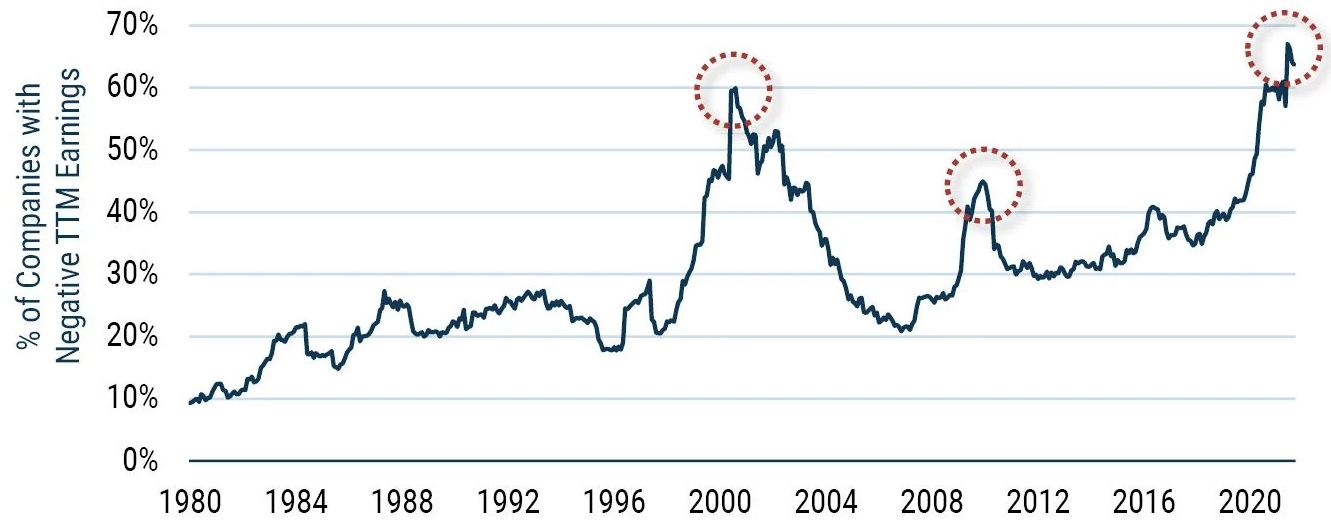
  • Growth Bubble: Making Money on Companies that Make No Money More than half of U.S. Growth stocks* have negative earnings, yet Growth stocks have dramatically outperformed in the past few years (GMO)

Inflation, Investing, Amazon, Sneakers, the Suburbs, and Greg LeMond

Monday morning news drop

  • Inflation in the 21st Century Taking Down the Inflationary Straw Man of the 1970s Four decades of relative fiscal austerity in the United States, coupled with accelerating globalization and technological development, have produced a disinflationary-to-deflationary tendency – extending from prices to labor incomes – that only substantial amounts of targeted federal spending can restore to equilibrium. With sustained levels of accelerating inflation being very unlikely. (Cornell Research Academy of Development, Law, and Economics)

  • Five Traders Tell Us How to Survive a World of Disrupted Markets Trading requires constant vigilance and the ability to adapt and profit from disruptions. But what happens when the act of trading itself is disrupted? To get a glimpse of the life of a trader in 2021, Bloomberg Markets interviewed traders, quizzed them about how they got into the business, what their typical day is like, how their market and investing strategy is changing, and what advice they’d give to budding traders. (Bloomberg)

  • Amazon copied products and rigged search results to promote its own brands, documents show A trove of internal Amazon documents reveals how the e-commerce giant ran a systematic campaign of creating knockoff goods and manipulating search results to boost its own product lines in India – practices it has denied engaging in. And at least two top Amazon executives reviewed the strategy. (Reuters)

  • When Nike released this shoe last year, it sold out online within minutes. How did it get so hard to buy sneakers? Welcome to the bot wars. The sneaker craze began nearly four decades ago, with the debut of the first Air Jordan. Back then, sneakerheads who wanted to get their hands on the latest styles had to do so in person. Limited-edition shoes, many of them designed in collaboration with statusy street wear brands, would command long lines outside shops.As the value of these rare sneakers rose, high-profile releases became more chaotic at stores, and sales began to move online. (New York Times)

  • Homeopathy Doesn’t Work. So Why Do So Many Germans Believe in It? How Natalie Grams, who once abandoned her medical education to study alternative therapies, became Germany’s most prominent homeopathy skeptic. (Businessweek)

  • Slackers of the World, Unite! Why employees love the software, and bosses don’t Thanks in large part to the coronavirus pandemic, Slack has now seeped out of start-up land and into all corners of corporate America, with more than 169,000 organizations—including 65 of the Fortune 100—paying for its services. It has spawned competitors from Facebook, Microsoft, and Google; all told, chat is now the second-most-common computer activity, after email, according to RescueTime, productivity software that tracks users’ screen time. (The Atlantic)

  • An Empire of Dying Wells: Old oil and gas sites are a climate menace. Meet the company that owns more of America’s decaying wells than any other. We found methane leaks at most of the places we visited. Some sites showed signs of maintenance in recent months, but others looked more or less abandoned. We saw access roads choked by vegetation, machinery buried under vines and weeds, oil dripping onto the ground, and steel doors rusted off their hinges. That’s not to say the wells were unattended. Mud wasps, spiders, mice, snails, and bees made their homes in them, and a porcupine napped under a brine tank. (Bloomberg Green)

  • A half-mile installation just took 20,000 pounds of plastic out of the Pacific — proof that ocean garbage can be cleaned The installation is essentially an artificial floating coastline that catches plastic in its fold like a giant arm, then funnels the garbage into a woven funnel-shaped net. Two vessels tow it through the water at about 1.5 knots (slower than normal walking speed), and the ocean current pushes floating garbage toward the giant net. (Business Insider)

  • Life in the New American Suburbs: A vision of how we’ll live in an age of moderately higher density The suburban model we created was fundamentally unsustainable. The upkeep on the vast sprawl of roads and other infrastructure was hellishly expensive, especially given the country’s excessive construction costs. New knowledge industries created clustering economies that made density more important for productivity, even as social media and a decline in crime made urban life more enjoyable. These pressures have created both a rental crisis for renters and an affordability crisis for first-time homebuyers. (Noahpinion)

  • Greg LeMond and the Amazing Candy-Colored Dream Bike: The Tour de France legend and anti-doping crusader is building an ultralight ebike that he hopes will be fun as hell to ride—and jumpstart a US carbon-fiber boom. CRAAAACK. The supercore snaps in two. I stare wide-eyed at him before he laughs, gamely. In fairness to the supercore, LeMond does have enormous hands. It occurs to me then that, of all the bike materials that LeMond has chosen to become obsessed with, it’s not surprising he has fixated on carbon fiber. It’s a high-performance material, strong and versatile, but it can be surprisingly vulnerable. A lot like LeMond himself, actually. (Wired)

  • 12 Predictions for the Future of Music Let me peer into my crystal ball, and predict the next decade in music. I’m brave (or foolhardy) enough to tell you what I see—but you may want to sit down first. If you earn your living from music, some of these changes might come as a shock. (Ted Gioia)

  • New Bond Can’t Take On Beijing’s Supervillains A whole genre of geopolitical spy thrillers is now off limits. (Foreign Policy)

Undercharging For Work, Online Clothing Logistics, and Vancouver City Planning for Skateboarding

Friday morning news drop

  • Why so many people undercharge for their work Setting a rate can be a minefield for folks navigating an industry alone. (Vox)

  • Many House Hunters Are Choosing Diverse Neighborhoods That Reflect a Changing Population Buyers say they want to avoid ‘cookie-cutter’ areas, but the focus exposes challenges to preserving communities and blending residents (Wall Street Journal)

  • The Nasty Logistics of Returning Your Too-Small Pants: What happens to the stuff you order online after you send it back? (The Atlantic)

  • The problem with America’s semi-rich America’s upper-middle class works more, optimizes their kids, and is miserable (Vox)

  • ‘Ueck’ carrying legacy into Crew’s playoff run Uecker, 87 going on 27, emerged from the clubhouse with his checkered dress shirt soaked in champagne and Miller Lite. He has been calling Brewers games on the radio since some of the current players’ parents were toddlers, and yet there he was, being dragged to the pitcher’s mound at American Family Field with confetti still falling as the Brewers celebrated clinching the 2021 National League Central title. Players wanted Uecker in the middle of their group photo. There’s no other broadcaster on the planet who is more a part of their team. (MLB)

  • Why Vancouver Changed its Mind About Skateboards I had the pleasure of making this video for the Vancouver Park Board who's currently asking for public input on a new skateboarding strategy for the city

Videos of the Week

Surviving the Horror of Residential Schools by Skateboarding | The New Yorker Documentary In “Joe Buffalo,” directed by Amar Chebib and executive produced by Tony Hawk, an Indigenous skateboarding legend overcomes addiction and trauma stemming from his years in Canada's Church-run school system.

Former's "Audible Refuge" Video Austyn and Jake annihilate everything in their paths, tag teaming on crusty bumps and iconic stone spots. You’re gonna wanna play that Pulaski clip back.

Chima Ferguson's "Nice to See You" Vans Part Chima’s resume had him in the top tier, but this new part elevates him into the pantheon of all-timer greats. Those Martin’s Place hammers carry major weight.

Cutting Corners - Episode 1 - Tom K kicks off a new series for the spot enthusiasts of the world, scoping cutty locales and skating the unskateable. Take a ride along and stay tuned for who hops in next…

JOERI VEUL "MEMORIES" // WETHEPEOPLE BMX One of our favourite guys out there, Wethepeople rider Joeri Veul filmed this video shortly before he suffered a brain haemorrhage last year. Joeri is taking some time away from riding whilst he recovers but managed to put together this video with a few clips of his homies in The Netherlands to finish it off. Much love and respect to Joeri for pushing through the tough times and staying motivated. We cant wait to see you back on a bike soon Joeri!

FRONTOCEAN BMX - Italy: Vans ’The Circle’ 2021 | DIG BMX

Danny MacAskill and Drop & Roll - Cruising Vol.1

Course Preview of Carson Storch's Gnarly Line at Red Bull Rampage 2021 Less than 48 hours left till the showdown of the most infamous MTB Freeride event in the world of Mountain Biking. Just about time to hop on a GoPro run with Freerider Carson Storch who previews his very own line down the cliffs of Virgin, Utah.

Surfing Portugal | Ericeira Reef Mason Ho makes his way North East across the globe to Europe. Ericeira Portugal to be exact. A small cool surf town with incredible seafood and waves.

Earthquakes, Strata Insurance, the QAnon Conspiracy Toll, and Questlove

Thursday morning news drop

  • The Big One: Getting Ready for North America’s Next Major Quake We know we need to prepare for natural disasters. So why do we shrug off the threat? (Walrus)

  • QAnon's Deadly Price Church-loving surf instructor Matthew Taylor Coleman fell into online conspiracy theories, then allegedly admitted to killing his kids to save the world. How did no one see it coming? (Rolling Stone)

  • Canada has biodiversity targets. Now it needs accountability As the UN Convention on Biological Diversity creates new targets, the federal government must take action or risk another dismal report card (Narwhal)

  • How a team of musicologists and computer scientists completed Beethoven’s unfinished 10th Symphony When Ludwig van Beethoven died in 1827, he had started work on his 10th Symphony but, due to deteriorating health, wasn’t able to make much headway: All he left behind were some musical sketches. His notes teased at some magnificent reward. Now, thanks to the work of a team of music historians, musicologists, composers and computer scientists, Beethoven’s vision will come to life. (The Conversation)

  • The Passion of Questlove The drummer, D.J. and producer is everywhere and loved by everyone. But few understand what drives him: an obsession with spreading the joys of Black music. (NY Times)

  • The thorny truth about socially responsible investing Think you’re investing ethically? You might be surprised. It’s good that investors are trying to pay attention to where money flows. What isn’t so good: Plenty of people think they’re investing in ways that match their values when in reality, they aren’t. It’s really easy to slap the ESG label onto an investment product, likely increase fees on it a little bit, and call it a day. (Vox)

  • S&P 500: Pay to Play? A new working paper attempts to figure out why some companies make it into the blue-chip stock market index. (Financial Times)

  • Strata insurance hikes: nothingburger or crisis? Strata insurance hikes have been in the news for a couple years now, with stories of devastating insurance hikes causing individual projects to rapidly hike strata fees. The cause of the crisis have been speculated on for just as long. Is it badly maintained buildings? Irresponsible owners? Shoddy construction? Climate change? Greedy insurance companies? There’ve been lots of theories and speculation but little evidence in most of the coverage of this issue. (House Hunt Victoria)

  • What’s wrong with America’s consumer-price index? Experts underestimated inflation last year. Now they seem to be overstating it (Economist)

United-states-CPI-Consumer-price-index-2021.png

The Rock, Frances Haugen, Kyrie Earvin, and Hockey Season

Wednesday morning news drop

  • Constructions workers in Western Canada heavily represented in overdose deaths An analysis of 872 overdose deaths carried out by the BC Coroners Service showed that 44% of the individuals were employed at the time of death and of those, 55% were employed in the trades and transport industry. (ATAC)

  • There Is Shadow Inflation Taking Place All Around Us Some companies haven’t been raising prices. Instead, they’ve been cutting back customer services and conveniences, but how should that be measured?(Upshot)

  • What Does Frances Haugen Want From Facebook? I don’t think she loves the product in the current form. I think she considers it to be a threat to democracy and human life. But in terms of the general idea that this technology doesn’t have to be this way and that a company that is committed to Facebook’s stated mission of connecting the world and bringing people closer together, that that is a possible thing. If people just ended up being angrier at Facebook as a result of what she’d done, it was kind of a waste. (Slate)

  • Al Gore’s $36 Billion Fund Sees New Urgency to Cut Off Oil Money Five years. That’s roughly how much time the investment universe has left to stop feeding capital to greenhouse-gas emitters before it’s too late. “The urgency of the challenge will require us to think differently around capital allocation,” Blood said in an interview. “And we don’t have 15 years or 18 years to get there. We have probably five years.” (Bloomberg Green)

  • Kyrie Irving facing justified consequences isn’t a moment to gloat The Brooklyn Nets have called Kyrie Irving’s bluff. Following weeks of cajoling and coddling and respectful nodding about the all-star point guard’s “personal views” when it comes to refusing to be vaccinated against COVID-19, the organization that is on the hook for his $35.3 million salary — only to be faced with prospect of having him work part-time — finally said “enough.” (Sportsnet)

  • The best- and worst-case scenarios for Covid-19 this winter Last year, almost nobody was vaccinated against Covid-19. 56% of the US population is fully vaccinated as of October 7. That includes 84% of people over 65, who are generally the most vulnerable to dying from the virus. FDA will soon consider whether to authorize a vaccine for children as young as 5, which would push vaccination rates higher. More than half the population being vaccinated is the primary reason for optimism about the coming months. (Vox)

  • On B.C.’s Sunshine Coast, some of Canada’s oldest living trees escape the chopping block The treasured high-elevation Dakota Bowl has been slated for auction with BC Timber Sales every year for the last five years. Determined to protect the old-growth forest, home to culturally modified trees, hanging lakes and ancient cedar bear dens, a local conservation group brought new tactics and independent science to the table (Narwhal)

  • Dwayne Johnson Lets Down His Guard A no-holds-barred talk with the megastar and entrepreneur about his volatile childhood, his heartbreaking relationship with his dad, and Vin Diesel’s “bullshit.” (Vanity Fair)

  • Will a Canadian Team Ever Win the Stanley Cup Again? An expert explains what it would take to end the nearly three-decade dry spell (Walrus)

Will-a-Canadian-Team-Ever-Win-the-Stanley-Cup-Again.jpg

Working at Disney World, the Volkswagen Beetle, and Spider Murderers

After the long weekend Tuesday morning news drop

  • Eleven Un-Magical Secrets I Learned While Working at Disney World From parents leaving their kids with “Mary Poppins” to ladies lusting after Captain Jack Sparrow, the most magical place on Earth is also one of the most colorful places to work. (Bloomberg)

  • The Unstoppable Appeal of Highway Expansion: U.S. transportation authorities have spent billions widening urban freeways to fight traffic delays. What makes the “iron law of congestion” so hard to defeat? (Citylab)

  • The fiscal policy elephant in the room: The global macro debate is focussed on monetary policy. Fiscal policy will play a bigger role in the coming 12-18 months. (Value Added)

  • Climate Change Is the New Dot-Com Bubble: The free market has plenty of grandiose ideas about how to fix our broken planet. There’s just one problem: We can’t afford another bust. (Wired)

  • Fund Managers Start Axing ESG Buzzword as Greenwash Rules Bite Some of Europe’s biggest asset managers are starting to drop a once-ubiquitous ESG label from their company filings amid concern that regulators will no longer tolerate vague descriptions of environmental, social and governance investing. (Bloomberg Green)

  • Self-driving cars: The 21st-century trolley problem Autonomous tech could lead to deaths at the hands of robots. But is continuing to let humans drive even worse? (Vox)

  • Collectors Who Caught the Bug Volkswagen’s original Beetle, cute and petite, still thrills aficionados. (New York Times)

  • The Cheap and Easy Climate Fix That Can Cool the Planet Fast CO2 is only part of the patchwork of warming. Methane locks in far more heat in the short term and has been leaking just as relentlessly. (Bloomberg)

  • Anti-vaccine chiropractors rising force of misinformation At a time when the surgeon general says misinformation has become an urgent threat to public health, an investigation found a vocal and influential group of chiropractors has been capitalizing on the pandemic by sowing fear and mistrust of vaccines. (AP)

  • Why so many of us are casual spider-murderers: It’s officially arachnicide season in the Northern Hemisphere. Millions of spiders have appeared in our homes – and they’d better be on their guard. Why do we kill them so casually? (BBC)

Videos of the Week, AT&T Far-Right News Media, and the US Bond Market

Friday morning news drop

  • How AT&T helped build far-right One America News As it lauded former President Donald Trump and spread his unfounded claims of election fraud, One America News Network saw its viewership jump. Reuters has uncovered how America’s telecom giant nurtured the news channel now at the center of a bitter national divide over politics and truth. (Reuters)

  • US government bond market specialists warn of fragility in Fed pullout Concerns remain over gaps in liquidity after weak supports during pandemic-induced instability (Financial Times)

  • Secret trove illuminates the lives of billionaires The world’s wealthiest are among the most avid users of offshore companies, a new cache of documents known as the Pandora Papers shows, and they turn to tax and secrecy havens for a variety of reasons. (Washington Post)

  • Are U.S. Housing Prices Becoming Unaffordable? Housing prices are rising for a number of reasons: Household formation from the millennial generation, Increased demand to move due to the pandemic, Investors looking for yield and inflation protection, Extremely low mortgage rates. The one variable that could throw a wrench into this equation would be higher mortgage rates. (A Wealth of Common Sense)

  • A Whiff of Civil War in the Air Malice and misinformation are driving national division. A recent poll that should shock exactly no one who closely follows American politics and culture. A majority of Trump voters (52 percent) and a strong minority of Biden voters (41 percent) strongly or somewhat agree that it’s “time to split the country.” (The Dispatch)

  • The World’s 50 Best Restaurants 2021: The Full List of Winners This is the first World’s 50 Best Restaurants list since the onset of the pandemic. Votes for the 2021 list take into account the votes cast for the 2020 list as well as a March 2021 “refresh” vote, in which voters could issue new votes, but only for restaurants in their own region. (Eater)

  • Clint and Ron Howard Remember When They Were Just ‘The Boys’ In a new memoir, the showbiz siblings recall their experiences growing up on “The Andy Griffith Show,” “Star Trek” and other Hollywood classics. But they weren’t all happy days. (New York Times)

Videos of the week

Micky Clarke - "DOOM" - Chapter 11 TV

BMX BIGGEST GAP BARSPIN | LEGENDARY LYON 25 STAIRS | COURAGE ADAMS What a way to debut your first edition shoe! The @CourageAdams Slip-On BMX. Featuring premium black leather uppers embossed with elephant skin texture and Courage’s signature Elephant Scale logo showing through transparent rubber outsoles.

Vans Presents COURAGE - Featuring Courage Adams | BMX | VANS

Top 3 Slopestyle Runs from SilverStar | Crankworx British Columbia 2021 Red Bull Joyride might have gotten away this year, but the there was no way British Columbia could let the summer go by without a world-class MTB Slopestyle event. As luck would have it, Brett Rheeder and Matt MacDuff have been keeping themselves very busy in SilverStar Bike Park lately. Over the last two years, they have built an absolute fire 🔥 of a Slopestyle course with tons of potential to drive evolution of the sport above and beyond.

Dickies' "Loose Ends" Video Ronnie gets to work on the pool beat straight out the gate, followed by timeless stylings from Knox, Foy, Allysha and the esteemed Dickies team. Wallin shuts it down with one of his finest displays to date.

Braydon Szafranski's "SZA" Part The legend of Las Vegas never ceases to surprise. Absurd manuals, sketchy ditch rides and heavy stair moves for the OG fans, Braydon brings it all.

NOTHING NEW Nothing has changed. Level 1, in partnership with 686 and Rossignol, presents NOTHING NEW - another snow riding experience.

China's Energy Crisis, Tether's Missing Money, and Squid Game

Thursday morning news drop

  • China’s Energy Crisis: A simple breakdown of the crisis and its impact on the world China’s energy crisis is best understood through the simple, Econ 101 lens of supply and demand, with a particular focus on the coal market. Net-net, we have demand up and supply down, leading to widespread shortages, rising costs, and a ripple effect that extends across the globe—the stage is set for what could be a long, cold winter. (Curiosity Chronicle)

  • The Great Inflation Debate: Watching the inflation-watchers Whether we are living through the beginning of a new inflation is uncertain. What is clear is that we are living through a great inflation debate. I cannot think of a period in recent memory, in which there was so little agreement on likely future trends. The uncertainty causes real anxiety for policy-makers and the public. Does it amount to a crisis of the authority of economics? (Chartbook)

  • Anyone Seen Tether’s Billions? A wild search for the U.S. dollars supposedly backing the stablecoin at the center of the global cryptocurrency trade—and in the crosshairs of U.S. regulators and prosecutors. (Businessweek)

  • Adapting to a brave new world The past year has been challenging for asset and wealth managers as they confronted COVID-19 and the almost overnight shift to digitization and working from home, as well as growing cyber threats and heightened investor focus on sustainability. This has compounded already significant pre-pandemic pressures, ranging from increased client expectations and stiff competition, to new regulation. (RBC)

  • Are We Craving Risk or Losing Reward? 1980-2000 will go down as the most favorable 20-year period in U.S. investment history. However, we haven’t changed our collective narrative to reflect this yet. We are still acting like this period was “normal” though, in retrospect, it clearly wasn’t. Because, if you look over the last six centuries, interest rates across the globe have been on a slow downward trajectory: (Of Dollars And Data)

  • The pandemic is testing the limits of face recognition Government use of face ID systems exploded during the pandemic—but tying it to critical services has left some people locked out at the moment they needed help the most. (MIT Technology Review)

  • How Fear and Family Values Led to the Biggest Hit in Netflix’s History More South Koreans are dying alone and in poverty, so why not risk it all in a fight to the death? (Slate)

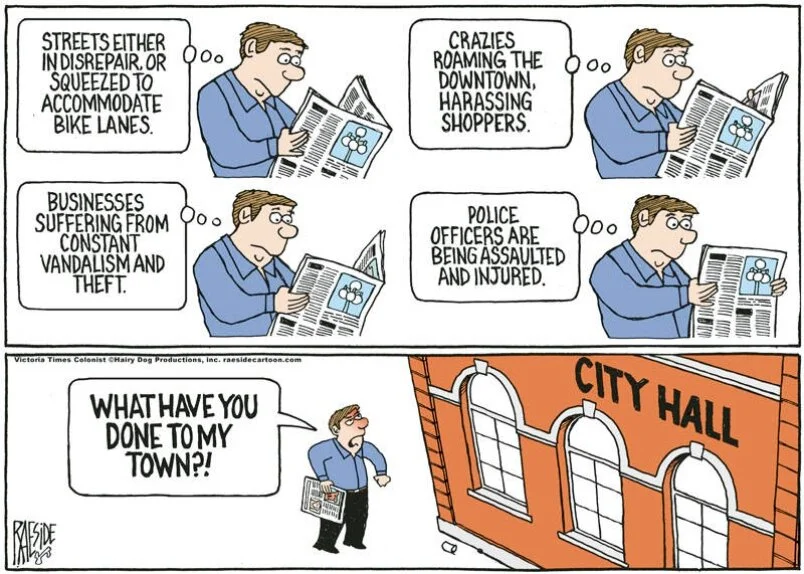
tc-379667-web-revised-cityhall-web-jpg.jpg