Sports Gambling, Market Crash, Interest Rates, and the Apple Park

Tuesday morning news drop

  • The Sports Gambling Gold Rush Is Absolutely Off the Charts Legal sports betting in the U.S. — once confined to Nevada — has gone mainstream. Since the Supreme Court in 2018 ended federal bans on the industry’s expansion, dozens of states have legalized it, and a multibillion-dollar betting boom is afoot. More money is now wagered on sports in New Jersey than in Nevada. California, which may become the biggest market of all, will vote on legalization next year. (Bloomberg)

  • ‘To the Moon’ Crash Is Coming A longtime venture capitalist sees the religious dedication to Elon Musk, hype, and YOLO investing as almost a dot com-style pyramid scheme in the making. (Vice)

  • Finding Some Middle Ground Between Paul Volcker & Jerome Powell The problem is it’s not like taking interest rates from 0% to 0.75% or 1% is all of the sudden going to fix the supply chain issues. The Fed can’t make more semiconductors. They can’t unpack container ships at the LA ports. They can’t create more houses out of thin air. (Wealth of Common Sense)

  • The Biggest Deepfake Abuse Site Is Growing in Disturbing Ways A referral program and partner sites have spurred the spread of invasive, AI-generated “nude” images. (Wired)

  • A Sunny Place for a Shady Online Business: Malta, home to hundreds of betting sites and dubious oversight, is a target of an international money laundering crackdown. (Businessweek)

  • Documents link Huawei to China’s surveillance programs A review of more than 100 Huawei PowerPoint presentations, many marked “confidential,” suggests that the company has had a broader role in tracking China’s populace than it has acknowledged. (Washington Post)

  • The U.S. Has A Lot Of Guns Involved In Crimes But Very Little Data On Where They Came From the ways guns were trafficked made it hard to answer basic questions like how many might be stolen each year. Often, he said, police found trafficked guns only after they were used in a crime. Experts who spoke with FiveThirtyEight said there was no clear, national data on how crime guns go from manufacturers and dealers to the black market, how trafficking differed from state to state or even the street price of trafficked firearms in different markets. The most recent federal report on gun trafficking dates from 2000, and it used data from 1996 to 1998. (FiveThirtyEight)

  • The Paperwork Coup A much more dangerous insurrection was under way in the inboxes of Trump’s inner circle in the weeks before January 6. (The Atlantic)

  • Donald Trump’s Megaphone: Fox News news hosts knew that Trump’s lies were lies—and they amplified them anyhow I didn’t want to be complicit in so many lies. I know that a huge share of the people you saw on TV praising Trump were being dishonest. I know it, because they would say one thing to my face or in my presence and another thing when the cameras and microphones were flipped on. Punditry and politics is a very small world—especially on the right—and if you add-up all the congressmen, senators, columnists, producers, editors, etc. you’ll probably end up with fewer people than the student population of a decent-sized liberal arts college. (The Dispatch)

  • A Classic Car Giant With a Lofty Mission: Save Driving The Hagerty brand insures collectible autos — two million of them — and its articles and videos draw crowds. After going public, it has bigger plans. (New York Times)

  • Inside Apple Park: first look at the design team shaping the future of tech Led by Evans Hankey and Alan Dye, the Apple Design Team holds enormous sway over our evolving relationship with technology. Opening the doors to their studio at Apple Park in Cupertino for the first time, they offered us a deep dive into the working processes behind their latest creations. (Wallpaper)

Cumberland, Fast Fashion, Gucci, and Indoor Farms

Monday morning news drop

  • Canada's village that bought a forest Cumberland on Vancouver Island has evolved from a grubby coal town to a mountain biking mecca, all thanks to passionate locals who claimed control of their landscape.(BBC)

  • Why Did the Women’s Tennis Association Risk Everything for Peng Shuai? The WTA decided to do what the NBA, Nike, Microsoft, Starbucks, Blackstone, Goldman Sachs and innumerable other global businesses vastly greater in size, power and revenue have not. It has to do with tanks in Shenzhen, mariachi bands in Guadalajara and a legacy passed down by players for 50 years. (Sports Illustrated)

  • How Shein beat Amazon at its own game — and reinvented fast fashion By connecting China’s garment factories with Western Gen-Z customers, Shein ushered in a new era of “ultra-fast” shopping. (Rest of World)

  • Inside Gucci with creative director Alessandro Michele You don't need to speak much Italian to know the word Gucci. For 100 years, the brand with its double G logo has been synonymous with opulence, understated luxury and over-the-top prices. (60 Minutes)

  • The true story behind the IBM Personal Computer: The industry-creating IBM Personal Computer 5150 turned 40 this year. To mark the occasion, we reveal the story of its birth – and destroy one long-running myth in the process (IT Pro)

  • Inside Tesla as Elon Musk Pushed an Unflinching Vision for Self-Driving Cars The automaker may have undermined safety in designing its Autopilot driver-assistance system to fit its chief executive’s vision, former employees say. (New York Times)

  • Can Indoor Farms Reach Skyscraper Height? A proposed Shenzhen skyscraper would include a 51-story hydroponic farm, as hopes grow that vertical farms can help address food insecurity. (CityLab)

  • Five reasons why inflation will persist Unless governments can improve labour productivity, inflation can only be cured by interest rates high enough to slow down the economy (Financial Post)

  • The Future of Work Is a 60-Year Career Humans may soon live to be 100, which likely means more years on the job. That could be a good thing, if we take the opportunity to redesign work. (The Atlantic)

  • The best and worst places to live (if you only care about money). The conventional wisdom has long been that most workers — no matter their education or skills — should move to big metropolitan areas with lucrative, globally competitive industries, where they can get in on the action and climb the economic ladder. But there is another side to the equation: cost of living. Whether a place offers a good financial deal is like an arm-wrestling match between the income you can earn there and its cost of living. (NPR)

  • Fox News’s shaky veneer collapses Text messages the Jan. 6 committee received from Mark Meadows included appeals from several Fox News hosts, including Sean Hannity and Brian Kilmeade, warning Meadows Jan 6 rioters were “destroying everything you have accomplished.” This ended the ability for Fox News to credibly claim that its approach to its coverage is objective. (Washington Post)

  • The Great Inheritors: How Three Families Shielded Their Fortunes From Taxes for Generations In the early 1900s some of the wealthiest Americans claimed their fortunes would never last through the generations. A century of tax avoidance later, the dynasties are going strong. (ProPublica)

Videos of the Week, SOTY, Mark Suciu, Inflation or Creation?

Friday morning news drop

  • Why Jerome Powell Pivoted on Inflation A surge in wages and benefits got his attention. Other data soon confirmed his concern. (Upshot)

  • The history of the metal box that’s wrecking the supply chain: Shipping containers, explained by a historian. Behold the simple shipping container. It’s a large, steel box that can carry tens of thousands of pounds of cargo. It’s also stackable and designed to fit on ocean freight ships, trains, and even trucks. These containers have been an unnoticed cog in the world’s highly complex manufacturing network for decades. But not anymore. (Vox)

  • It’s beginning to look a lot more expensive for Christmas The holidays feel more expensive this year because they are. This year’s holiday season will likely feel more normal than last. It’s also going to be more expensive, essentially across the board. In the United States and in many parts of the world, inflation is running higher now than it has in recent decades thanks, in part, to supply-demand mismatches, supply chain kinks, and a generally weird economic moment. (Vox)

  • Inflation in the Housing Market And we haven’t even considered the fact that rising inflation makes your fixed monthly payment lower over time. Just look at the debt profile of homeowners in the United States: You could argue the homeowner has never had it better than they’ve had it this past cycle. (A Wealth of Common Sense)

  • Six Rules For Avoiding Market Panic Attacks Pity the investor without a panic plan. Delete becoming chum for the hysterical shark-infested financial media. What should you do? How about turning to West Point for some practical solutions? Nate Zinsser runs the performance psychology program at our most prestigious military academy. Cadets face immense stress grinding through the four-year program. Zinsser’s tips are indespinsable. (A Teachable Moment)

  • How the Chinese trade deal led to the Great Awokening: Twenty years on, who are the big winners from globalization? (Wrong Side of History)

  • The NFL Is a COVID Superspreader Right Now There are currently more than 70 active players on the NFL’s COVID-19 list. (Vice)

Videos of the Week

We gotta give respect to Mark Suciu for crushing SOTY this year. From his Spitfire part to the epic Flora rail montage he deserved it all. One of the most amazing performances in skate history was laid down this year and filled with NBD’s… all praise to Mark Suciu. Dude killed it this year. RIP!

Vans BMX Presents: Acea | BMX | VANS Vans BMX Presents: Acea, a new film from Dennis Enarson capturing a snapshot of his life over the past year, including the birth of his first son for whom the project is named. Coming off the success and momentum of Right Here, Dennis filmed Acea with lifelong friend and acclaimed filmmaker Tony Ennis—an athlete-filmer duo highly anticipated by the BMX community. The result is mind-blowing maneuvers and stunts that only Dennis can pull off, and a part that rivals everything Dennis has done up until now.

CHAD KERLEY - LOCKDOWN

Demolition Parts Presents: Kris Fox Pendulum Between lockdowns and news of melanoma Kris Fox decided to hit the road with the Fast and Loose crew. West coast to east coast and all the deep concrete in the middle fills this part to the brim. Enjoy the deep roast.

Building a WILD Freeride MTB Line | Darren Berrecloth on Vancouver Island Watch freeride MTB legend, Darren Berrecloth, fuse his creative building and unique riding in this stunning new edit shot by Rupert Walker.

For years, mountain bike films have led to mind-blowing one-off stunts for film features tucked out of the way in British Columbia's forests. Most of these iconic structures are now dilapidated and reclaimed by nature. Darren Berrecloth has built his fair share, but for this new backyard edit, he’s created a series of inspired features along the trails he regularly rides and incorporated them into the flow with his signature riding style.

"I've been wanting to do a shred edit on the trails above my house for quite some time," says Darren. "And I was super stoked to get this opportunity to get out there with Rupert [Walker] and create some unique features and go back to my roots; my blend of BMX and mountain bike, and incorporate that into trail bike riding."

Hailing from Parksville, BC, Canada, Darren Berrecloth has been widely regarded as one of the best freeride mountain bikers in the world, ever since he exploded onto the scene with a third at the 2002 Red Bull Rampage. With a wide range of podium finishes and magazine covers under his belt, Berrecloth is showing no sign of slowing down.

A hard-working athlete who puts lots of effort into building unique bike features, Berrecloth’s dedication to the sport is unmatched in the industry. Known for taking lines that other riders don’t even consider, his success, sheer guts and determination have seen him become something of a legendary figure – even more so since breaking his back in 2011 and returning to competitive riding for 2012.

LATE FOR SCHOOL 2 / Gabriel Wibmer

JENKEM - Ground Glass: Mark Suciu Videographer James Thomson spent a couple of days with Mark filming this 16mm edit for our “Ground Glass” series that ditches the one-upmanship and stair counting, and focuses back on just some of the bits that make Mark special. Don’t think of this as yet another part of his “SOTY run,” but rather as a victory lap, and a showing of our appreciation for one of the best skaters of our generation.

Trey Wood's "Madness" Part

Ryan Decenzo's "1990" Part Still stacking on gold-standard hammer spots like Hollywood High and Rincon, Ryan’s skating knows no chill.

Inflation Hits 4.7% in Canada, BC Climate Disaster, Looney Tunes, and Fogo Island

Thursday morning news drop

  • After a year of climate disaster, B.C. grapples with the urgent need to adapt to its dangerous future ‘Climate change is upon us,’ but B.C.’s not yet prepared to face the heat, wildfires and floods ahead (Narwhal)

  • Canada's inflation rate stays at 18-year high of 4.7% Inflation rates are soaring around the world right now, as the combination of record government spending, supply chain disruptions and a surge in demand for consumer goods has caused prices to rise quickly. (CBC)

  • Federal Reserve to wind down stimulus faster — and likely hike rates faster, too In abrupt shift, the US Federal Reserve bank will wind down so-called QE program much faster than previously planned (CBC)

  • What Could Possibly Go Wrong? These Are the Biggest Economic Risks for 2022 Economists have struggled to see ahead in the pandemic. They’re upbeat about next year, but could easily get blindsided again (Bloomberg)

  • The Age of Financial Misinformation. Because it’s never been easier to spread financial information, but also never been harder to check it.But this is just the tip of the financial misinformation iceberg. Because it isn’t just incorrect information that’s the issue, but misinterpreted information as well. For example, last week I tweeted out this chart from Bloomberg showing how net equity flows this year have eclipsed the combined inflows of the past 19 years. (Of Dollars And Data)

  • Simply adding supply won’t solve our housing crisis Housing is both a human right and a profitable asset — and that’s the problem (TVO)

  • NFTs explained: Why people are spending millions of dollars on JPEGs People are spending millions for a reason, regardless of how weird it seems. (CNET)

  • Corner Stores Are the New Darlings of the Global Tech Industry A billion-dollar effort to turn these unassuming shops into mini–tech hubs is only just beginning. (The Atlantic)

  • Unvaccinated Covid Patients Push Hospital Systems Past the Brink There are consequences to a health system locked up by Covid patients. There were still strokes, heart attacks and accidents coming in. The Unvaccinated are not only killing themselves, they are killing these other people also, as they take scarce ER/ICU beds. Hospital around the state are full, and transfers to other hospitals were nearly impossible. (Bloomberg)

  • Looney Tunes Will Never Die and That’s All, Folks! How Bugs Bunny and his pals managed to become a TV success impervious to time and changing standards (Walrus)

  • Fogo Island: Bringing new life to a remote Canadian fishing community A remote jewel of land off the coast of Canada, Fogo Island floats in the northeast corner of the northeast province of Newfoundland and Labrador, the outstretched right fingertip of this continent. The place might be drop-dead gorgeous, but it wasn't immune to the fate befalling so many small and isolated communities in North America: its one and only industry went into steep decline, and so in turn, did its population. Then about a decade ago, a local returned home, fresh off making a fortune in the tech sector. Her pockets were deep. So was her desire to lift up the place and bring people back. So she unleashed a sort of economic experiment. (60 Minutes)

Inflation, Bond Traders, SEC and Ripple, Steph Curry, and Connor McDavid

Wednesday morning news drop

  • Is gold over inflation? A historic market trend may be ending Gold has so far failed to rally in the face of the highest U.S. inflation in almost 30 years, suggesting that a long-held market orthodoxy may be breaking down. (Globe and Mail)

  • Bond Traders Stare at Worst Real Returns Since Volcker Era Treasury returns trail CPI by most since the early 1980s; Negative real yields help government at expense of savers. (Bloomberg)

  • Can We Trust What’s Happening to Money? All over the world, people are abandoning old forms of money and adopting new ones, like cryptocurrency, faster than our brains and customs can process. “We are at an interesting juncture.” (New York Times)

  • SEC case against Ripple Labs for XRP crypto sale a ‘Bit’ of a double standard This is where things get nonsensical on the part of the SEC. The commission is now arguing that whatever Hinman said, his speech meant nothing. It’s simply his opinion, nothing more. In court, the SEC is telling the crypto world it really hasn’t made an official ruling whether Bitcoin or Ethereum’s Ether comport with securities laws. (New York Post)

  • How Fear of Disruption, ‘Free Money,’ and the Lure of Alts Profits Drove Record M&A: Alternatives firms are outperforming their traditional peers, giving them more resources to reinvest in their businesses and spend on growth. (Institutional Investor)

  • First U.S. vaccine mandate in 1809 launched 200 years of court battles “It doesn’t seem to have triggered widespread opposition at the time. People were terrified of smallpox, and people’s own experience with vaccination reassured them. When smallpox outbreaks struck their area, people could see that those in their community who had been vaccinated didn’t get sick.” (Washington Post)

  • The Scramble for EV Battery Metals Is Just Beginning Global miners have an opportunity to sell ESG-friendly natural resources to the automotive and energy industries, but it will require investment (Wall Street Journal)

  • Trump’s White House Emailed About a PowerPoint on How to End American Democracy: Former Trump chief of staff Mark Meadows handed over a trove of pre-Jan. 6 documentation. It’s damning stuff (Rolling Stone)

  • Meet the real NASA scientist behind Netflix’s Don’t Look Up. All in a day’s work: discovering comets, saving the planet, and smashing the patriarchy (The Verge)

  • Steph Curry Just Broke the 3-Point Record and He’s Not Even Close to Finished Stephen Curry never wanted to say it himself, even if others have been saying it for years. He refused to call himself the greatest shooter of them all until the numbers said so. And now? "I got that baby," Curry said, raising his arms high in the air. (Sportsnet)

  • Football, basketball coaches on how McDavid’s skill transcends hockey world Amid a career that’s already been stuffed with trophies, records and plenty of highlight-reel fodder, there are times, even still, when Connor McDavid makes you just stop and watch. (Sportsnet)

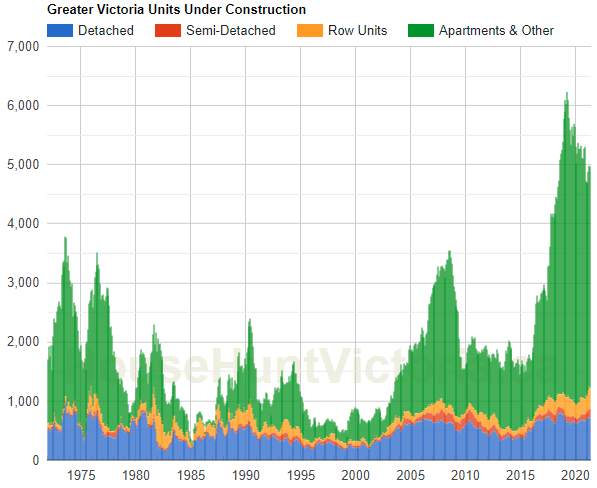
  • Flippin’ Victoria BC has a Speculation & Vacancy Tax, the results of which I’ve discussed several times. It’s a pretty good vacancy tax, but it’s debatable how well it targets speculation. That’s partially because in my mind speculation is hard to define, with every owner being part speculator. How many people would be buying right now if they were convinced prices would fall? However many people believe that flippers – those owners that buy only to sell shortly afterwards – should be specifically targetted by a speculation tax. How many of those flippers are there? It’s a more difficult question to answer than it should be since it requires the history of all property sales, but I’ve extracted the last few years of data for detached homes to see what order of magnitude we are talking about. There’s no set definition for flipping, but I’ve charted sales pairs that happened within 12 months, and those that happened within 18 months. Are flippers a substantial factor in the market? (House Hunt Victoria)

Bank of Canada Mandate, Great Escape or Resignation, and Jennifer Lawrence

Tuesday morning news drop

  • New Bank of Canada mandate maintains inflation target but keeps one eye on jobs picture, too There has been a suggestion in recent years that central banks should consider moving away from inflation targeting, and try to achieve other goals with their monetary policy. That could include setting their policy to encourage full employment, for example, or to raise or lower the value of the country's currency — even if that means inflation heats up or cools down as a result. (CBC)

  • The Great Escape: Why workers are quitting their jobs, after the trauma of the pandemic According to a July survey from the Society for Human Resource Management, 41 percent of U.S. workers are either actively searching for a new job, or planning to do so in the next few months. Two-thirds of those searching have considered a career change, rather than moving within their industry. Bankrate’s job seeker survey in August found even more turbulence; 55 percent of the workforce said they would likely look for a new job in the next year. (American Prospect)

  • Everything’s Getting More Expensive. Here’s What You Can Blame It On. The supply chain is still screwed up, Energy prices spiked in November and People are still spending their stimulus money. (New York Magazine)

  • 3 Small Ways to Be a More Inclusive Colleagues Over the last three years the author has been investigating the impact of peer relationships on an individual’s experience of inclusion at work. She found that peers have the power to include or exclude other individuals, and the exercise of that power can make a meaningful difference to work performance. Peer inclusion is demonstrated through three small acts that can make a world of difference: 1) Instrumental assistance, or acts that help a peer to perform their work tasks (such as by providing information, making introductions to contacts, giving endorsements in meetings, or offering advice); 2) Emotional bonding, or socializing with their peers, joking and banter, as well as providing space for venting and showing an authentic interest in a peer’s personal life; and 3) embodied connection, creating and communicating a closer connection with through body language and the sharing of space, such as walking to a meeting together or pulling a chair closer during a conversation. (Harvard Business Review)

  • New People Are Coming to Crypto — And They May Not Like Bitcoin For a long time, there’s been a perception that it’s rooted in some kind of anarchy, with Bitcoin specifically often associated with right-wing, anti-Fed, gold-bug types. The fact that Bitcoin uses a lot of electricity to secure the network has helped cement the perception of “crypto” as a kind of antithesis of popular, liberal, ESG-ish ideals. But things are changing on that front, and mainstream commenters who previously turned up their noses at the space are capitulating. (Bloomberg)

  • Expected Returns Over the Next Decade Annual returns over the past 10 years: U.S. growth is up almost 20% per year. The S&P 500 is up more than 16% per year. Small caps are up almost 14% per year. REITs rose more than 11% annually. Everyone has been dancing on the grave of value stocks for years now, yet they’re up nearly 14% per year over the last decade. A simple 60/40 portfolio of U.S. stocks and bonds is up around 11% per year over the past 10 years. (Wealth of Common Sense)

  • The Office Is an Efficiency Trap: As office design evolved over the last century, one feature remained: the goal of filling your life with even more work. (Wired)

  • Two years after B.C. passed its landmark Indigenous Rights act, has anything changed? The province promised to align all of its laws with the principles of the United Nations Declaration on the Rights of Indigenous Peoples (UNDRIP), but a full two years in, only one clause of one B.C. statute has been amended (Narwhal)

  • The Compay Man Tse Chi Lop, the suspected ringleader of a $21-billion crime syndicate, may be the world’s most innovative drug lord. And Toronto was his training ground. (Toronto Life)

  • Jennifer Lawrence: “I Didn’t Have a Life. I Thought I Should Go Get One” After a long break, the Oscar winner returns with the ferocious satire Don’t Look Up, and talks to V.F. about love, fame, and boundaries. (Vanity Fair)

Fogo Island, Superfan Misses 1st Raptors Game, and Hallmark Movies

Monday morning news drop

  • Fogo Island: Bringing new life to a remote Canadian fishing community A remote jewel of land off the coast of Canada, Fogo Island floats in the northeast corner of the northeast province of Newfoundland and Labrador, the outstretched right fingertip of this continent. The place might be drop-dead gorgeous, but it wasn't immune to the fate befalling so many small and isolated communities in North America: its one and only industry went into steep decline, and so in turn, did its population. Then about a decade ago, a local returned home, fresh off making a fortune in the tech sector. Her pockets were deep. So was her desire to lift up the place and bring people back. So she unleashed a sort of economic experiment. We took two planes, a long drive and a ferry to reach Fogo Island, and check on the early results. (60 Minutes)

  • 'Superfan' Nav Bhatia, in isolation, misses 1st ever Raptors home game Friday night's Toronto Raptors game was notable for who wasn't in attendance. The Raptors' COVID-19 scare kept Superfan from Toronto's game against the New York Knicks. It's the first home game he's missed since the Toronto franchise joined the NBA in 1995. (CBC)

  • Hallmark’s trademark American Christmas movies? They’re made in Canada In a quaint Oregon firehouse decorated with more Christmas trees than would seem fire code compliant, a bewildered fireman places a cardboard box, teeming with kittens, on a table. Beside him, his silver-haired colleague chuckles as a mewling tabby paws his chest. “There are only seven kittens here,” exclaims the younger, “but we started with nine!” The kittens gambol and chirp, a plucky score accompanying the men as they try to control the roving felines. The elder assesses where this life has taken him, so unlike what he had planned. He sighs – “We’re gonna need a bigger box.” (Globe and Mail)

  • Canada’s rural-urban divide is getting deeper, and that hurts all Canadians Much of Canada’s political power lives in cities, and that has led to cultural biases and blind spots that risk erasing a vital kind of diversity in the country (Globe and Mail)

  • Misreading Inflation Why we should err on the side of inaction—and why we won’t. Indisputably, all other factors held constant, inflation is bad. It erodes the real value of money, reducing purchasing power. The same money buys less than it did before, including things like food and shelter. But all other factors are not constant. “Nominal” values—such as the dollar cost of items—are less important than “real” values such as actual purchasing power. (Boston Review)

  • Jim Belushi Left Hollywood to Grow Weed and Heal His Soul: The iconic comedian and sitcom dad wants to save all of us—one dank, wondrous, sticky-icky trip at a time. (Men’s Health)

  • He Voted to Impeach. Can He Survive in the GOP? The political education of Peter Meijer After January 6, Peter Meijer thought he could help lead the Republican Party away from an abyss. Now he laughs at his own naïveté. (The Atlantic)

  • Built to Lie A new book about the Boeing 737 MAX disaster exposes the company’s allergy to the truth. (American Prospect)

Before The Mets, Steve Cohen Was The Hedge-Fund King | FRONTLINE (full documentary) Inside the government’s crackdown on insider trading, drawing on exclusively-obtained video of hedge fund titan Steven A. Cohen, incriminating FBI wiretaps, and interviews with both Wall Street and Justice Department insiders.

Videos of the Week and Inflation is 6.8% in the USA

Friday morning news drop

  • U.S. inflation rate spikes to 6.8% — highest level in almost 40 years Food, energy and housing costs major contributors to spike (CBC)

  • Bank of Canada to keep two per cent inflation target in new mandate The new five-year mandate, however, will include some new language around employment (Financial Post)

  • Canada's central bank appears more concerned with job creation than about inflation Bank of Canada must keep an eye on Ottawa — and one on Washington — in inflation fight (CBC)

  • We'll all be paying a lot more for food next year, says Canada's Food Price Report 2022 expected to see the biggest annual increase in food bills on record, new report says (CBC)

  • Wall Street Finally Learns It Can’t Ignore Crypto and NFTs Digital currencies have been around for a while, but 2021 was the year the wider crypto world made its mark. Its “memeification” and pop culture normalization happened at a pace that detractors found baffling and that true believers argued was still too slow. As it gained another raft of high-profile supporters, it also captured the attention of Wall Street as a force that could no longer be ignored—and of regulators. (Bloomberg)

  • Half a Billion in Bitcoin, Lost in the Dump: For years, a Welshman who threw away the key to his cybercurrency stash has been fighting to excavate the local landfill. (New Yorker)

  • Brookfield sees 'truly massive' opportunities in energy Investors face an historic opportunity to put their money into renewable energy assets given the global consensus that now exists around the urgent need for decarbonization, according to Brookfield Asset Management Inc. (Bloomberg)

  • From the Great Resignation to Lying Flat, Workers Are Opting Out In China, the U.S., Japan, and Germany, younger generations are retinking the pursuit of wealth. (Businessweek)

  • What’s Really Behind Global Vaccine Hesitancy: Countries with low vaccination rates are suffering from more than just inequity. South Africa has 150 days’ worth of vaccine supply. It’s now facing the same problem that’s bedeviling countries the world over: Lots of people don’t want to get their shots. South Africa recently paused deliveries of the J&J and Pfizer vaccines because it has more stock than it can use. “We have plenty [of] vaccine and capacity but hesitancy is a challenge.” (The Atlantic)

  • The Long Way Home How NFL wide receiver Demaryius Thomas lost his mother and grandmother to drug dealing, and how he plans on bringing them home. (ESPN)

Powell Peralta Skateboard Stories Presents: Christopher Hiett

“Flora” Episode 3: Mark Suciu With his forth segment of the year Mark will win SOTY with this banger rail segment where Mark and Justin return to The Bay for an unreal performance that pushes the physical, mental and creative limits of skateboarding, culminating in a dizzying spectacle of handrail achievements.

Chima Ferguson's "Nice to See You" RAW Files: His Vans part shocked the world with its glorious onslaught of first-rate stunts. Now see how much punishment Chima endured in his pursuit of the sublime.

PEAK CONDITION - CH | 11 | TV | 013 Epic all time surfing in the rain

Brett Rheeder - Continuum | SHIMANO Everything is connected. Each ride is an extension of the one before. Each reentry is a transition to the next launch. Each experience builds on one another toward a flow state of endless progression. Only the settings and perspectives change along this continuum. In this film by Brett Rheeder and Harrison Mendel, the sequence of individual movements are all linked together as a cohesive collection, with each maneuver unique yet forming a coherent visual journey across ever-changing landscapes by maintaining a locked perspective.

Crossover - Christian Rigal: “What started as a blank canvas on a friend’s property quickly turned into a BMX inspired MTB zone. Using an old Church foundation from 1876 as our centrepiece, we went to work for nine days on the tools and machines to make this crossover dream build a reality. Five Ten let me run wild with this and I can't thank them enough for trusting me and my vision for this project. Opportunities like this are rare and I am stoked to have had the chance to bring some of these crazy ideas to life, and hoping it inspire others to look at things differently and do the same! You don’t need a mountain to ride mountain bikes” - Christian Rigal

TRENT LUTZKE - ROAD HAWG | Sunday Bikes | BMX Michigan's own Trent Lutzke packed up his van and road-tripped across the country on two separate occasions for this one. Racking up miles on the road and stacking footage in Arizona, New Mexico, Texas, Wisconsin, California and of course, the Upper Peninsula of Michigan. Trent has been killing it on both sides of the lens for a while now, so we were stoked to spend some time working with him on this one. Road Hawg indeed

Home Ownership in Victoria, Data Science, and Canadian Multiculturalism

A friend asked me who or what is to “blame” for house appreciation in Victoria? There is no one issue. Here are ten case facts making home ownership in Victoria, BC, a desirable asset class.

  1. Low interest rates

  2. No capital gains tax on principal residence

  3. Cultural values around prioritizing home ownership

  4. Desirable climate and geography (they aren't building anymore land)

  5. A lack of residential construction between the mid 1990’s to the mid 2000’s

  6. A lack of high density zoning and construction that reflects the regional growth rate

  7. Inadequate government investment in purpose built rental housing

  8. Retained equity and home equity lines of credit (HELOC) allowing older home owners to buy a second property or fund their children’s first home purchase

  9. Population growth as individuals migrate to Victoria from other areas across Canada and various foreign countries

  10. A long history of stable appreciation as an asset class that has outpaced inflation and fixed income investments

And now for the Thursday morning news drop

  • This Bull Market Hasn’t Always Been Easy Every new generation of investors has to learn the same lessons as the previous generation. But experience alone isn’t always enough to make you a successful investor. Experienced investors panic all the time. Who do you think holds all of the money that actually moves the markets? They also miss big trends, hold onto legacy positions for too long, become overconfident in their assertions and can’t see how the world is changing around them. (A Wealth of Common Sense)

  • Everyone Is Talking About Data Science. Here’s How J.P. Morgan Is Putting It Into Practice. J.P. Morgan Asset Management is building machine learning and predictive analytics tools for its fundamental portfolio managers. Just don’t call them quants. (Institutional Investor)

  • Canadian Multiculturalism: A Work in Progress As we mark fifty years since the adoption of Canada’s federal multiculturalism policy, human rights advocate Amira Elghawaby celebrates its merits and reflects on the work that is yet to be done when it comes to inclusion, acceptance, and fighting systemic racism in our country (Walrus)

  • Without Dorsey, Can Twitter Finally Flourish? There was only one little idea that there was Jack’s. But today, you look at it, and even in his resignation letter, he is the “inventor.” One of the greatest quotes I ever heard about him was someone said, “The greatest product that Jack Dorsey ever made was Jack Dorsey.” (Slate)

  • The Dark Side of 15-Minute Grocery Delivery: Mini-warehouses dubbed “dark stores” are quietly taking over urban retail space. Left unregulated, the insatiable demand for faster delivery will only hasten the erosion of community life. (Bloomberg)

  • Can Apple Take Down the World’s Most Notorious Spyware Company? Pegasus was used to target Al Arab editor Abdulaziz Alkami eight years ago. The same spyware was also employed to surveil Emirati human rights advocate Ahmed Mansoor and Saudi-American dissident Jamal Khashoggi. On Friday reports even emerged that at least nine State Department officials working on East Africa-related issues were hacked using Pegasus over the past few months, representing the widest known hacks of American officials using NSO technology to date. (Slate)

  • Want to help animals? Here’s where to donate your money. If you care about animals and want to reduce their suffering, but aren’t sure exactly how, Animal Charity Evaluators (ACE) is an organization that might be able to help. The California-based nonprofit puts out an annual guide for recommended animal charities, and it just released its list for this year. (Vox)

  • Well I Guess This Is Growing Up Blink-182’s Mark Hoppus got cancer—and then accidentally shared his diagnosis with the public over social media. Turns out getting sick renewed his faith, healed his old friendships, and reminded him what makes life worth living. (GQ)

  • The story of the Beatles rooftop concert at the heart of ‘Get Back’ The rooftop show and the associated “Let It Be” album are at the heart of Peter Jackson’s three-part documentary series “Get Back,” which has earned a strong critical reception and catapulted the album into the UK Top 40, more than a half century after its release.(Washington Post)

Interest Rate Hikes, Meal Kits, and the Best Movies of 2021

Wednesday morning news drop

  • Bank of Canada to lay groundwork for rate hike The Bank of Canada is expected to keep the spotlight on inflation at its policy decision this week, as it nears the start of an aggressive campaign of interest rate hikes. (Bloomberg)

  • Branding the Billion-Dollar Dark Stores Instant grocery delivery is a sector on steroids. But how can brands stand out in a super-saturated market? (Bloomberg)

  • Let’s get real: the American Rescue Plan was the best economic policy in forty years Nearly a year and a half into the recovery from the Covid recession, it’s indisputable that fiscal relief was a success. Not so, after the Great Financial Crisis — it fell far short. Blame Larry Summers. (Stay-At-Home Macro)

  • Is the Correction Over? Was that it? It feels ridiculous to ask, given that at the lows of last week, the peak-to-trough decline in the S&P 500 was just 5.2%. It feels ridiculous to ask, given that at the lows of last week, the market was still up 21% YTD. But it is a reasonable question, given that stocks have aggressively bounced, with S&P 500 futures currently sitting less than 2% below all-time highs. (Irrelevant Investor)

  • How Meal Kits Changed My Mind about Cooking The pandemic sparked a boom in cooking from scratch. Where do boxes of premeasured ingredients fit in? (Walrus)

  • Why insects are more sensitive than they seem: For decades, the idea that insects have feelings was considered a heretical joke – but as the evidence piles up, scientists are rapidly reconsidering. (BBC)

  • ‘I spontaneously burst into tears’: How 13 songwriters felt watching the new Beatles documentary We spoke to more than a dozen songwriters about their reactions to the series about the iconic quartet, the viral moment when McCartney writes the backbone of “Get Back” in minutes, and the sometimes smooth, sometimes arduous process of how to craft a song in the first place. Here’s what they had to say. (Washington Post)

  • Trump’s Coup Has Already Began January 6 was practice. Donald Trump’s GOP is much better positioned to subvert the next election. (Atlantic)

  • The Best Movies of 2021 It was a year of octogenarian high jinks, long yet revealing documentaries, and masters reasserting themselves (Method)