Yield Curve Indicates Recession, Salary Transparency, Russia, and Real Estate

Monday morning news drop

  • Yield Curve Almost Flashes Recession, Maybe, but Who Knows When Whisper it quietly, but maybe the yield curve isn’t quite as useful as many think as a recession alert (Wall Street Journal)

  • The Entirely Predictable Impact of Salary Transparency Europe is about to decide whether to make everyone’s salaries public, a move that could dramatically narrow the gender pay gap. (Wired)

  • Say hello to Russian gold and Chinese petroyuan: The Russia-led Eurasia Economic Union and China just agreed to design the mechanism for an independent financial and monetary system that would bypass dollar transactions. (The Cradle)

  • Is Russia’s Largest Tech Company Too Big to Fail? It took 20 years for Arkady Volozh to build Yandex into Russia’s Google, Uber, Spotify, and Amazon combined. It took 20 days for everything to crumble. (Wired)

  • Explore the global assets of Russia's oligarchs and enablers A sizable chunk of Russia’s wealth has been siphoned offshore by corrupt politicians and well-connected businessmen. We wanted to know where it went — so we started hunting. OCCRP and its partners trawled land records, corporate registries, and offshore leaks to come up with this database of assets belonging to key figures close to Vladimir Putin. Proving the ownership of yachts, mansions, and planes is not easy, since their owners often take pains to keep them hidden. We only included assets in this database if our researchers uncovered clear evidence of their ownership. We’ve also included assets owned by family members and known proxies of the figures we investigated. Explore what we found below, and check back regularly for new additions. (OCCRP)

  • A turning point? More sellers enter Canada's housing market in February One month doesn’t make a trend but if February is any indication, more sellers may be (finally) making their way into Canada’s housing market. Early results from local real estate boards showed notable month-to-month increases in new listings across major markets. (RBC)

  • How Should Real-Estate Agents Be Paid? Many researchers and consumer advocates believe it’s time to change the commissions that home sellers pay. But how? Three researchers discuss some alternatives. (Wall Street Journal)

  • She Was a Candidate to Lead Levi’s. Then She Started Tweeting. Jennifer Sey left Levi’s after her advocacy against school closures and mask mandates for children gained attention. She says it’s a matter of free speech. The company disagrees. (New York Times)

  • Victoria's amalgamation frustration: why there are still 13 municipalities in BC's capital The absurdities of the Capital Regional District's municipal patchwork are real—but so are the arguments for decentralized power (Capital Daily)

  • Nicolas Cage Can Explain It All He is one of our great actors. Also one of our most inscrutable, most eccentric, and most misunderstood. But as Cage makes his case here, every extraordinary thing about his wild work and life actually makes perfect ordinary sense. (GQ)

Videos of the Week, Economic Warfare, Propaganda, and Interest Rates

Friday morning news drop

  • Russia Central Banker Wanted Out Over Ukraine, But Putin Said No Russian president said to reject Nabiullina’s bid to resign Respected central banker faces legacy at risk as sanctions hit. (Bloomberg)

  • Brief History Of Economic Warfare The methods and mediums through which countries wield this economic weapon changes over time, but the objectives of economic sanctions today are the same as those of centuries past: hurt the enemy by hurting their economy and restricting access to financial lifelines. (Investor Amnesia)

  • Fertilizer Prices Surge as Ukraine War Cuts Supply, Leaving Farmers Shocked Fertilizer prices were already high before the war. They have now reached record levels amid a precipitous drop in Russian supply. The result is that fertilizer is about three to four times costlier now than in 2020, with far-reaching consequences for farmer incomes, agricultural yields and food prices. (Wall Street Journal)

  • How ‘washed up…old man’ Warren Buffett is getting the last laugh “He’s old, he’s washed up,” Barstool Sports founder David Portnoy said about Buffett. “He’s an old man, his time passed him by. I’m better that he is. It’s no debate. I killed him. He’s dead. He’s dead,” Portnoy said. “I’m just printing money. Why take profits when every airline goes up 20% everyday. Losers take profits. Winners push the chips to the middle. I should be up a billion dollars.” (Marketwatch)

  • Why Propaganda Works (The “Illusory Truth Effect”): Freedom of speech does not include the right to amplification of speech. (Range Widely)

  • Interest Rates Are Getting Weird Yields still pale in comparison with the inflation rate but rates are now much higher than they were as recently as a few months ago. The biggest moves from a magnitude perspective have come at the 2 and 5 year maturities. It’s also interesting to note the 5 year treasury has the same exact yield as the 10 year. The 2 year yield isn’t far behind. (Wealth of Common Sense)

Videos of the Week

Side Hits ft. Vinny T: The trail may end, but the fun doesn't have to. With the right perspective, the entire world can be your playground. Vinny T shows us exactly how creative you can get between MTB trails as you cruise towards your next drop-in spot.

Denby Chandler BMX: Denby Chandler is one of our long term team legends and has put in an outstanding amount of dedication to LUXBMX over the years through his riding, presence, and love for everything LUXBMX. Over the past year or so Denby and Tim filmed random clips whilst being out and about in Brisbane.

REAL presents Ishod Already an all-time great, but still in his prime, Ishod makes it look easy in this ten-minute über part for REAL.

Liam Pace - Monster Army Part: Arizona's Liam Pace skates everything - and we mean everything - in his new part for Monster Army. Video: Josh "Peacock" Henderson.

Jai Glindeman is an 18-year-old Lennox Head native with an economy of movement that defies his age. Smooth, never rushed and always in control, the young Aussie has style beyond his years. And while the name of his new edit is “Stale”, his polished surfing is anything but. Hit play to watch a smooth operator put on a workshop.

Toronto Tech Town, Canadian Oil and Gas Sector, and Stablecoins

Thursday morning news drop

  • Toronto, the Quietly Booming Tech Town For all the excitement around places like Austin and Miami, the biggest tech expansion has been in Canada’s largest city. (New York Times)

  • The Canadian oil and gas companies that want to put the brakes on climate financial transparency Without more transparency, regulators warn Canada's economy will balloon into a 'climate bubble' that may suddenly burst, causing severe economic disruptions — not dissimilar to recent Russian divestment. But companies such as Suncor and TC Energy want to delay some new mandatory reporting rules, according to an investigation by (The Narwhal)

  • When the Optimists are Too Pessimistic This is why even the optimists can be too pessimistic. Because we are using linear thinking to imagine a geometric future. It just doesn’t work. (Of Dollars And Data)

  • Bored Ape’s New ApeCoin Puts NFTs’ Power Problem on Display The story of ApeCoin’s launch also highlights a trouble spot at the cutting edge of crypto, where venture capital firms like Andreessen Horowitz often end up among the biggest beneficiaries (Bloomberg)

  • He Chased Silicon Valley Dreams Amid the Cannabis Boom. But Did His Ambition Lead to His Murder? Tushar Atre aimed his money and his talents at revolutionizing cannabis extraction. Two years in, he was dead--leaving behind a cloud of questions about the true nature of America's newest gold rush. (Inc.)

  • How ‘shock therapy’ created Russian oligarchs and paved the path for Putin. It’s a symbiotic relationship in which the oligarchs’ economic power buttresses the political power of the Russian president, and the president’s power buttresses the economic power of the oligarchs — like a medieval king getting tribute from his aristocracy in exchange for his protection. It’s an arrangement that the West is now fighting to disrupt. (NPR)

  • How the next pandemic surge will be different: The same: The brutal math of exponential growth. Different: Our pandemic fatigue is worse than ever. (Vox)

  • Covid’s Fifth Wave Shows Us How to Live With the Virus: Not all countries are impacted equally by the BA.2 subvariant. That tells us a lot about what works and what doesn’t. (Bloomberg)

  • This Kyrie situation is starting to feel like the Mayor of New York is trying to beat him in a game of one-on-one For every game missed it has cost Kyrie $380,000 and Mayor Adams has lifted many COVID restrictions, but not enough for Kyrie to play at Barclays. (Deadspin)

  • Stablecoins: Growth Potential and Impact on Banking Stablecoins have experienced tremendous growth in the past year, serving as a possible breakthrough innovation in the future of payments. In this paper, we discuss the current use cases and growth opportunities of stablecoins, and we analyze the potential for stablecoins to broadly impact the banking system. The impact of stablecoin adoption on traditional banking and credit provision can vary depending on the sources of inflow and the composition of stablecoin reserves. Among the various scenarios, a two-tiered banking system can both support stablecoin issuance and maintain traditional forms of credit creation. In contrast, a narrow bank approach for digital currencies can lead to disintermediation of traditional banking, but may provide the most stable peg to fiat currencies. Additionally, dollar-pegged stablecoins backed by adequately safe and liquid collateral can potentially serve as a digital safe haven currency during periods of crypto market distress (Federal Reserve)

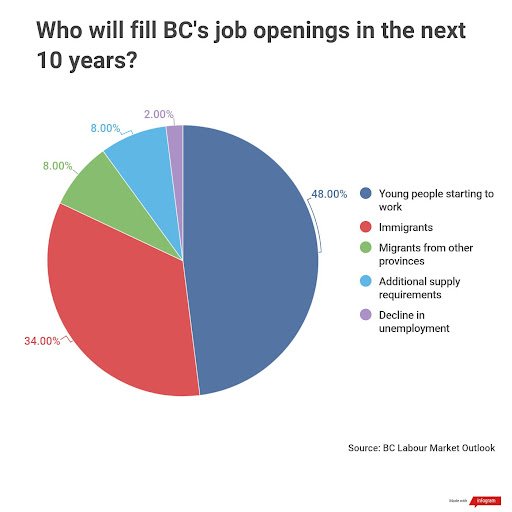
  • What does Victoria's labour shortage look like? Research predicts BC will have enough workers in the next 10 years—but tell that to businesses desperate for workers. We look at the data. (Capital Daily)

More Paid Vacation Days, the Bond Market, Interest Rates, and Home Affordability

Wednesday morning news drop

  • Out of Office: The Case for More Paid Vacation Days The pandemic has forced us to reevaluate our relationship with work and time off (Walrus)

  • The Worst Run For Bonds Since 1980 The S&P 500 and the Bloomberg US Aggregate bond index have both declined for consecutive months ten times since 1976. They’ve never both had negative returns for three straight months, which is where it looked like things were headed. That is, until last week, when the S&P 500 had its strongest four-day run since the start of the pandemic. Right now, the S&P 500 is up 1.8% for the month. (Irrelevant Investor)

  • How Sensitive Are Your Stocks to Interest Rates? It’s Time to Find Out As central banks start lifting borrowing costs from near zero, profitless startups are certain to suffer more than telecom companies. For everything in between, investors should learn to look at stocks as if they were bonds. (Wall Street Journal)

  • The Real Winner of the Used Car Bubble Is Revealed Windfall profits from car financing are padding automakers’ bottom lines. A big source is their financing units, thanks to soaring used-car prices and exceptionally low loan-default rates. (Bloomberg)

  • This is why youth say they're leaving Alberta Report finds many young people think Alberta lacks vibrancy and diversity (CBC)

  • Bitcoin Miners Want to Recast Themselves as Eco-Friendly Facing intense criticism, the crypto mining industry is trying to change the view that its energy-guzzling computers are harmful to the climate. (New York Times)

  • Truth Is Another Front in Putin’s War The Kremlin has used a barrage of increasingly outlandish falsehoods to prop up its overarching claim that the invasion of Ukraine is justified. (New York Times)

  • How Kremlin accounts manipulate Twitter The Russian government has a huge network of more than 100 official Twitter accounts. They range from foreign embassies, with a few thousand followers, to those with more than a million followers. President Putin has his own account. Many of the accounts are labelled as Russian government organisations by Twitter. (BBC)

  • Robot Truckers Could Replace 500K U.S. Jobs: Amid a severe driver shortage, a new study says 90% of long-haul trucking could be replaced by self-driving technology. The short trip from a factory or distribution center to an interstate is usually far more complicated than the next several hundred miles. The same is true once the machine exits the interstate. Trucking companies may set up transfer stations at either end, where human drivers handle the tricky first leg of the trip and then hitch their cargo up to robot rigs for the tiresome middle portion. (Bloomberg)

  • Exploring scenarios for future home affordability We know that rising prices have led to severely deteriorated affordability, with especially detached properties breaking out of the historical ranges for that measure, while condo affordability is at the level where prices usually turned around. Given that, let’s look at a few scenarios of what might happen to affordability going forward. In the past two cycles, affordability dropped roughly 15 percentage points over a period of about 7 to 8 years from the peak. (House Hunt Victoria)

Economic Sanctions, Russian War, Nuclear Missiles, and Crypto

Tuesday morning news drop

  • Economic shock and awe: The strategy behind the economic sanctions against Russia Think of it as an economic shock and awe campaign. Never before has such a large, modern economy been cut off so quickly from most of the world. (60 Minutes)

  • The Weakness of the Despot An expert on Stalin discusses Putin, Russia, and the West. (New Yorker)

  • Could Putin actually fall? What history teaches us about how autocrats lose power — and how Putin might hang on. (Vox)

  • Russia’s war for Ukraine could be headed toward stalemate Casualties, equipment losses and a lack of progress on the ground are taking an unsustainable toll, experts say (Washington Post)

  • These journalists filmed the agony in Mariupol and escaped while being hunted down by Russian forces The Russians were hunting us down. They had a list of names, including ours, and they were closing in. We had been documenting the siege of the Ukrainian city by Russian troops for more than two weeks and were the only international journalists left in the city. We were reporting inside the hospital when gunmen began stalking the corridors. Surgeons gave us white scrubs to wear as camouflage. (CBC)

  • I was a nuclear missile operator. There have been more near-misses than the world knows As a 22-year-old I controlled a warhead that could vaporize a metropolis. Since Russia invaded Ukraine, the public is waking up again to the existential dangers of nuclear weapons. (The Guardian)

  • Would-be home buyers may be forced to rent the American dream, rather than buy it Every American is feeling the bite of inflation. Groceries cost more, gas costs more, everything seems to cost more. This past week, the Federal Reserve raised interest rates in an effort to tame the highest inflation in 40 years. (60 Minutes)

  • Apple Is Crypto’s Biggest Wild Card: Crypto applications for the iPhone could attract more than 1 billion new users. “Apple’s position on crypto is between neutral and hostile. However, iPhone could be the tool that on-boards millions of people to the ecosystem.” How? By creating a user-friendly way to interact with the crypto economy. “You have to remember that Apple is a company that makes products for people to access protocols.” (Bloomberg)

  • Obamacare Is Boosting Economic Health: The 12 states holding out against Medicaid expansion are laggards in job-market strength and income growth. Even the ones that signed up late are doing better. (Bloomberg)

  • Tired of waiting for driverless vehicles? Head to a farm For years Americans have been told autonomous technology was improving and that driverless vehicles were just around the corner. Finally they’re here, but to catch a glimpse of them, you’ll need to go to a farm rather than look along city streets. Beginning this fall, green 14-ton tractors that can plow day or night with no one sitting in the cab, or even watching nearby, will come off the John Deere factory assembly line in Waterloo, Iowa, harkening the age of autonomous farming. (AP)

  • How vaccination status might predict views on the Russian invasion of Ukraine New poll indicates that “vaccine refusers are much more sympathetic to Russia.” (Toronto Star)

Preparing for a Recession, Apple's Infinite Loop, and Michael Bublé

Monday morning news drop

  • How to Prepare For a Recession So we could go into a recession this year or next year or four years from now. I honestly have no idea. All I know is we will have a recession at some point. Since World War II, we’ve had 13 recessions in the United States: This means that over the past 80 years or so, a recession has occurred once every 5.9 years on average. (Wealth of Common Sense)

  • Inflation Isn’t Going Back to Normal This Year; So says the Federal Reserve. Our central bankers aren’t ready to do just anything to bring inflation down. They aren’t mentally gearing up to do their best impression of Paul Volcker, the Fed chair who plunged the U.S. into a painful double-dip recession in order to finally slay inflation early in Ronald Reagan’s presidency. Instead, they’re willing to tolerate moderate inflation for a while longer, with the hope that they can gently ease the economy toward a soft landing by the end of this year and beginning of next. (Slate)

  • An Oral History of Apple’s Infinite Loop Apple’s old HQ holds stories of pizza ovens, iPhone secrets, baseball bats, and what happened to Steve Jobs’ office. (Wired)

  • A History: War, Oil Prices, Inflation & Trade Historically, wars have been the main catalyst of government-to-government transfers. The scale of official credits granted in and around WW1 and WW2 was particularly large, easily surpassing the scale of total international bailout lending after the 2008 crash. During peacetime, development finance and financial crises are the main drivers of official cross-border finance, with official flows often stepping in when private flows retrench. (Investor Amnesia)

  • Russia’s billionaires: Who they are, what they own — and can they influence Vladimir Putin? Targeting oligarchs is popular. It’s not clear it can help end a war. (Grid)

  • Welcome to Londongrad, Where Kleptocrats Wash Their Money Clean For years, Russian wealth has poured into Britain with few questions asked, helping to finance political campaigns and buoying the luxury property market. Russian oligarchs have been so happy to avail themselves of Britain’s laissez-faire regulatory climate to park their wealth and launder dirty money that the nation’s capital has earned the moniker Londongrad. (New York Times)

  • How ‘Ukrainian bioweapons labs’ myth went from QAnon fringe to Fox News A feedback loop involving Russia and Tucker Carlson is promoting claims of US funding for biological weapons in Ukraine (The Guardian)

  • The military-intelligence veterans who helped lead Trump’s campaign of disinformation: After Donald Trump lost the White House, ex-National Security Advisor Michael Flynn and three other current and former U.S. Army officers challenged the vote’s legitimacy and pushed baseless conspiracy claims. Military ethicists say their actions threaten to weaken the public’s faith in democracy. (Reuters)

  • Covid success to covid disaster: What happened in Hong Kong? Hong Kong’s tragic turn underscores the importance of effective vaccines to protect against omicron. (Grid)

  • Michael Bublé Always Finds a Way Hustle, charm and a remarkable ability to slot himself into songs have made the musician a star — even though his style has never aligned with pop trends. (New York Times)

Videos of the Week, ESG Investing, Russia, Bitcoin, and Netflix

Friday morning news drop

  • With ESG on the Rise, Asset Managers Target the Murky Underbelly of Supply Chains Firms like Alliance Bernstein and BNY Mellon have joined the fight against modern slavery — but like other ESG initiatives, it’s not easy. (Institutional Investor)

  • Russia’s invasion of Ukraine shows the true cost of fossil fuels The war has caused an energy shock, demonstrating how geopolitics can change the economics of gas and oil. (Grid)

  • How Putin’s Oligarchs Bought London From banking to boarding schools, the British establishment has long been at their service, discretion guaranteed. (New Yorker)

  • Russia Watchers Seek New Indicators to Gauge Impact of Sanctions Analysts are prospecting for datasets that will give a real-time read on the economy. (Businessweek)

  • Inheriting bitcoin is harder than it sounds Your bitcoin can live on, even if you don’t. (Vox)

  • These are Netflix’s Most Popular Shows (According to Netflix) We analyzed eight months of Netflix viewership data to determine what is and isn’t working on the world’s most popular TV network. (Bloomberg)

Videos of the Week

Steve Vanderhoek Rides The North Shore - Risk Is Reward: Risk versus reward — the idea that an endeavour with greater uncertainty garners greater payoff — is a principle used in fields as diverse as economics, athletics and even relationships. For Vancouver resident Steve Vanderhoek, the saying reflects nearly every aspect of his life. As a firefighter and professional mountain bike freerider, saving a life at work before risking his own on a boundary-pushing stunt often occurs within the same day. Vanderhoek thrives under pressure, and in doing so is redefining what it means to truly live on the edge.

Fun-N-Games Feat. Garret Mechem: To announce his signing with Fasthouse, Garret wanted to share this with y'all. Hope you enjoy. Special thank you to all the homies who accompanied us while making this, and thank you to Cam Zink for letting us film your spot.

Mind to Matter" feat. August Nesbitt: Riding: August Nesbitt. Video: Liam Morgan. Still Photography: Max McCulloch/Liam Morgan.

Cinema BMX - Chad Kerley - Intermission: Kick back and watch as CK vibes around SoCal, living life on and off the bike for a special feature "Intermission" filmed and edited by Andrew Knight. Enjoy!

John Dilo's "Red Tiger" Part - Rough Cut

Emerica's "Emerge" Video Matisse Banc and Jordan Powell start the show, shutting down sets before Braden Hoban solidifies his status as one of the best rail skaters out.

Real Skifi Tenet: Take off comes before landing. Or does it? What if the outrun is actually the inrun? Real Skifi Tenet is a skiing fiction piece inspired by Christopher Nolan's Tenet. All the illusions in this video were achieved by acting and simply reversing and/or altering the speed of the footage. No VFX needed. The question is: which clips are reversed, and which are not? Which ones go back and forth, and which don't? After all, time is in the eye of the beholder. The idea for this video had been in our minds for a while already, and finally we got together to brainstorm and make it happen. In this project, we had to use our creativity differently from what we’re used to. This time, the challenge was to get the acting and timing right instead of landing a hard trick. We hope you enjoy!

Russian Debt, Interest Rates, Inflation, and Russia's War on Ukraine

Thursday morning news drop

  • Russia Is Spiraling Toward a $150 Billion Default Nightmare What happens with bond payments due Wednesday could kickstart Russia’s first foreign-currency default since the 1917 revolution. (Bloomberg)

  • Powell Admires Paul Volcker. He May Have to Act Like Him. The Federal Reserve is facing the fastest inflation most Americans have ever seen. Its chair says policymakers will do what it takes to tame prices. (New York Times)

  • Predicting the Next Recession The Fed cannot ease pandemic related supply constraints (except by curbing demand), and the Fed cannot stop the war. So, there is a possibility that the Fed will tighten too much and that will lead to a “hard landing” (aka recession). (Calculated Risk)

  • Investors Haven’t Faced a Market Like This in Decades. Here’s How They’re Coping. Inflation and geopolitical risk are “back with a vengeance” just as volatility is spiking. (Institutional Investor)

  • How a wrinkle in the oil futures market has clogged America’s oil pump Big deal, you may say. Traders are speculating. That’s just what they do. But it’s not just traders who watch the futures market. Oil companies watch the market closely, too, as do the investors who invest in them, to determine whether it’s worthwhile putting money in the ground. (NPR)

  • Inside Chernobyl, 200 Exhausted Staff Toil Round the Clock at Russian Gunpoint Trapped since their shift 3 weeks ago, the Ukrainians keeping the abandoned nuclear plant safe from meltdown are ill-fed, stressed and desperate for relief (Wall Street Journal)'

  • The Weakness of the Despot An expert on Stalin discusses Putin, Russia, and the West. (New Yorker)

  • Was it inevitable? A short history of Russia’s war on Ukraine To understand the tragedy of this war, it is worth going back beyond the last few weeks and months, and even beyond Vladimir Putin (Guardian)

  • The Senate just voted to make daylight saving time permanent. Good. The case against changing clocks is less about extending sunsets later all year and more about staying consistent. (Vox)

  • Say Goodnight to the Bad Guy Trained during the twilight of the territorial era of wrestling, Scott Hall got his big break in WWF doing a glorified Scarface impression—then transformed the entire sport after he took his talents to WCW. Hard work pays off, dreams come true. Bad times don't last, but Bad Guys do. (Ringer)

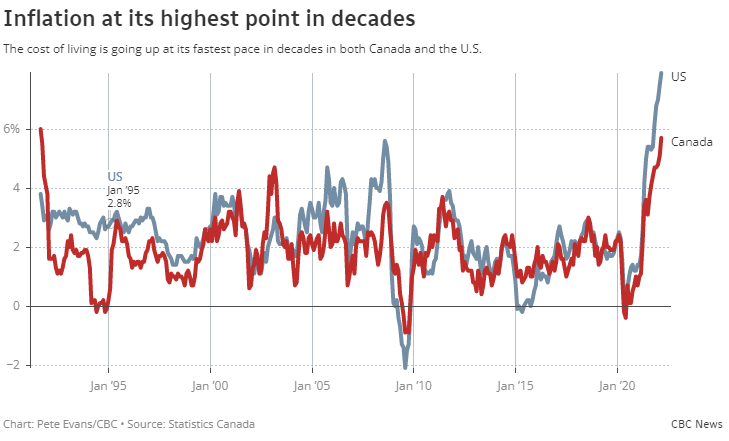
  • Canada's inflation rate now at 30-year high of 5.7% Inflation hit a three-decade high In February as central banks It's the highest since August 1991 (CBC)

Zelensky Talks to Parliament, Russian Debt, and Razor Ramon Passes Away

Wednesday morning news drop

  • Parliament gave Zelensky a hero's welcome. He gave us something else: a cold dose of reality More than 7,000 kilometres away, the guest of honour sat somewhere in the middle of a war zone. Standing on the floor of the House of Commons, Prime Minister Justin Trudeau introduced "our friend" Volodymyr Zelensky, president of Ukraine. (CBC)

  • Dollars or Rubles? Russian Debt Payments Are Due, and Uncertain. Citing sanctions, the Russian government warned it might pay foreign debt obligations in rubles. Credit rating agencies say a default is imminent. (New York Times)

  • The Ukrainian Cultural Sites at Risk of Destruction With Ukrainians facing continued attacks from Russian forces, the heritage that forms their national identity is also under siege. (Bloomberg)

  • Russia’s war has already failed: The country’s credibility as a geopolitical power is eroding before our eyes, says our military analyst in the first of her weekly columns (Prospect)

  • The Weapon the West Used Against Putin: The way in which the U.S. disclosed intelligence ahead of Russia’s invasion of Ukraine could drastically change geopolitics in the future. (The Atlantic)

  • Inside the 18 Minutes of Trading Chaos That Broke the Nickel Market When the commodity’s price went vertical last week, the metals industry plunged into turmoil not seen since the Tin Crisis of 1985. (Businessweek)

  • The Great Tech Hub Exodus Didn’t Quite Happen Two years into the pandemic, US tech jobs remain concentrated in a handful of coastal hubs. But a new set of cities is gaining ground. (Wired)

  • Scott Hall Understood the Soul of Wrestling Fans At a basic level, pro wrestling is about effortlessness, the art of making staged violence look smooth and natural. Nobody made it look easier than Razor Ramon. Scott Hall passed away at age 63, 1958-2022 (Ringer)

Anti-Vaccine Movements, Ukraine, and Tom Brady's NFL Return

Tuesday morning news drop

  • The long, strange history of anti-vaccination movements Here’s what the past can tell us about the future of the pandemic. (Vox)

  • Did This Many Deaths Become Normal? The U.S. is nearing 1 million recorded COVID-19 deaths without the social reckoning that such a tragedy should provoke. Why? (The Atlantic)

  • Murdoch hounded by lawsuits that could cost Fox News billions Rupert Murdoch for years has enjoyed a Trump-like ability to avoid responsibility for the avalanche of lies he promotes. That all may be changing thanks to a pair of billion-dollar defamation lawsuits surrounding Trump’s Big Lie campaign — Murdoch appears powerless to stop the looming legal reckoning. (Press Run)

  • People in Moscow grab their last Big Macs before McDonald's temporarily shuts Russian The Kremlin threatens to seize assets, infrastructure as hundreds of companies leave Russia (CBC)

  • YouTube is spreading Putin’s ‘morally repugnant’ Ukraine propaganda Russian state outlets are using the U.S.-based video streaming giant to push “denazification” messages to justify invading Ukraine to Russian-speaking audiences. (Grid)

  • Could Putin actually fall? What history teaches us about how autocrats lose power — and how Putin might hang on. (Vox)

  • How the right embraced Russian disinformation about ‘U.S. bioweapons labs’ in Ukraine: Despite the constant debunking, the Russian propaganda that the United States has bioweapons labs in Ukraine has taken root, especially on the right, with the hashtag #usbiolabs trending on Twitter as the Russian invasion of Ukraine commenced. “Would the Russian invasion of Ukraine be justified if it were for biodefense?” asked Robert W. Malone, a prominent vaccine skeptic, on March 9. (Washington Post)

  • How a Playground for the Rich Could Undermine Sanctions on Oligarchs Allies of President Vladimir Putin, arriving on private jets and yachts, are still welcome in the U.A.E., which has yet to condemn the Ukraine invasion or enforce sanctions. (New York Times)

  • The New Financial Supermarkets: Private-equity firms were once niche players serving big clients. Now they’re trying to be everything to everyone. (New York Times)

  • Woolly Mammoth Revival Raises $75 Million From VC Firms, Paris Hilton Resurrecting the extinct creatures could slow climate change, according to a bioscience startup, but investors are keen to see human applications for the genetic research. (Bloomberg Green)

  • Tom Brady’s NFL return is both understandable and potentially foolish The quarterback still believes he has plenty to offer his team. But it is often the game, rather than the player, that decides when a career is over (Guardian)